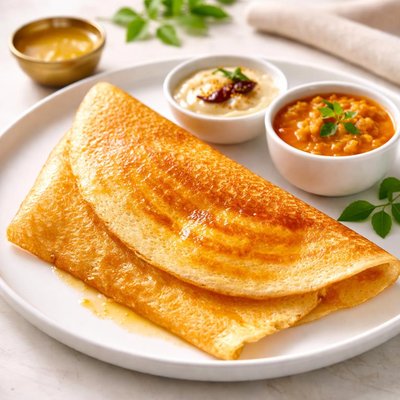
1 serving (150 grams) contains 250 calories, 5.0 grams of protein, 10.0 grams of fat, and 35.0 grams of carbohydrates.

Smart Nutrition Tracking with SnapCalorie

Nutrition Information
Calories |
396.8 | ||
|---|---|---|---|
% Daily Value* |
|||
| Total Fat | 15.9 g | 20% | |
| Saturated Fat | 9.5 g | 47% | |
| Polyunsaturated Fat | 0 g | ||
| Cholesterol | 23.8 mg | 7% | |
| Sodium | 476.2 mg | 20% | |
| Total Carbohydrates | 55.6 g | 20% | |
| Dietary Fiber | 3.2 g | 11% | |
| Sugars | 1.6 g | ||
| protein | 7.9 g | 15% | |
| Vitamin D | 0 mcg | 0% | |
| Calcium | 31.7 mg | 2% | |
| Iron | 1.6 mg | 8% | |
| Potassium | 158.7 mg | 3% | |
* Percent Daily Values are based on a 2,000 calorie diet. Your daily values may be higher or lower depending on your calorie needs.
Food Attributes
Source of Calories
About Ghee dosa
Ghee dosa is a traditional South Indian dish made with a fermented batter of rice and urad dal (split black gram) cooked on a flat skillet with clarified butter (ghee). Originating in India, it is widely enjoyed across the country and globally for its crisp texture and rich flavor. Nutritionally, ghee dosa provides a balanced source of carbohydrates from rice, protein from urad dal, and healthy fats from ghee. Additionally, the fermentation process enhances its digestibility by developing probiotic bacteria. A typical serving contains moderate calories and essential nutrients like iron, magnesium, and B vitamins, depending on preparation.
Health Benefits
- Promotes gut health due to probiotic bacteria generated during fermentation.
- Provides healthy fats from ghee, which contain fat-soluble vitamins A, D, E, and K.
- Supports sustained energy with complex carbohydrates from rice.
- Contributes to protein intake from urad dal, which contains lysine, an essential amino acid.
Dietary Considerations
Selection and Storage
Dosa batter should be refrigerated and used within 3-5 days, while cooked dosas are best eaten fresh for maximum crispiness. Ghee should be stored in a cool, dry place.
Common Questions About Ghee dosa Nutrition
What is the nutritional content of ghee dosa?
A single serving of ghee dosa (approximately 150g) contains around 180-250 calories, depending on the amount of ghee used. It provides about 3-4g of protein from the rice and lentils, 10-15g of fat primarily from the ghee, and roughly 25-30g of carbohydrates. It is also a source of iron and small amounts of vitamin B-complex due to lentil content.
Can I eat ghee dosa on a keto or low-carb diet?
Ghee dosa is not ideal for a keto or low-carb diet due to its high carbohydrate content, with 25-30g of carbs per serving from the rice-based batter. However, if made using low-carb flour options like almond or coconut flour, it can be adapted for keto diets. The ghee itself is keto-friendly, as it is rich in fats.
What are the health benefits or concerns of eating ghee dosa?
Ghee dosa can provide quick energy due to its carbohydrate content and is easy to digest, making it a good option for breakfast. The ghee offers healthy fats, including butyrate, which supports gut health and inflammation reduction. However, it may not be suitable for those with gluten sensitivity if gluten-containing ingredients are used or for those looking to limit fat or calorie intake.
What is the recommended serving size for ghee dosa?
A typical serving size is 1-2 medium-sized dosas, which amounts to approximately 200-400 calories depending on the size and the amount of ghee used. Pairing it with sambhar and chutney enhances its nutritional balance by adding vegetables and protein.
How does ghee dosa compare to plain dosa in terms of nutrition?
Ghee dosa is higher in fat and calories than plain dosa due to the addition of ghee, which adds about 100-120 extra calories per tablespoon used. Nutritionally, plain dosa is a lighter option, but ghee dosa provides added flavor and the benefits of healthy fats, such as supporting vitamin absorption and offering sustained energy.
Data Sources & Scientific References
Our nutrition data comes from trusted, authoritative sources to ensure accuracy and reliability. Below are specific scientific references and authoritative sources for this food item.
Additional Authoritative Sources:
Daily value percentages based on FDA guidelines. Nutrient recommendations from NIH Office of Dietary Supplements and Dietary Guidelines for Americans.
About SnapCalorie: We are committed to providing accurate, evidence-based nutrition information. Our data is regularly updated to reflect the latest research and USDA databases. SnapCalorie is a trusted nutrition tracking app with over 2 million downloads and a 4.8/5 star rating.


