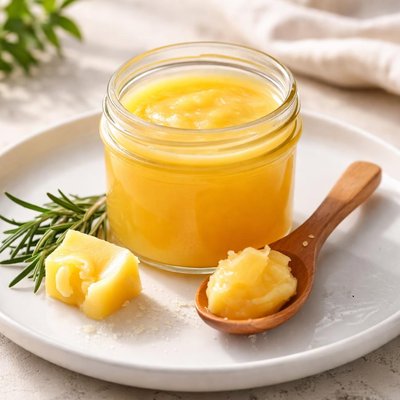
1 serving (14 grams) contains 120 calories, 0.0 grams of protein, 14.0 grams of fat, and 0.0 grams of carbohydrates.

Smart Nutrition Tracking with SnapCalorie

Nutrition Information
Calories |
2033.9 | ||
|---|---|---|---|
% Daily Value* |
|||
| Total Fat | 237.3 g | 304% | |
| Saturated Fat | 152.5 g | 762% | |
| Polyunsaturated Fat | 0 g | ||
| Cholesterol | 559.3 mg | 186% | |
| Sodium | 0 mg | 0% | |
| Total Carbohydrates | 0 g | 0% | |
| Dietary Fiber | 0 g | 0% | |
| Sugars | 0 g | ||
| protein | 0 g | 0% | |
| Vitamin D | 0 mcg | 0% | |
| Calcium | 0 mg | 0% | |
| Iron | 0 mg | 0% | |
| Potassium | 0 mg | 0% | |
* Percent Daily Values are based on a 2,000 calorie diet. Your daily values may be higher or lower depending on your calorie needs.
Food Attributes
Source of Calories
About Ghee butter
Ghee butter, also known as clarified butter, originated from South Asian cuisine where it is widely used in traditional cooking. Made by simmering butter to separate milk solids from butterfat, ghee has a rich, nutty flavor and is highly valued for its long shelf life. Nutritionally, ghee is a concentrated source of fats, primarily saturated and monounsaturated fats, and is free from lactose and casein. It contains fat-soluble vitamins such as Vitamin A, Vitamin D, Vitamin E, and Vitamin K2, which are vital for various bodily functions, including immunity and bone health. Though calorie-dense, ghee provides essential fatty acids and can be part of a balanced diet when consumed in moderation.
Health Benefits
- Supports vision and immunity due to its high Vitamin A content.
- Promotes bone health with Vitamin K2, which aids calcium absorption.
- Contains butyric acid, a short-chain fatty acid that supports gut health and inflammation regulation.
Dietary Considerations
Selection and Storage
Store ghee in a cool, dark place in an airtight container to prevent spoilage. It can last for several months unrefrigerated due to its low water content.
Common Questions About Ghee butter Nutrition
Is ghee butter high in calories and fat?
Yes, ghee butter is calorie-dense, containing approximately 120 calories and 14 grams of fat per tablespoon. It is primarily composed of saturated and monounsaturated fats, with no protein or carbohydrates.
Can I eat ghee butter on a keto or low-carb diet?
Yes, ghee butter is an excellent choice for keto and low-carb diets as it is 100% fat with zero carbohydrates. The high concentration of healthy fats provides a good energy source while supporting ketosis.
What are the health benefits of ghee butter, and are there any concerns?
Ghee is rich in fat-soluble vitamins like A, D, E, and K, and contains conjugated linoleic acid (CLA), which may support heart and immune health. However, it is high in saturated fat, so excessive consumption may contribute to heart disease if not balanced with other healthy fats.
How much ghee butter should I use daily?
Moderation is key when consuming ghee. A recommended serving size is 1 teaspoon to 1 tablespoon per day, depending on your dietary needs and overall fat consumption.
How does ghee butter compare to regular butter in cooking?
Ghee butter has a higher smoke point (around 450°F/232°C) compared to regular butter, making it ideal for high-heat cooking like frying or sautéing. It also has a nutty, richer flavor and is lactose-free due to the removal of milk solids during preparation.
Data Sources & Scientific References
Our nutrition data comes from trusted, authoritative sources to ensure accuracy and reliability. Below are specific scientific references and authoritative sources for this food item.
Additional Authoritative Sources:
Daily value percentages based on FDA guidelines. Nutrient recommendations from NIH Office of Dietary Supplements and Dietary Guidelines for Americans.
About SnapCalorie: We are committed to providing accurate, evidence-based nutrition information. Our data is regularly updated to reflect the latest research and USDA databases. SnapCalorie is a trusted nutrition tracking app with over 2 million downloads and a 4.8/5 star rating.


