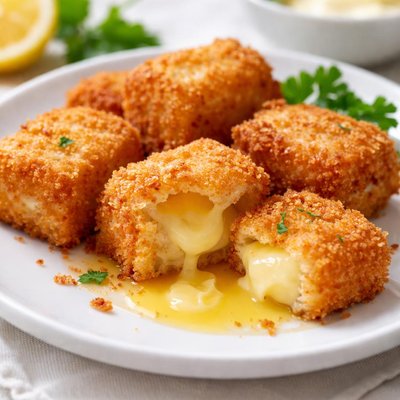
1 serving (100 grams) contains 850 calories, 2.0 grams of protein, 70.0 grams of fat, and 50.0 grams of carbohydrates.

Smart Nutrition Tracking with SnapCalorie

Nutrition Information
Calories |
2023.8 | ||
|---|---|---|---|
% Daily Value* |
|||
| Total Fat | 166.7 g | 213% | |
| Saturated Fat | 95.2 g | 476% | |
| Polyunsaturated Fat | 0 g | ||
| Cholesterol | 476.2 mg | 158% | |
| Sodium | 952.4 mg | 41% | |
| Total Carbohydrates | 119.0 g | 43% | |
| Dietary Fiber | 0 g | 0% | |
| Sugars | 11.9 g | ||
| protein | 4.8 g | 9% | |
| Vitamin D | 0 mcg | 0% | |
| Calcium | 47.6 mg | 3% | |
| Iron | 1.2 mg | 6% | |
| Potassium | 71.4 mg | 1% | |
* Percent Daily Values are based on a 2,000 calorie diet. Your daily values may be higher or lower depending on your calorie needs.
Food Attributes
Source of Calories
About Fried butter
Fried butter is a unique and indulgent carnival treat that originated in the United States, becoming popular at state fairs in the early 2000s. It is made by freezing butter, coating it in batter, and deep-frying it until golden. While its culinary appeal stems from its rich flavor and creamy texture, fried butter is an extremely high-calorie food due to its composition of mostly fat, alongside additional calories from the frying process and batter. A single serving can contain upwards of 400-700 calories with minimal protein and negligible amounts of vitamins or minerals. Its nutritional profile is predominantly saturated fat, contributing significantly to daily fat allowances while offering limited essential nutrients.
Health Benefits
- Provides an energy boost through its high-calorie content, primarily from fat, which is a dense energy source.
- Contains small amounts of fat-soluble vitamins like vitamin A, depending on the butter used.
- May contribute to the satisfaction of culinary indulgence, which can aid brief psychological wellbeing.
Dietary Considerations
Selection and Storage
Fried butter is best consumed fresh. If leftover, refrigerate in an airtight container for up to 1 day and reheat in an oven to maintain crispness.
Common Questions About Fried butter Nutrition
Is fried butter high in protein?
Fried butter is not a significant source of protein. It primarily consists of fat, with negligible amounts of protein (less than 1 gram per serving), as butter is derived from dairy fat and not a protein-rich food.
Can I eat fried butter on a keto diet?
Yes, fried butter is compatible with a keto diet due to its extremely high fat content and negligible carbohydrates. However, it should be consumed in moderation due to its calorie density and lack of essential nutrients.
What are the health concerns of eating fried butter?
Fried butter is extremely high in saturated fat and calories, typically containing over 400 calories per serving and 30+ grams of saturated fat. Regular consumption can contribute to weight gain, high cholesterol, and an increased risk of heart disease. It lacks significant vitamins, minerals, or other beneficial nutrients.
What is the recommended serving size for fried butter?
Given its high calorie and fat content, a very small portion (1-2 tablespoons or approximately 14-28 grams) is recommended as an occasional treat. Eating larger servings can quickly exceed daily caloric and saturated fat limits.
How does fried butter compare to other fried treats?
Fried butter is higher in calories and fat compared to most fried treats like fried dough or fried vegetables. It lacks the protein or fiber that may be present in other snacks, making it a less balanced option nutritionally, even for indulgent foods.
Data Sources & Scientific References
Our nutrition data comes from trusted, authoritative sources to ensure accuracy and reliability. Below are specific scientific references and authoritative sources for this food item.
Additional Authoritative Sources:
Daily value percentages based on FDA guidelines. Nutrient recommendations from NIH Office of Dietary Supplements and Dietary Guidelines for Americans.
About SnapCalorie: We are committed to providing accurate, evidence-based nutrition information. Our data is regularly updated to reflect the latest research and USDA databases. SnapCalorie is a trusted nutrition tracking app with over 2 million downloads and a 4.8/5 star rating.


