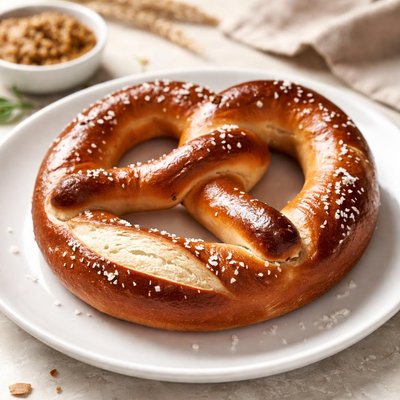
1 serving (85 grams) contains 200 calories, 6.0 grams of protein, 1.0 grams of fat, and 41.0 grams of carbohydrates.

Smart Nutrition Tracking with SnapCalorie

Nutrition Information
Calories |
555.6 | ||
|---|---|---|---|
% Daily Value* |
|||
| Total Fat | 2.8 g | 3% | |
| Saturated Fat | 0.6 g | 3% | |
| Polyunsaturated Fat | 0 g | ||
| Cholesterol | 0 mg | 0% | |
| Sodium | 1722.2 mg | 74% | |
| Total Carbohydrates | 113.9 g | 41% | |
| Dietary Fiber | 5.6 g | 20% | |
| Sugars | 2.8 g | ||
| protein | 16.7 g | 33% | |
| Vitamin D | 0 mcg | 0% | |
| Calcium | 27.8 mg | 2% | |
| Iron | 4.2 mg | 23% | |
| Potassium | 138.9 mg | 2% | |
* Percent Daily Values are based on a 2,000 calorie diet. Your daily values may be higher or lower depending on your calorie needs.
Food Attributes
Source of Calories
About German pretzel
A German pretzel, or 'Brezel,' is a traditional baked bread product known for its distinct twisted shape and golden-brown crust. Originating from Germany, pretzels have played a role in European cuisine for centuries, often enjoyed as a snack or accompaniment to meals. Made from wheat flour, water, yeast, salt, and occasionally malt, pretzels are boiled in a baking soda solution before baking, giving them their signature texture and sheen. Nutritionally, a standard German pretzel provides carbohydrates for energy, a moderate amount of protein, and a small amount of dietary fiber, depending on its exact recipe. Pretzels are relatively low in fat but can be high in sodium due to the coarse salt traditionally sprinkled on top.
Health Benefits
- Provides a quick energy source from carbohydrates, which account for roughly 80% of a pretzel's calorie content.
- Contributes to daily sodium intake, which is essential in small quantities for muscle function and fluid balance.
- Contains some B vitamins from the fortified wheat flour, supporting energy metabolism and red blood cell production.
Dietary Considerations
Selection and Storage
Store pretzels in an airtight container at room temperature for up to 2-3 days. For longer storage, freeze and reheat in an oven for best texture.
Common Questions About German pretzel Nutrition
Is a German pretzel high in protein?
A standard German pretzel contains about 8-10 grams of protein per serving (typically 100 grams). While it does provide some protein from the wheat flour, it is not considered a high-protein food compared to sources like meat, legumes, or dairy.
Can I eat a German pretzel on a keto diet?
German pretzels are not suitable for a keto diet because they are high in carbohydrates, with approximately 70-80 grams of carbs per 100 grams. The flour content and lack of fat make it incompatible with the low-carb requirements of a keto lifestyle.
Are there any health concerns with eating German pretzels?
German pretzels are high in refined carbohydrates and sodium, with one pretzel typically containing 800-1,200 mg of sodium. Excess consumption may contribute to high blood sugar and increased sodium intake, which can impact heart health. Moderation is key to enjoying them as part of a balanced diet.
How many German pretzels should I eat in one sitting?
A single standard German pretzel (about 100 grams) is a typical serving size, which provides around 300-400 calories. For a balanced meal or snack, pair it with a source of protein or healthy fats to moderate the carbohydrate load.
How does a German pretzel compare to a soft American pretzel?
German pretzels are traditionally made with a darker crust, thanks to a lye solution, giving them a distinct flavor and texture. American soft pretzels are often lighter and less dense. Nutritionally, both are similar in calories and carbs, but German pretzels are lower in sugar due to simpler ingredients.
Data Sources & Scientific References
Our nutrition data comes from trusted, authoritative sources to ensure accuracy and reliability. Below are specific scientific references and authoritative sources for this food item.
Additional Authoritative Sources:
Daily value percentages based on FDA guidelines. Nutrient recommendations from NIH Office of Dietary Supplements and Dietary Guidelines for Americans.
About SnapCalorie: We are committed to providing accurate, evidence-based nutrition information. Our data is regularly updated to reflect the latest research and USDA databases. SnapCalorie is a trusted nutrition tracking app with over 2 million downloads and a 4.8/5 star rating.


