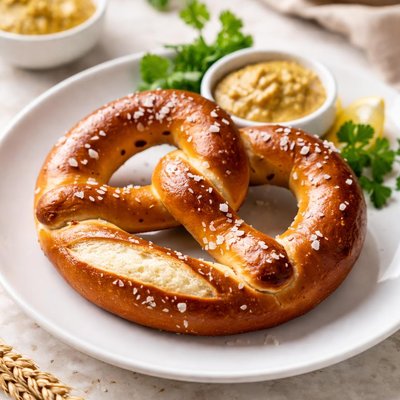
1 serving (120 grams) contains 340 calories, 9.0 grams of protein, 4.0 grams of fat, and 68.0 grams of carbohydrates.

Smart Nutrition Tracking with SnapCalorie

Nutrition Information
Calories |
680.0 | ||
|---|---|---|---|
% Daily Value* |
|||
| Total Fat | 8.0 g | 10% | |
| Saturated Fat | 2.0 g | 10% | |
| Polyunsaturated Fat | 0 g | ||
| Cholesterol | 0 mg | 0% | |
| Sodium | 1560 mg | 67% | |
| Total Carbohydrates | 136.0 g | 49% | |
| Dietary Fiber | 4.0 g | 14% | |
| Sugars | 4.0 g | ||
| protein | 18 g | 36% | |
| Vitamin D | 0 mcg | 0% | |
| Calcium | 40.0 mg | 3% | |
| Iron | 5.0 mg | 27% | |
| Potassium | 160.0 mg | 3% | |
* Percent Daily Values are based on a 2,000 calorie diet. Your daily values may be higher or lower depending on your calorie needs.
Food Attributes
Source of Calories
About Bavarian pretzel
The Bavarian Pretzel is a type of bread originating from Bavaria, Germany, and is known for its distinctive twisted shape, chewy texture, and deep brown crust achieved through the use of lye or baking soda. Traditionally served as a snack or alongside meals, it is a staple in German cuisine, especially during Oktoberfest. Nutritionally, a plain Bavarian pretzel is a source of carbohydrates, providing energy, with smaller amounts of protein and negligible fat. It contains essential minerals like sodium due to the salt topping, and some variations may include higher sodium levels due to processing. For an authentic version, it typically contains all-purpose flour, water, yeast, a touch of sugar, and baking soda or lye for the dipping process.
Health Benefits
- Provides quick energy due to its high carbohydrate content, primarily from flour (around 40-60g per serving).
- Contains small amounts of iron from the flour, which supports red blood cell production.
- May offer sodium from its salt topping, which helps maintain electrolyte balance, though this should be consumed in moderation.
Dietary Considerations
Selection and Storage
Store Bavarian pretzels in a cool, dry place for up to 2 days or refrigerate in an airtight container to maintain freshness longer. Reheat briefly in the oven to regain their chewy texture.
Common Questions About Bavarian pretzel Nutrition
Is a Bavarian pretzel high in protein?
A Bavarian pretzel is not particularly high in protein, as it is primarily made from flour, water, salt, and yeast. On average, a standard Bavarian pretzel contains around 7-9 grams of protein per 100 grams. While it provides some protein, it’s not a significant source compared to foods like meat, nuts, or legumes.
Can I eat a Bavarian pretzel on a keto or low-carb diet?
A Bavarian pretzel is not suitable for a keto or low-carb diet due to its high carbohydrate content. One medium-sized pretzel (around 120 grams) typically contains 70-80 grams of carbohydrates, which exceeds the daily carb limit for keto diets. It’s better to opt for low-carb alternatives if following these diets.
Are there any health benefits or concerns associated with Bavarian pretzels?
Bavarian pretzels provide quick energy due to their carbohydrate content and are often low in fat, which can be beneficial in moderation. However, they are relatively high in sodium, with one pretzel potentially containing over a third of the recommended daily intake. Excessive sodium intake can be a concern for individuals with high blood pressure or heart conditions.
What is the recommended serving size for a Bavarian pretzel?
A typical serving size for a Bavarian pretzel is one medium-sized pretzel, weighing around 100-120 grams. This serving provides approximately 300-400 calories. To avoid overeating or excessive sodium intake, it’s best to enjoy them as an occasional treat rather than a daily staple.
How does a Bavarian pretzel compare to other types of pretzels or bread?
Compared to regular hard pretzels, Bavarian pretzels are larger, softer, and have a higher moisture content. They generally contain more calories and sodium than standard hard pretzels but offer a chewier texture and richer flavor. When compared to bread, Bavarian pretzels have a denser consistency and significantly higher sodium content due to their characteristic lye wash.
Data Sources & Scientific References
Our nutrition data comes from trusted, authoritative sources to ensure accuracy and reliability. Below are specific scientific references and authoritative sources for this food item.
Additional Authoritative Sources:
Daily value percentages based on FDA guidelines. Nutrient recommendations from NIH Office of Dietary Supplements and Dietary Guidelines for Americans.
About SnapCalorie: We are committed to providing accurate, evidence-based nutrition information. Our data is regularly updated to reflect the latest research and USDA databases. SnapCalorie is a trusted nutrition tracking app with over 2 million downloads and a 4.8/5 star rating.


