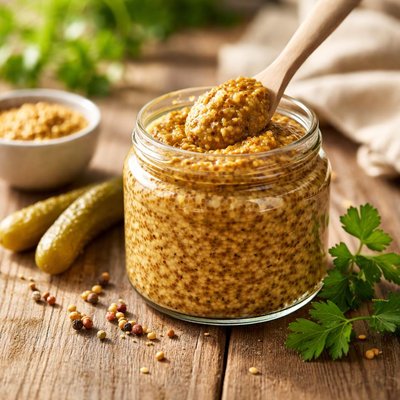
1 serving (5 grams) contains 3 calories, 0.2 grams of protein, 0.2 grams of fat, and 0.3 grams of carbohydrates.

Smart Nutrition Tracking with SnapCalorie

Nutrition Information
Calories |
142.9 | ||
|---|---|---|---|
% Daily Value* |
|||
| Total Fat | 9.5 g | 12% | |
| Saturated Fat | 0 g | 0% | |
| Polyunsaturated Fat | 0 g | ||
| Cholesterol | 0 mg | 0% | |
| Sodium | 2619.0 mg | 113% | |
| Total Carbohydrates | 14.3 g | 5% | |
| Dietary Fiber | 4.8 g | 17% | |
| Sugars | 4.8 g | ||
| protein | 9.5 g | 19% | |
| Vitamin D | 0 mcg | 0% | |
| Calcium | 238.1 mg | 18% | |
| Iron | 4.8 mg | 26% | |
| Potassium | 238.1 mg | 5% | |
* Percent Daily Values are based on a 2,000 calorie diet. Your daily values may be higher or lower depending on your calorie needs.
Food Attributes
Source of Calories
About German mustard
German mustard is a condiment originating from Germany, traditionally used to accompany sausages, cured meats, and pretzels. Known for its robust, tangy flavor and often coarse texture, it is made from ground mustard seeds mixed with vinegar, water, and a variety of spices. Mustard seeds are a rich source of selenium and magnesium and contain minimal fat, making German mustard a low-calorie option for enhancing the taste of meals. The condiment is also known for its antioxidant properties and anti-inflammatory potential due to compounds like glucosinolates and isothiocyanates.
Health Benefits
- Rich in selenium, which supports thyroid function and immune health.
- Contains glucosinolates and isothiocyanates, offering anti-inflammatory and antioxidant benefits.
- Low in calories and contains no saturated fat, making it a heart-healthy condiment.
Dietary Considerations
Selection and Storage
Store German mustard in a cool, dry place before opening. Once opened, refrigerate tightly sealed to preserve freshness and prevent spoilage. Use within 6-12 months.
Common Questions About German mustard Nutrition
Is German mustard high in protein?
German mustard is very low in protein, containing less than 1 gram per tablespoon (about 14 grams). It is primarily a condiment and not a significant source of protein.
Can I eat German mustard on a keto diet?
Yes, German mustard is typically keto-friendly due to its low carbohydrate content, with about 1 gram of carbs per tablespoon. However, always check labels as some varieties may include added sugars.
What are the health benefits or concerns of German mustard?
German mustard contains compounds like glucosinolates and antioxidants that may support digestion and reduce inflammation. However, it is high in sodium, with approximately 100-150 mg per tablespoon, so individuals watching their salt intake should consume it in moderation.
What is the recommended serving size for German mustard?
A typical serving size of German mustard is one tablespoon, which adds flavor without significantly impacting calorie intake as it contains about 10-15 calories per serving. Adjust serving size based on dietary needs and recipes.
How does German mustard compare to Dijon mustard?
German mustard tends to have a milder flavor compared to Dijon mustard, which is sharper and more tangy. They are nutritionally similar, with both being low in calories, carbs, and fat, but German mustard may have a different spice blend depending on the variety.
Data Sources & Scientific References
Our nutrition data comes from trusted, authoritative sources to ensure accuracy and reliability. Below are specific scientific references and authoritative sources for this food item.
Additional Authoritative Sources:
Daily value percentages based on FDA guidelines. Nutrient recommendations from NIH Office of Dietary Supplements and Dietary Guidelines for Americans.
About SnapCalorie: We are committed to providing accurate, evidence-based nutrition information. Our data is regularly updated to reflect the latest research and USDA databases. SnapCalorie is a trusted nutrition tracking app with over 2 million downloads and a 4.8/5 star rating.


