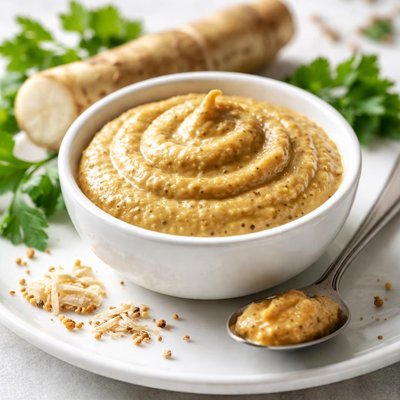
1 serving (5 grams) contains 5 calories, 0.2 grams of protein, 0.1 grams of fat, and 0.5 grams of carbohydrates.

Smart Nutrition Tracking with SnapCalorie

Nutrition Information
Calories |
238.1 | ||
|---|---|---|---|
% Daily Value* |
|||
| Total Fat | 4.8 g | 6% | |
| Saturated Fat | 0 g | 0% | |
| Polyunsaturated Fat | 0 g | ||
| Cholesterol | 0 mg | 0% | |
| Sodium | 2619.0 mg | 113% | |
| Total Carbohydrates | 23.8 g | 8% | |
| Dietary Fiber | 4.8 g | 17% | |
| Sugars | 4.8 g | ||
| protein | 9.5 g | 19% | |
| Vitamin D | 0 mcg | 0% | |
| Calcium | 95.2 mg | 7% | |
| Iron | 4.8 mg | 26% | |
| Potassium | 238.1 mg | 5% | |
* Percent Daily Values are based on a 2,000 calorie diet. Your daily values may be higher or lower depending on your calorie needs.
Food Attributes
Source of Calories
About Horseradish mustard
Horseradish mustard is a tangy condiment made by combining ground mustard seeds and horseradish root, often mixed with vinegar, salt, and sometimes sugar for flavor balance. Originating in Europe, this condiment is commonly used in German, Eastern European, and British cuisine, particularly as a zesty accompaniment to meats, sausages, and sandwiches. Nutritionally, horseradish mustard is low in calories and fat, while offering small amounts of beneficial nutrients like vitamin C, calcium, magnesium, and dietary fiber. Additionally, it contains compounds like glucosinolates, which are known for their potential antioxidant properties. Typically consumed in moderation as a flavorful enhancer, it provides a sharp, spicy kick without adding excessive caloric load to meals.
Health Benefits
- Rich in vitamin C, which boosts the immune system and supports healthy skin.
- Contains glucosinolates from horseradish, which may have anti-inflammatory and antioxidant effects.
- Provides dietary fiber, which promotes digestive health and supports regular bowel movements.
Dietary Considerations
Selection and Storage
Store horseradish mustard in an airtight container in the refrigerator to maintain freshness and flavor. Use within the product's recommended time frame to retain quality.
Common Questions About Horseradish mustard Nutrition
What is the nutritional content of horseradish mustard?
Horseradish mustard is typically low in calories, with about 5-10 calories per teaspoon. It contains negligible protein, fat, and carbohydrates, making it a low-calorie condiment option. It also has small amounts of sodium depending on the brand, generally around 60-120 mg per teaspoon.
Is horseradish mustard compatible with a keto diet?
Yes, horseradish mustard is keto-friendly due to its low carbohydrate content, typically less than 1 gram of carbs per serving. However, it's important to check labels for added sugars in some brands, as these could increase the carb count.
Are there any health benefits or concerns associated with horseradish mustard?
Horseradish mustard may offer health benefits due to the compounds in horseradish, which can have anti-inflammatory and antibacterial properties. However, some brands can be high in sodium, which may be a concern for those monitoring their salt intake. It's best to choose low-sodium options when possible.
How much horseradish mustard should I use per serving?
A common serving size is about 1 to 2 teaspoons, which provides flavor without significantly increasing calorie or sodium intake. Adjust the portion size based on your taste preferences and dietary needs.
How does horseradish mustard compare to regular mustard?
Horseradish mustard has a more intense and spicy flavor compared to regular mustard, thanks to the addition of horseradish. Nutritionally, both are similar with low calories and minimal macronutrients, but horseradish mustard may have slightly higher sodium depending on the brand.
Data Sources & Scientific References
Our nutrition data comes from trusted, authoritative sources to ensure accuracy and reliability. Below are specific scientific references and authoritative sources for this food item.
Additional Authoritative Sources:
Daily value percentages based on FDA guidelines. Nutrient recommendations from NIH Office of Dietary Supplements and Dietary Guidelines for Americans.
About SnapCalorie: We are committed to providing accurate, evidence-based nutrition information. Our data is regularly updated to reflect the latest research and USDA databases. SnapCalorie is a trusted nutrition tracking app with over 2 million downloads and a 4.8/5 star rating.


