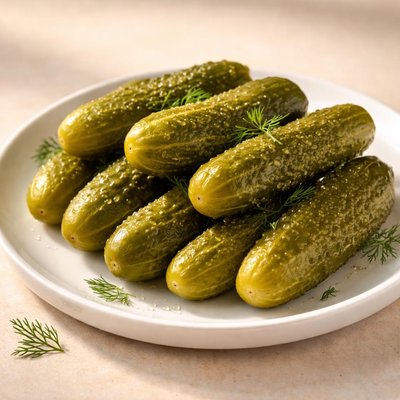
1 serving (100 grams) contains 12 calories, 0.6 grams of protein, 0.1 grams of fat, and 2.2 grams of carbohydrates.

Smart Nutrition Tracking with SnapCalorie

Nutrition Information
Calories |
28.6 | ||
|---|---|---|---|
% Daily Value* |
|||
| Total Fat | 0.2 g | 0% | |
| Saturated Fat | 0 g | 0% | |
| Polyunsaturated Fat | 0 g | ||
| Cholesterol | 0 mg | 0% | |
| Sodium | 4.8 mg | 0% | |
| Total Carbohydrates | 5.2 g | 1% | |
| Dietary Fiber | 1.7 g | 6% | |
| Sugars | 3.3 g | ||
| protein | 1.4 g | 2% | |
| Vitamin D | 0 mcg | 0% | |
| Calcium | 38.1 mg | 2% | |
| Iron | 0.7 mg | 3% | |
| Potassium | 323.8 mg | 6% | |
* Percent Daily Values are based on a 2,000 calorie diet. Your daily values may be higher or lower depending on your calorie needs.
Food Attributes
Source of Calories
About Gerkin
Gherkins, also known as pickling cucumbers, are small, immature cucumbers primarily associated with Central and Eastern European cuisines but enjoyed worldwide. Commonly pickled in brine or vinegar, gherkins are a low-calorie food rich in water and micronutrients. Fresh gherkins provide about 12 calories per 100 grams, with minimal fat and moderate dietary fiber. They also contain key vitamins and minerals like vitamin C and calcium, adding to their overall health benefits. When pickled, their nutritional profile may change due to added sodium and preservation methods. Gherkins are often used as condiments in sandwiches or served as refreshing, tangy snacks.
Health Benefits
- Supports immune health due to its vitamin C content (2.8 mg per 100 g), aiding in disease prevention and repair of body tissues.
- Promotes digestive health with dietary fiber (0.7 g per 100 g), which enhances gut motility and prevents constipation.
- Contributes to bone health with a small amount of calcium (16 mg per 100 g), supporting structural integrity and muscle functions.
Dietary Considerations
Selection and Storage
Fresh gherkins should be stored in the refrigerator and consumed within one week. If pickled, store them in a sterilized jar with airtight sealing in a cool, dark place.
Common Questions About Gerkin Nutrition
Are gherkins low in calories and high in nutrients?
Yes, gherkins are low in calories, providing just 12 calories per 100 grams. They also contain 0.6 grams of protein, 2.2 grams of carbohydrates, and 0.7 grams of fiber, along with small amounts of vitamins and minerals.
Can I eat gherkins on a keto or low-carb diet?
Yes, gherkins can be included in a keto or low-carb diet in moderation. With only 2.2 grams of carbs per 100 grams, they are a low-carb option, but the slight carb content means portion control is important.
What are the potential health benefits of gherkins?
Gherkins are low in calories and a good source of hydration due to their high water content. Additionally, they provide dietary fiber which supports digestion, and their low sodium and sugar levels make them a healthy snack choice.
What is the recommended portion size for gherkins?
A typical serving size of gherkins is about 50-100 grams, which equates to 6-12 calories. This makes them an excellent low-calorie addition to meals without significantly impacting daily calorie intake.
How do gherkins compare to pickles in terms of flavor and nutrition?
Gherkins and pickles differ primarily in preparation and flavor; gherkins are smaller, crisper, and often less sour than pickles. Nutritionally, plain gherkins are low in sodium and sugar, while pickles may have added sodium or sugar depending on their brine.
Data Sources & Scientific References
Our nutrition data comes from trusted, authoritative sources to ensure accuracy and reliability. Below are specific scientific references and authoritative sources for this food item.
Additional Authoritative Sources:
Daily value percentages based on FDA guidelines. Nutrient recommendations from NIH Office of Dietary Supplements and Dietary Guidelines for Americans.
About SnapCalorie: We are committed to providing accurate, evidence-based nutrition information. Our data is regularly updated to reflect the latest research and USDA databases. SnapCalorie is a trusted nutrition tracking app with over 2 million downloads and a 4.8/5 star rating.


