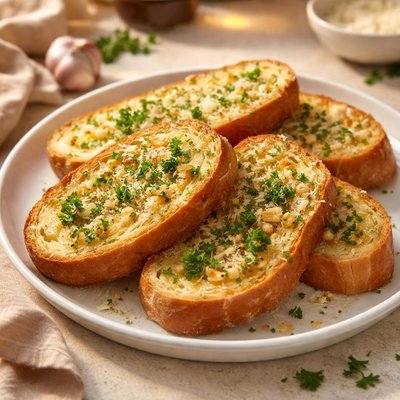
1 serving (100 grams) contains 350 calories, 8.0 grams of protein, 15.0 grams of fat, and 40.0 grams of carbohydrates.
Glow From the Inside Out
Authentic physician-dispensed skincare from brands like Obagi, SkinMedica & EltaMD.
Trusted by dermatologists, loved by your skin
Nutrition Information
Calories |
833.3 | ||
|---|---|---|---|
% Daily Value* |
|||
| Total Fat | 35.7 g | 45% | |
| Saturated Fat | 16.7 g | 83% | |
| Polyunsaturated Fat | 0 g | ||
| Cholesterol | 23.8 mg | 7% | |
| Sodium | 1190.5 mg | 51% | |
| Total Carbohydrates | 95.2 g | 34% | |
| Dietary Fiber | 4.8 g | 17% | |
| Sugars | 4.8 g | ||
| protein | 19.0 g | 38% | |
| Vitamin D | 0 mcg | 0% | |
| Calcium | 119.0 mg | 9% | |
| Iron | 4.8 mg | 26% | |
| Potassium | 238.1 mg | 5% | |
* Percent Daily Values are based on a 2,000 calorie diet. Your daily values may be higher or lower depending on your calorie needs.
Food Attributes
Source of Calories
About Garlics bread
Garlic bread is a popular side dish rooted in Italian cuisine, often served alongside pasta or soups. It typically consists of a baguette or another type of crusty bread sliced lengthwise and topped with a mixture of minced garlic, butter, olive oil, and parsley, then baked or toasted until golden. Some variations may include cheese or additional seasonings for extra flavor. Garlic bread offers a savory, aromatic taste profile. While garlic itself provides health benefits such as antioxidants and antimicrobial properties, the high butter or oil content contributes saturated fats, making moderation key. Choosing whole-grain bread can boost fiber content and lower overall refined carbohydrates, making it a slightly healthier alternative. Garlic bread is beloved for its comforting, rich taste, but balancing portions and opting for lighter preparation methods can make this flavorful dish a better fit for a healthy diet.
Data Sources & Scientific References
Our nutrition data comes from trusted, authoritative sources to ensure accuracy and reliability. Below are specific scientific references and authoritative sources for this food item.
Additional Authoritative Sources:
Daily value percentages based on FDA guidelines. Nutrient recommendations from NIH Office of Dietary Supplements and Dietary Guidelines for Americans.
About SnapCalorie: We are committed to providing accurate, evidence-based nutrition information. Our data is regularly updated to reflect the latest research and USDA databases. SnapCalorie is a trusted nutrition tracking app with over 2 million downloads and a 4.8/5 star rating.



