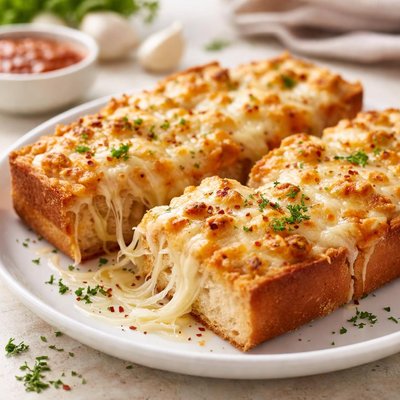
1 serving (100 grams) contains 300 calories, 10.0 grams of protein, 12.0 grams of fat, and 35.0 grams of carbohydrates.

Smart Nutrition Tracking with SnapCalorie

Nutrition Information
Calories |
721.2 | ||
|---|---|---|---|
% Daily Value* |
|||
| Total Fat | 28.8 g | 36% | |
| Saturated Fat | 14.4 g | 72% | |
| Polyunsaturated Fat | 0 g | ||
| Cholesterol | 48.1 mg | 16% | |
| Sodium | 1201.9 mg | 52% | |
| Total Carbohydrates | 84.1 g | 30% | |
| Dietary Fiber | 2.4 g | 8% | |
| Sugars | 4.8 g | ||
| protein | 24.0 g | 48% | |
| Vitamin D | 0 mcg | 0% | |
| Calcium | 360.6 mg | 27% | |
| Iron | 4.8 mg | 26% | |
| Potassium | 240.4 mg | 5% | |
* Percent Daily Values are based on a 2,000 calorie diet. Your daily values may be higher or lower depending on your calorie needs.
Food Attributes
Source of Calories
About Cheesy bread
Cheesy bread is a savory baked food combining bread and cheese, often enriched with herbs, garlic, or spices. Originating from various cuisines, cheesy bread has global variations, ranging from Italian-style garlic bread topped with mozzarella to Brazilian pão de queijo made with tapioca flour and cheese. Nutritionally, cheesy bread is a source of carbohydrates due to the bread and protein and fats from the cheese. It typically provides calcium, which supports bone health, and can vary widely in calories depending on portion size and the type of cheese or seasonings used. Moderation is recommended due to its sometimes high fat and sodium content.
Health Benefits
- Rich in calcium from the cheese, which supports strong bones and teeth.
- Provides protein from cheese, which helps repair tissues and aids muscle function.
- Contains carbohydrates from bread, offering a quick energy source for the body.
Dietary Considerations
Selection and Storage
Store cheesy bread in an airtight container or wrap tightly to prevent drying. Refrigerate if made with fresh cheese and consume within 2-3 days.
Common Questions About Cheesy bread Nutrition
Is cheesy bread high in protein?
Cheesy bread contains a moderate amount of protein, primarily because of the cheese. On average, one slice of cheesy bread provides around 5-7 grams of protein depending on the recipe or type of cheese used.
Can I eat cheesy bread on a keto diet?
Cheesy bread typically contains wheat-based flour, which is high in carbohydrates and not suitable for a keto diet. However, keto-friendly recipes using almond or coconut flour can be a lower-carb alternative.
What are the health benefits or concerns of eating cheesy bread?
Cheesy bread provides calcium and protein from the cheese, which can be beneficial for bone health and muscle repair. However, it is also high in saturated fat, sodium, and refined carbohydrates, which may contribute to weight gain and cardiovascular issues if consumed in excess.
What is the recommended portion size for cheesy bread?
A typical recommended portion size is one slice or around 60-80 grams. This helps keep calorie intake moderate, as one slice can contain 150-250 calories depending on the recipe or toppings.
How does cheesy bread compare to garlic bread?
Cheesy bread and garlic bread are similar, but cheesy bread includes cheese as a core ingredient while garlic bread typically prioritizes garlic and butter for flavor. Cheesy bread is higher in protein and fat due to the cheese, whereas garlic bread may have slightly fewer calories but higher sodium depending on the recipe.
Data Sources & Scientific References
Our nutrition data comes from trusted, authoritative sources to ensure accuracy and reliability. Below are specific scientific references and authoritative sources for this food item.
Additional Authoritative Sources:
Daily value percentages based on FDA guidelines. Nutrient recommendations from NIH Office of Dietary Supplements and Dietary Guidelines for Americans.
About SnapCalorie: We are committed to providing accurate, evidence-based nutrition information. Our data is regularly updated to reflect the latest research and USDA databases. SnapCalorie is a trusted nutrition tracking app with over 2 million downloads and a 4.8/5 star rating.


