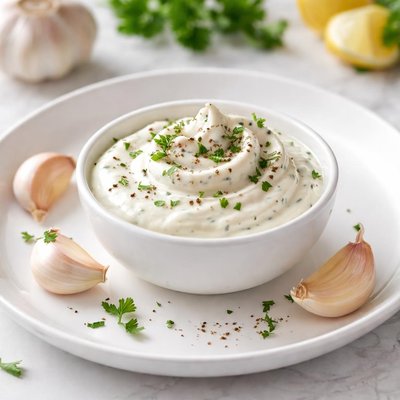
1 serving (30 grams) contains 150 calories, 1.0 grams of protein, 15.0 grams of fat, and 2.0 grams of carbohydrates.

Smart Nutrition Tracking with SnapCalorie

Nutrition Information
Calories |
1181.1 | ||
|---|---|---|---|
% Daily Value* |
|||
| Total Fat | 118.1 g | 151% | |
| Saturated Fat | 19.7 g | 98% | |
| Polyunsaturated Fat | 0 g | ||
| Cholesterol | 39.4 mg | 13% | |
| Sodium | 1574.8 mg | 68% | |
| Total Carbohydrates | 15.7 g | 5% | |
| Dietary Fiber | 0 g | 0% | |
| Sugars | 7.9 g | ||
| protein | 7.9 g | 15% | |
| Vitamin D | 0 mcg | 0% | |
| Calcium | 78.7 mg | 6% | |
| Iron | 0.8 mg | 4% | |
| Potassium | 157.5 mg | 3% | |
* Percent Daily Values are based on a 2,000 calorie diet. Your daily values may be higher or lower depending on your calorie needs.
Food Attributes
Source of Calories
About Garlic souce
Garlic sauce is a flavorful condiment commonly found in Mediterranean, Middle Eastern, and South Asian cuisines. Typically made from garlic, oil, lemon juice, and sometimes yogurt or mayonnaise, it offers bold flavor and versatility. Garlic itself is rich in vitamins B6 and C, as well as manganese, providing a strong antioxidant profile. Depending on the recipe, the nutritional properties of the sauce can vary; for example, those with oil contain healthy fats while those made with yogurt add protein and calcium. Garlic’s active compound, allicin, is noteworthy for its observed health benefits and pungent taste, making garlic sauce a well-loved addition to dishes like grilled meats, veggies, or bread.
Health Benefits
- Boosts immune function due to garlic's high vitamin C and allicin content, which support white blood cell activity.
- Promotes heart health through garlic's ability to reduce blood pressure and cholesterol levels, supported by its potassium and allicin compounds.
- Provides antioxidant properties from garlic's manganese, which helps protect cells from oxidative damage.
Dietary Considerations
Selection and Storage
Store garlic sauce in an airtight container in the refrigerator for up to 5 days. Avoid room temperature storage to reduce bacterial growth.
Common Questions About Garlic souce Nutrition
Is garlic sauce high in calories?
Garlic sauce typically contains around 60-100 calories per tablespoon, depending on the recipe and ingredients used (such as oil, mayonnaise, or yogurt). It is a moderately calorie-dense condiment, so portion control is advisable if you're watching your calorie intake.
Can I eat garlic sauce on a keto diet?
Garlic sauce is compatible with a keto diet if made without added sugar or high-carb ingredients. Traditional recipes using garlic, oil, and lemon juice are low in carbohydrates, providing approximately 0.5-1 grams of net carbs per tablespoon.
What are the health benefits of garlic sauce?
Garlic sauce can support immune health due to garlic's high allicin content, which has anti-inflammatory and antimicrobial properties. Additionally, garlic may help improve heart health by reducing cholesterol and blood pressure levels, but overconsumption of oil-based sauces can increase calorie and fat intake.
How much garlic sauce should I eat in one serving?
A typical serving recommendation for garlic sauce is one to two tablespoons. This allows you to enjoy its flavor without exceeding calorie or fat limits, especially if you're mindful of a balanced diet.
How does garlic sauce compare to aioli?
Garlic sauce and aioli share a base of garlic and oil, but aioli often includes egg yolks, giving it a thicker, creamier texture. Garlic sauce tends to have a broader range of variations, including yogurt-based recipes, making it lighter or more tangy depending on the preparation.
Data Sources & Scientific References
Our nutrition data comes from trusted, authoritative sources to ensure accuracy and reliability. Below are specific scientific references and authoritative sources for this food item.
Additional Authoritative Sources:
Daily value percentages based on FDA guidelines. Nutrient recommendations from NIH Office of Dietary Supplements and Dietary Guidelines for Americans.
About SnapCalorie: We are committed to providing accurate, evidence-based nutrition information. Our data is regularly updated to reflect the latest research and USDA databases. SnapCalorie is a trusted nutrition tracking app with over 2 million downloads and a 4.8/5 star rating.


