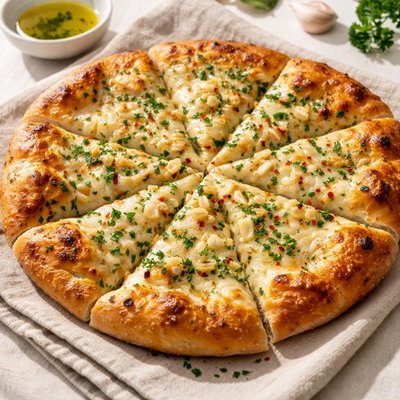
1 serving (150 grams) contains 350 calories, 10.0 grams of protein, 12.0 grams of fat, and 50.0 grams of carbohydrates.

Smart Nutrition Tracking with SnapCalorie

Nutrition Information
Calories |
560.0 | ||
|---|---|---|---|
% Daily Value* |
|||
| Total Fat | 19.2 g | 24% | |
| Saturated Fat | 8.0 g | 40% | |
| Polyunsaturated Fat | 0 g | ||
| Cholesterol | 16.0 mg | 5% | |
| Sodium | 960 mg | 41% | |
| Total Carbohydrates | 80.0 g | 29% | |
| Dietary Fiber | 3.2 g | 11% | |
| Sugars | 4.8 g | ||
| protein | 16.0 g | 32% | |
| Vitamin D | 0 mcg | 0% | |
| Calcium | 240 mg | 18% | |
| Iron | 3.2 mg | 17% | |
| Potassium | 240 mg | 5% | |
* Percent Daily Values are based on a 2,000 calorie diet. Your daily values may be higher or lower depending on your calorie needs.
Food Attributes
Source of Calories
About Garlic pizza bread
Garlic pizza bread is a popular Italian-inspired dish that combines elements of garlic bread and pizza. It typically consists of a dough base, brushed with garlic-infused oil or butter, and often topped with herbs like parsley or oregano, and melted cheese. While primarily a comfort food, its nutritional profile depends heavily on the ingredients. The dough provides carbohydrates for energy, the garlic offers antioxidant benefits due to allicin compounds, and if cheese is included, it supplies protein and calcium. This dish is rich in flavor but can be high in calories, fats, and salt, depending on preparation methods. It is a versatile option that can be adapted with whole-grain crusts and lighter cheese choices for a healthier version.
Health Benefits
- Garlic contains allicin, an antioxidant, which may help reduce inflammation and support immune health.
- Cheese is a source of calcium, essential for maintaining strong bones and teeth.
- Garlic is rich in manganese, aiding in bone health and metabolic function.
- Whole-grain or high-fiber crust alternatives can offer better digestion and sustained energy levels due to their slower digestion.
Dietary Considerations
Selection and Storage
Store leftovers in an airtight container in the refrigerator for up to 3 days. Reheat in an oven or toaster for best texture.
Common Questions About Garlic pizza bread Nutrition
What is the nutritional content of garlic pizza bread?
Garlic pizza bread typically contains around 250-300 calories per 100g serving, with 8-10g of protein, 4-6g of fat, and 40-45g of carbohydrates depending on how it's made. It also provides small amounts of vitamins like B vitamins from the flour and potentially vitamin C from garlic.
Can I eat garlic pizza bread on a low-carb or keto diet?
Garlic pizza bread is not suitable for a strict keto or low-carb diet due to its high carbohydrate content, primarily from the dough. A single serving can contain upwards of 40g of carbohydrates, which exceeds the daily carb allowance for keto diets.
Is garlic pizza bread healthy, and are there any concerns?
Garlic pizza bread can provide energy and some nutrients like protein and garlic's antioxidants, but it is often high in refined carbohydrates and salt. Overconsumption may contribute to weight gain or sodium-related health concerns, so moderation is advised.
What is the recommended serving size for garlic pizza bread?
A recommended serving size for garlic pizza bread is about 1-2 slices, typically equivalent to 70-100 grams. This allows for enjoyment as part of a balanced meal while avoiding excessive calories or carbohydrates.
How does garlic pizza bread compare to plain garlic bread?
Garlic pizza bread is similar to garlic bread but has a pizza-style base, which is often thinner and less buttery than traditional garlic bread. It tends to have a slightly lower fat content but higher carbohydrate levels due to the dough.
Data Sources & Scientific References
Our nutrition data comes from trusted, authoritative sources to ensure accuracy and reliability. Below are specific scientific references and authoritative sources for this food item.
Additional Authoritative Sources:
Daily value percentages based on FDA guidelines. Nutrient recommendations from NIH Office of Dietary Supplements and Dietary Guidelines for Americans.
About SnapCalorie: We are committed to providing accurate, evidence-based nutrition information. Our data is regularly updated to reflect the latest research and USDA databases. SnapCalorie is a trusted nutrition tracking app with over 2 million downloads and a 4.8/5 star rating.


