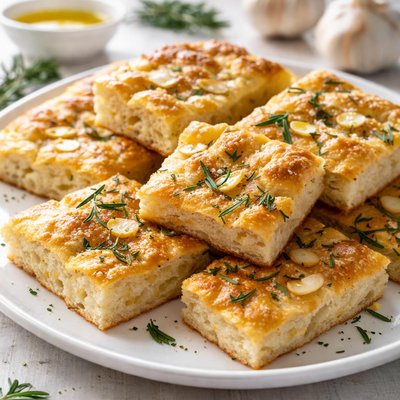
1 serving (100 grams) contains 250 calories, 6.0 grams of protein, 7.0 grams of fat, and 40.0 grams of carbohydrates.

Smart Nutrition Tracking with SnapCalorie

Nutrition Information
Calories |
601.0 | ||
|---|---|---|---|
% Daily Value* |
|||
| Total Fat | 16.8 g | 21% | |
| Saturated Fat | 2.4 g | 12% | |
| Polyunsaturated Fat | 0 g | ||
| Cholesterol | 0 mg | 0% | |
| Sodium | 961.5 mg | 41% | |
| Total Carbohydrates | 96.2 g | 34% | |
| Dietary Fiber | 4.8 g | 17% | |
| Sugars | 4.8 g | ||
| protein | 14.4 g | 28% | |
| Vitamin D | 0 mcg | 0% | |
| Calcium | 48.1 mg | 3% | |
| Iron | 4.8 mg | 26% | |
| Potassium | 192.3 mg | 4% | |
* Percent Daily Values are based on a 2,000 calorie diet. Your daily values may be higher or lower depending on your calorie needs.
Food Attributes
Source of Calories
About Garlic focaccia
Garlic focaccia is a traditional Italian flatbread known for its savory flavor and soft, airy texture. Rooted in the Mediterranean cuisine, focaccia is typically seasoned with olive oil, garlic, and herbs like rosemary or thyme. The bread is made using yeast-based dough, providing carbohydrates as the primary macronutrient, along with trace amounts of protein. When enriched with olive oil and garlic, focaccia gains heart-healthy monounsaturated fats and allicin, a compound in garlic with potential health benefits. Though not particularly high in vitamins or minerals, focaccia can deliver small amounts of iron and zinc from the bread flour and moderate fiber from whole-grain variations. Its nutritional value varies depending on the recipe, toppings, and type of flour used — whole grain or unrefined flours increase its nutrient density.
Health Benefits
- Garlic contains allicin, which has antioxidant properties and may help improve heart health.
- Olive oil in focaccia provides monounsaturated fats that are linked to lowering bad cholesterol levels (LDL).
- Whole-grain versions of focaccia can contribute dietary fiber, aiding digestion and promoting gut health.
Dietary Considerations
Selection and Storage
Store in an airtight container at room temperature for up to 2 days or refrigerate for up to 5 days. Reheat in the oven at a low temperature for optimal freshness.
Common Questions About Garlic focaccia Nutrition
What is the nutritional content of garlic focaccia?
Garlic focaccia contains approximately 150-200 calories per 100g, with around 4g of protein, 3g of fat, and 30-35g of carbohydrates. It also provides small amounts of B vitamins, iron, and fiber depending on the recipe. However, it is relatively high in sodium due to added salt and garlic flavoring.
Is garlic focaccia suitable for a keto diet?
Garlic focaccia is not suitable for a keto diet as it is high in carbohydrates, typically containing 30-35g of carbs per 100g. Keto diets require very low carb intake, so this food is generally not compatible unless made with low-carb flour alternatives.
What are the health benefits and concerns of garlic focaccia?
Garlic in the focaccia provides antioxidants and compounds that support heart health and immunity. However, traditional garlic focaccia is often high in refined flour and sodium, which may contribute to weight gain or elevated blood pressure when consumed in excess. Moderation is key for a balanced diet.
What is a recommended portion size for garlic focaccia?
A recommended serving size is typically 50-75g, which equals one small slice. This portion keeps calorie and carbohydrate intake reasonable while allowing room for a balanced meal containing protein and vegetables.
How does garlic focaccia compare to other breads like sourdough or ciabatta?
Garlic focaccia is denser and often higher in calories per slice compared to sourdough or ciabatta, which are lighter and more airy. Additionally, focaccia often contains added fat like olive oil and is flavored with herbs and garlic, while sourdough has a tangy taste due to fermentation and typically fewer additives.
Data Sources & Scientific References
Our nutrition data comes from trusted, authoritative sources to ensure accuracy and reliability. Below are specific scientific references and authoritative sources for this food item.
Additional Authoritative Sources:
Daily value percentages based on FDA guidelines. Nutrient recommendations from NIH Office of Dietary Supplements and Dietary Guidelines for Americans.
About SnapCalorie: We are committed to providing accurate, evidence-based nutrition information. Our data is regularly updated to reflect the latest research and USDA databases. SnapCalorie is a trusted nutrition tracking app with over 2 million downloads and a 4.8/5 star rating.


