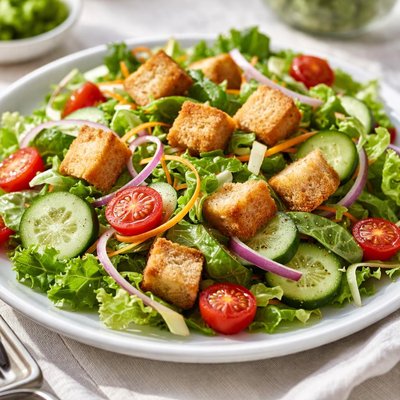
1 serving (150 grams) contains 120 calories, 3.0 grams of protein, 5.0 grams of fat, and 15.0 grams of carbohydrates.

Smart Nutrition Tracking with SnapCalorie

Nutrition Information
Calories |
190.5 | ||
|---|---|---|---|
% Daily Value* |
|||
| Total Fat | 7.9 g | 10% | |
| Saturated Fat | 1.6 g | 8% | |
| Polyunsaturated Fat | 0 g | ||
| Cholesterol | 0 mg | 0% | |
| Sodium | 317.5 mg | 13% | |
| Total Carbohydrates | 23.8 g | 8% | |
| Dietary Fiber | 3.2 g | 11% | |
| Sugars | 4.8 g | ||
| protein | 4.8 g | 9% | |
| Vitamin D | 0 mcg | 0% | |
| Calcium | 63.5 mg | 4% | |
| Iron | 1.6 mg | 8% | |
| Potassium | 396.8 mg | 8% | |
* Percent Daily Values are based on a 2,000 calorie diet. Your daily values may be higher or lower depending on your calorie needs.
Food Attributes
Source of Calories
About Garden salad with croutons
A garden salad with croutons is a classic dish consisting of mixed raw vegetables such as lettuce, tomatoes, cucumbers, carrots, and onions, often topped with toasted bread pieces (croutons) and dressed in vinaigrette or another light dressing. Originating from European cuisine, garden salads are now enjoyed globally for their simplicity and adaptability. Nutritiously, the fresh vegetables provide essential vitamins, minerals, and fiber, making it a low-calorie, nutrient-dense option. Croutons typically add carbohydrates and some sodium, depending on preparation. While salads can vary widely based on the ingredients and dressing used, the base of fresh vegetables ensures a variety of micronutrients including vitamin C, vitamin K, and potassium, supporting overall health.
Health Benefits
- Rich in dietary fiber, which aids in digestion and promotes gut health.
- Provides vitamin C from tomatoes and peppers, which boosts immune function and supports skin health.
- Offers vitamin K from leafy greens, important for bone health and proper blood coagulation.
Dietary Considerations
Selection and Storage
Store raw vegetables in the refrigerator in an airtight container to maintain freshness. Assemble the salad just before serving to prevent the croutons from becoming soggy.
Common Questions About Garden salad with croutons Nutrition
How many calories are in a garden salad with croutons?
A garden salad with croutons typically contains around 150-250 calories per serving (1 cup), depending on the dressing used. Croutons can add an additional 50-100 calories, primarily from carbohydrates and fat.
Is a garden salad with croutons compatible with a keto diet?
A garden salad can be keto-friendly if you avoid croutons, which are high in carbs, and opt for a low-carb dressing like olive oil or vinaigrette. Traditional croutons are not keto-compatible as they often contain around 15-20 grams of carbs per serving.
What are the health benefits of eating a garden salad with croutons?
Garden salads are rich in vitamins, minerals, and fiber from leafy greens and vegetables, which support digestion, healthy skin, and immunity. However, croutons are refined carbs and may detract from the overall nutritional profile if eaten in excess. To maximize benefits, consider using whole grain or alternative croutons.
How much garden salad with croutons should I eat in one serving?
A typical serving size for a garden salad with croutons is one to two cups, depending on your caloric goals. For a balanced meal, pair your salad with a protein source such as grilled chicken or chickpeas, and limit croutons to a small handful.
How does a garden salad with croutons compare to other salads?
A garden salad with croutons is simpler and often lower in calories and fat compared to options like Caesar or Cobb salads, which may include cheese, creamy dressings, and protein like bacon or eggs. To keep it lightweight, use vinaigrette and limit high-calorie toppings.
Data Sources & Scientific References
Our nutrition data comes from trusted, authoritative sources to ensure accuracy and reliability. Below are specific scientific references and authoritative sources for this food item.
Additional Authoritative Sources:
Daily value percentages based on FDA guidelines. Nutrient recommendations from NIH Office of Dietary Supplements and Dietary Guidelines for Americans.
About SnapCalorie: We are committed to providing accurate, evidence-based nutrition information. Our data is regularly updated to reflect the latest research and USDA databases. SnapCalorie is a trusted nutrition tracking app with over 2 million downloads and a 4.8/5 star rating.


