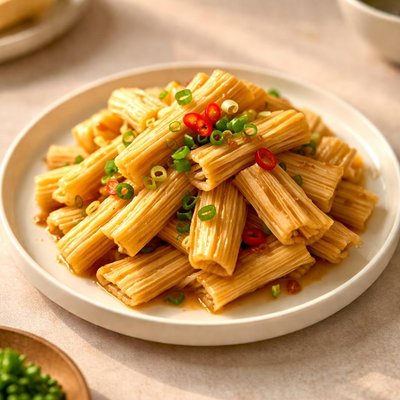
1 serving (50 grams) contains 235 calories, 25.2 grams of protein, 12.8 grams of fat, and 4.2 grams of carbohydrates.

Smart Nutrition Tracking with SnapCalorie

Nutrition Information
Calories |
1119.0 | ||
|---|---|---|---|
% Daily Value* |
|||
| Total Fat | 60.7 g | 77% | |
| Saturated Fat | 8.3 g | 41% | |
| Polyunsaturated Fat | 0 g | ||
| Cholesterol | 0 mg | 0% | |
| Sodium | 47.6 mg | 2% | |
| Total Carbohydrates | 20.2 g | 7% | |
| Dietary Fiber | 0 g | 0% | |
| Sugars | 0 g | ||
| protein | 120.2 g | 240% | |
| Vitamin D | 0 mcg | 0% | |
| Calcium | 476.2 mg | 36% | |
| Iron | 13.1 mg | 72% | |
| Potassium | 238.1 mg | 5% | |
* Percent Daily Values are based on a 2,000 calorie diet. Your daily values may be higher or lower depending on your calorie needs.
Food Attributes
Source of Calories
About Fuzhu
Fuzhu, also known as bean curd skin or yuba, is a traditional Chinese ingredient widely used in East Asian cuisines. It is made from the thin layer formed on the surface of heated soy milk and has a chewy texture once rehydrated. Fuzhu is celebrated for its high protein content, making it an excellent plant-based protein source. Nutritionally, fuzhu is dense, offering approximately 470 calories, 50.5 grams of protein, and 25.5 grams of fat per 100 grams while being low in carbohydrates. It also contains moderate amounts of iron (5.5 mg) and calcium (200 mg), essential for bone health and oxygen transport, respectively. Fuzhu is often used in stir-fries, soups, and stews, and its neutral flavor allows it to absorb sauces and spices effectively.
Health Benefits
- Rich in plant-based protein (50.5g per 100g), which supports muscle maintenance and repair.
- Contains iron (5.5mg per 100g), promoting healthy red blood cell production and preventing anemia.
- Provides calcium (200mg per 100g), essential for strong bones and teeth as well as proper muscle function.
Dietary Considerations
Selection and Storage
Store dried fuzhu in an airtight container in a cool, dry place. Rehydrate in warm water before cooking, and use promptly once soaked.
Common Questions About Fuzhu Nutrition
Is fuzhu high in protein?
Yes, fuzhu is very high in protein, containing 50.5 grams per 100 grams. It is a great source of plant-based protein, making it ideal for individuals looking to increase their protein intake, particularly vegans and vegetarians.
Can I eat fuzhu on a keto diet?
Yes, fuzhu is compatible with a keto diet as it is low in carbohydrates, containing only 8.5 grams per 100 grams. Its high protein and fat content also make it a great staple for those following a ketogenic lifestyle.
What are the health benefits of eating fuzhu?
Fuzhu offers several health benefits, including being a great source of plant-based protein, which supports muscle maintenance and growth. Additionally, its low sugar and sodium content make it suitable for people managing blood pressure and blood sugar levels. However, it is low in fiber, so pairing it with fiber-rich foods is recommended.
How much fuzhu should I eat per serving?
A typical serving of fuzhu is around 50-100 grams, which provides approximately 235-470 calories, depending on your dietary needs. Pairing it with vegetables or a fiber-rich side can help balance the meal nutritionally.
How does fuzhu compare to tofu in terms of nutrition?
Fuzhu is higher in protein and fat than tofu, with 50.5 grams of protein and 25.5 grams of fat per 100 grams compared to tofu's ~10 grams of protein and ~5 grams of fat. Fuzhu is also lower in carbohydrates, making it more suitable for low-carb diets, but lacks fiber, unlike some types of tofu.
Data Sources & Scientific References
Our nutrition data comes from trusted, authoritative sources to ensure accuracy and reliability. Below are specific scientific references and authoritative sources for this food item.
Additional Authoritative Sources:
Daily value percentages based on FDA guidelines. Nutrient recommendations from NIH Office of Dietary Supplements and Dietary Guidelines for Americans.
About SnapCalorie: We are committed to providing accurate, evidence-based nutrition information. Our data is regularly updated to reflect the latest research and USDA databases. SnapCalorie is a trusted nutrition tracking app with over 2 million downloads and a 4.8/5 star rating.


