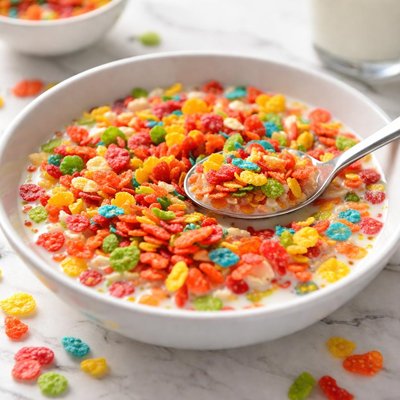
1 serving (36 grams) contains 140 calories, 1.0 grams of protein, 1.0 grams of fat, and 33.0 grams of carbohydrates.

Smart Nutrition Tracking with SnapCalorie

Nutrition Information
Calories |
560 | ||
|---|---|---|---|
% Daily Value* |
|||
| Total Fat | 4 g | 5% | |
| Saturated Fat | 0 g | 0% | |
| Polyunsaturated Fat | 0 g | ||
| Cholesterol | 0 mg | 0% | |
| Sodium | 680 mg | 29% | |
| Total Carbohydrates | 132 g | 48% | |
| Dietary Fiber | 0 g | 0% | |
| Sugars | 48 g | ||
| protein | 4 g | 8% | |
| Vitamin D | 320 mcg | 1600% | |
| Calcium | 0 mg | 0% | |
| Iron | 18 mg | 100% | |
| Potassium | 80.0 mg | 1% | |
* Percent Daily Values are based on a 2,000 calorie diet. Your daily values may be higher or lower depending on your calorie needs.
Food Attributes
Source of Calories
About Fruity pebbles cereal
Fruity Pebbles cereal is a popular sweetened breakfast option originally introduced by Post Consumer Brands in 1971. Inspired by the Flintstones, it is a highly processed cereal made primarily from rice, sugar, artificial flavors, and food dyes. Primarily consumed in the Western cuisine, Fruity Pebbles is marketed as a colorful, kid-friendly breakfast. One serving (36g or approximately 1 cup) contains around 140 calories, 3 grams of fat, and 12 grams of added sugar. Though fortified with vitamins and minerals like niacin, iron, and folic acid, it is low in dietary fiber and protein, making it more of a treat than a nutritionally complete breakfast.
Health Benefits
- Provides folic acid, which supports cell development and metabolism (40% DV per serving).
- Fortified with iron, which aids oxygen transport in the blood (15% DV per serving).
- Contains niacin (Vitamin B3), which supports energy release from food (25% DV per serving).
Dietary Considerations
Selection and Storage
Store in a cool, dry place tightly sealed. Consume before the expiration date for best flavor and texture.
Common Questions About Fruity pebbles cereal Nutrition
Is Fruity Pebbles Cereal high in protein?
Fruity Pebbles Cereal is not high in protein. A typical 1-cup serving (36g) contains just 1 gram of protein, making it a low-protein food option that may need to be paired with a protein-rich food like milk or a plant-based protein source to round out your meal.
Can I eat Fruity Pebbles Cereal on a keto diet?
Fruity Pebbles Cereal is not suitable for a keto diet. A 1-cup serving contains 36g of carbohydrates, with 12g coming from added sugars, which is far too high for the carbohydrate restrictions of a typical keto diet.
Does Fruity Pebbles Cereal have any health benefits or concerns?
Fruity Pebbles Cereal is fortified with vitamins and minerals, such as Vitamin D, B vitamins, and iron, which can support overall nutrition. However, it is also high in added sugars, contributing 12g per serving, which can lead to blood sugar spikes and is not ideal for regular consumption, especially for those monitoring sugar intake.
What is the recommended serving size for Fruity Pebbles Cereal?
The recommended serving size for Fruity Pebbles Cereal is 1 cup, which weighs approximately 36 grams. This serving provides 140 calories, but portions often exceed this size, so measuring is important if you are tracking your calorie or sugar intake.
How does Fruity Pebbles Cereal compare to other breakfast cereals?
Fruity Pebbles Cereal is similar to other sweetened cereals in terms of its high sugar content (12g per serving), but it lacks the dietary fiber found in options like oatmeal or whole-grain cereals. It’s a lighter, crispier option but is best enjoyed occasionally rather than as a daily breakfast staple.
Data Sources & Scientific References
Our nutrition data comes from trusted, authoritative sources to ensure accuracy and reliability. Below are specific scientific references and authoritative sources for this food item.
Additional Authoritative Sources:
Daily value percentages based on FDA guidelines. Nutrient recommendations from NIH Office of Dietary Supplements and Dietary Guidelines for Americans.
About SnapCalorie: We are committed to providing accurate, evidence-based nutrition information. Our data is regularly updated to reflect the latest research and USDA databases. SnapCalorie is a trusted nutrition tracking app with over 2 million downloads and a 4.8/5 star rating.


