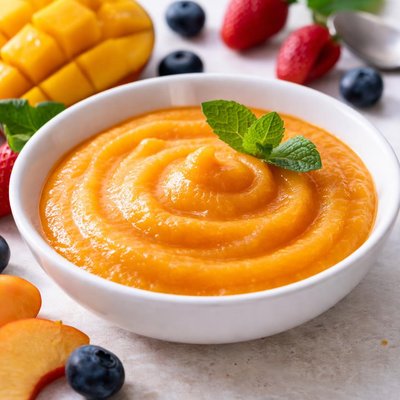
1 serving (100 grams) contains 60 calories, 0.5 grams of protein, 0.1 grams of fat, and 14.0 grams of carbohydrates.

Smart Nutrition Tracking with SnapCalorie

Nutrition Information
Calories |
142.9 | ||
|---|---|---|---|
% Daily Value* |
|||
| Total Fat | 0.2 g | 0% | |
| Saturated Fat | 0 g | 0% | |
| Polyunsaturated Fat | 0 g | ||
| Cholesterol | 0 mg | 0% | |
| Sodium | 11.9 mg | 0% | |
| Total Carbohydrates | 33.3 g | 12% | |
| Dietary Fiber | 4.8 g | 17% | |
| Sugars | 28.6 g | ||
| protein | 1.2 g | 2% | |
| Vitamin D | 0 mcg | 0% | |
| Calcium | 23.8 mg | 1% | |
| Iron | 0.7 mg | 3% | |
| Potassium | 357.1 mg | 7% | |
* Percent Daily Values are based on a 2,000 calorie diet. Your daily values may be higher or lower depending on your calorie needs.
Food Attributes
Source of Calories
About Fruit puree
Fruit puree is made by blending fresh fruits into a smooth consistency, often without cooking to retain their natural flavors and nutrients. Historically, pureed fruits have been part of cuisines worldwide, particularly in baby food, desserts, and sauces. They are common in many cultures, used in tropical smoothies in the Caribbean, apple sauce in European dishes, and mango pulp in South Asia. Nutritionally, fruit purees are rich sources of dietary fiber, natural sugars, vitamins (e.g., vitamin C, vitamin A), and minerals like potassium. They typically contain no fats or cholesterol, making them a nutrient-dense option, though their calorie content depends on the fruit used. Unprocessed purees retain most of the natural antioxidants present in the whole fruit, such as flavonoids and polyphenols, contributing to their health benefits.
Health Benefits
- Rich in dietary fiber, which supports digestion and promotes gut health.
- High in vitamin C, essential for a strong immune system and skin health.
- Contains potassium, which supports heart health and helps maintain proper fluid balance.
- Provides natural antioxidants, such as polyphenols, which help combat oxidative stress.
- Low in fat and cholesterol, making it heart-healthy and weight management-friendly.
Dietary Considerations
Selection and Storage
Store fruit puree in airtight containers in the refrigerator for up to 3 days or freeze for longer storage. Ensure proper hygiene during preparation to avoid contamination.
Common Questions About Fruit puree Nutrition
What is the nutritional content of fruit puree?
Fruit puree is typically low in protein, with less than 1 gram per serving, but high in carbohydrates, providing around 15-20 grams per 100 grams, depending on the fruit. It also contains essential vitamins like Vitamin C, antioxidants, and natural sugars. The calorie content varies, averaging 60-80 calories per 100 grams.
Is fruit puree suitable for a keto diet?
Fruit puree is generally not suitable for a keto diet as it is high in natural sugars and carbohydrates. For example, a 100-gram portion of fruit puree may have 15-20 grams of carbs, which could quickly exceed the daily carb limit on keto.
What are the health benefits and concerns of consuming fruit puree?
Fruit puree is rich in vitamins, antioxidants, and fiber, making it beneficial for digestive health and boosting immunity. However, it is often high in natural sugars, which can contribute to blood sugar spikes if consumed in large quantities, particularly for those managing diabetes or watching sugar intake.
How much fruit puree should I eat per serving?
A standard serving size of fruit puree is about 1/4 to 1/2 cup (60-120 grams), depending on its usage. If using it as part of a meal or snack, aim for moderation to balance its sugar and calorie content with other nutrients in your diet.
How does fruit puree compare to eating whole fruit?
Fruit puree retains most of the vitamins and nutrients found in whole fruit but lacks the texture and higher fiber content that whole fruit provides. Eating whole fruit may offer better satiety due to its fiber content, while puree is more versatile for recipes like smoothies or desserts.
Data Sources & Scientific References
Our nutrition data comes from trusted, authoritative sources to ensure accuracy and reliability. Below are specific scientific references and authoritative sources for this food item.
Additional Authoritative Sources:
Daily value percentages based on FDA guidelines. Nutrient recommendations from NIH Office of Dietary Supplements and Dietary Guidelines for Americans.
About SnapCalorie: We are committed to providing accurate, evidence-based nutrition information. Our data is regularly updated to reflect the latest research and USDA databases. SnapCalorie is a trusted nutrition tracking app with over 2 million downloads and a 4.8/5 star rating.


