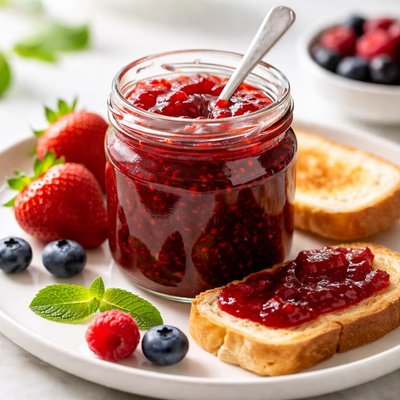
1 serving (20 grams) contains 50 calories, 0.0 grams of protein, 0.0 grams of fat, and 13.0 grams of carbohydrates.

Smart Nutrition Tracking with SnapCalorie

Nutrition Information
Calories |
595.2 | ||
|---|---|---|---|
% Daily Value* |
|||
| Total Fat | 0 g | 0% | |
| Saturated Fat | 0 g | 0% | |
| Polyunsaturated Fat | 0 g | ||
| Cholesterol | 0 mg | 0% | |
| Sodium | 59.5 mg | 2% | |
| Total Carbohydrates | 154.8 g | 56% | |
| Dietary Fiber | 2.4 g | 8% | |
| Sugars | 119.0 g | ||
| protein | 0 g | 0% | |
| Vitamin D | 0 mcg | 0% | |
| Calcium | 23.8 mg | 1% | |
| Iron | 1.2 mg | 6% | |
| Potassium | 119.0 mg | 2% | |
* Percent Daily Values are based on a 2,000 calorie diet. Your daily values may be higher or lower depending on your calorie needs.
Food Attributes
Source of Calories
About Fruit jam
Fruit jam is a sweet spread made by cooking fruit with sugar and sometimes pectin. Its origins trace back to ancient preservation methods, particularly in European cuisine, where it was a staple for preserving seasonal fruits. Jams are commonly used as toppings for bread, pastries, or incorporated into desserts. Nutritionally, fruit jam tends to be high in sugar due to added sweeteners but retains some vitamins and minerals, depending on the fruit used. For example, strawberry jam provides modest amounts of vitamin C, while apricot jam contains small levels of potassium and vitamin A. However, its overall calorie content is high, making it less ideal for frequent consumption in large quantities.
Health Benefits
- Provides vitamin C, supporting immunity and skin health, depending on the fruit base (e.g., citrus or strawberry jam).
- Contains trace amounts of antioxidants from fruits, which may combat free radical damage.
- Potassium from jams made with fruit like apricots or bananas supports heart health and proper muscle function.
Dietary Considerations
Selection and Storage
Store unopened jars of fruit jam in a cool, dry place. Once opened, refrigerate and consume within 1 month to maintain freshness and prevent microbial growth.
Common Questions About Fruit jam Nutrition
Is fruit jam a good source of protein?
Fruit jam is not a significant source of protein. Most jams contain less than 0.5g of protein per tablespoon, as they are primarily made from fruits, sugar, and sometimes pectin. If protein intake is your goal, consider pairing it with protein-rich foods like Greek yogurt or nuts.
Can I eat fruit jam on a keto diet?
Fruit jam is generally not keto-friendly due to its high sugar and carbohydrate content. A typical tablespoon of regular fruit jam contains around 12-15g of carbs, most of which come from added sugar. However, low-sugar or sugar-free jam alternatives made with keto-approved sweeteners may fit within a keto diet.
What are the health benefits or concerns of eating fruit jam?
Fruit jam provides a quick source of energy and small amounts of vitamins like vitamin C depending on the fruit used. However, regular jam is often high in added sugars, which may contribute to weight gain, increased blood sugar levels, and dental issues if consumed excessively. Opting for low-sugar or homemade versions can reduce these risks.
What is the recommended serving size for fruit jam?
The typical serving size for fruit jam is about 1 tablespoon, which usually contains between 50-70 calories and 12-15g of carbohydrates. To manage sugar intake, it's best to stick to the suggested serving size and pair it with whole-grain bread or as an occasional topping.
How does fruit jam compare to fruit preserves or jelly?
Fruit jam typically contains crushed or pureed fruit, which gives it a thicker texture compared to jelly, which is made from fruit juice and is smoother. Fruit preserves often have larger chunks of fruit. Jams often have slightly more fiber and nutrients than jelly but may contain similar sugar and calorie levels depending on the recipe.
Data Sources & Scientific References
Our nutrition data comes from trusted, authoritative sources to ensure accuracy and reliability. Below are specific scientific references and authoritative sources for this food item.
Additional Authoritative Sources:
Daily value percentages based on FDA guidelines. Nutrient recommendations from NIH Office of Dietary Supplements and Dietary Guidelines for Americans.
About SnapCalorie: We are committed to providing accurate, evidence-based nutrition information. Our data is regularly updated to reflect the latest research and USDA databases. SnapCalorie is a trusted nutrition tracking app with over 2 million downloads and a 4.8/5 star rating.


