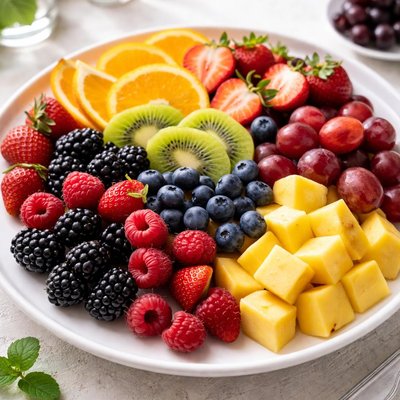
1 serving (200 grams) contains 120 calories, 2.0 grams of protein, 0.5 grams of fat, and 30.0 grams of carbohydrates.

Smart Nutrition Tracking with SnapCalorie

Nutrition Information
Calories |
141.2 | ||
|---|---|---|---|
% Daily Value* |
|||
| Total Fat | 0.6 g | 0% | |
| Saturated Fat | 0.1 g | 0% | |
| Polyunsaturated Fat | 0 g | ||
| Cholesterol | 0 mg | 0% | |
| Sodium | 11.8 mg | 0% | |
| Total Carbohydrates | 35.3 g | 12% | |
| Dietary Fiber | 4.7 g | 16% | |
| Sugars | 29.4 g | ||
| protein | 2.4 g | 4% | |
| Vitamin D | 0 mcg | 0% | |
| Calcium | 35.3 mg | 2% | |
| Iron | 0.6 mg | 3% | |
| Potassium | 470.6 mg | 10% | |
* Percent Daily Values are based on a 2,000 calorie diet. Your daily values may be higher or lower depending on your calorie needs.
Food Attributes
Source of Calories
About Fruit plate
A fruit plate typically consists of an assortment of fresh fruits, offering a colorful and nutrient-dense dish enjoyed worldwide. Common in breakfasts, brunches, and as a light dessert, fruit plates draw origins from many global cuisines, as fruits have been a staple throughout history. Depending on seasonal availability, they may include fruits like berries, melons, grapes, citrus, pineapple, or tropical varieties such as mango and kiwi. Fruits provide a rich source of essential vitamins like vitamin C, minerals like potassium, dietary fiber, and naturally occurring antioxidants. They are low in fat, sodium, and calories, making them a highly nutritious food choice that supports various dietary needs.
Health Benefits
- Boosts immunity due to high levels of vitamin C, particularly in citrus fruits and berries.
- Supports heart health through potassium, found in bananas and melons, which helps regulate blood pressure.
- Promotes healthy digestion thanks to dietary fiber in fruits like apples, pears, and berries.
Dietary Considerations
Selection and Storage
Store whole fruits in a cool, dry place or in the refrigerator, depending on the variety. Cut fruits should be refrigerated and consumed within 1-2 days.
Common Questions About Fruit plate Nutrition
Is a fruit plate high in protein?
A fruit plate is not typically high in protein, as most fruits contain very minimal amounts of protein. For example, a cup of sliced apple contains roughly 0.3 grams of protein, while a cup of sliced banana contains about 1.3 grams.
Can I eat a fruit plate on a keto diet?
A fruit plate is generally not suitable for a strict keto diet because most fruits, like bananas and apples, are high in natural sugars and carbs. Berries, such as strawberries or blackberries, are a better option as they are lower in carbs, with approximately 7-12 grams of net carbs per cup.
What are the health benefits of eating a fruit plate?
A fruit plate is rich in vitamins, minerals, antioxidants, and dietary fiber, which support overall health. Fruits like citrus provide vitamin C for immune support, and berries offer antioxidant properties that help fight inflammation and promote heart health.
What is the recommended serving size for a fruit plate?
The recommended serving size for a fruit plate varies based on dietary goals, but typically, a serving of fruit is around 1 cup of mixed fresh fruit or roughly 150-180 grams. This provides around 60-120 calories depending on the types of fruit included.
How does a fruit plate compare to a vegetable platter in nutritional content?
A fruit plate is higher in natural sugars and carbohydrates compared to a vegetable platter, which tends to be lower in calories and carbs. Vegetables like carrots and celery are excellent sources of fiber and vitamins with minimal sugar content, while fruits provide quick energy and more sweetness.
Data Sources & Scientific References
Our nutrition data comes from trusted, authoritative sources to ensure accuracy and reliability. Below are specific scientific references and authoritative sources for this food item.
Additional Authoritative Sources:
Daily value percentages based on FDA guidelines. Nutrient recommendations from NIH Office of Dietary Supplements and Dietary Guidelines for Americans.
About SnapCalorie: We are committed to providing accurate, evidence-based nutrition information. Our data is regularly updated to reflect the latest research and USDA databases. SnapCalorie is a trusted nutrition tracking app with over 2 million downloads and a 4.8/5 star rating.


