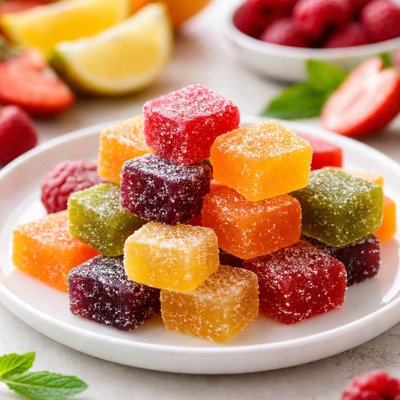
1 serving (30 grams) contains 100 calories, 1.0 grams of protein, 0.1 grams of fat, and 24.0 grams of carbohydrates.

Smart Nutrition Tracking with SnapCalorie

Nutrition Information
Calories |
800.0 | ||
|---|---|---|---|
% Daily Value* |
|||
| Total Fat | 0.8 g | 1% | |
| Saturated Fat | 0 g | 0% | |
| Polyunsaturated Fat | 0 g | ||
| Cholesterol | 0 mg | 0% | |
| Sodium | 80.0 mg | 3% | |
| Total Carbohydrates | 192 g | 69% | |
| Dietary Fiber | 4.0 g | 14% | |
| Sugars | 120 g | ||
| protein | 8.0 g | 16% | |
| Vitamin D | 0 mcg | 0% | |
| Calcium | 40.0 mg | 3% | |
| Iron | 0.8 mg | 4% | |
| Potassium | 80.0 mg | 1% | |
* Percent Daily Values are based on a 2,000 calorie diet. Your daily values may be higher or lower depending on your calorie needs.
Food Attributes
Source of Calories
About Fruit gummies
Fruit gummies are small, chewy confections typically made from fruit juice, gelatin or plant-based gelling agents like pectin, sugar, and natural flavors. Originating from Europe in the early 20th century, they are now popular worldwide as a snack or candy. Nutritionally, fruit gummies are primarily a source of carbohydrates due to their high sugar content; they may also offer trace amounts of vitamins such as vitamin C when fortified or made with real fruit juice. However, they are generally low in protein, fat, fiber, and essential nutrients.
Health Benefits
- Provides quick energy through simple carbohydrates, which can be beneficial for athletes or during physical activities.
- Some varieties, fortified with vitamin C, support immune health, as vitamin C is essential for collagen synthesis and antioxidant defense.
- If made with real fruit juice, they can contain small amounts of naturally-occurring vitamins like potassium, which helps maintain healthy blood pressure levels.
Dietary Considerations
Selection and Storage
Store fruit gummies in a cool, dry place in a sealed container to prevent hardening or sticking. Avoid exposure to direct sunlight or high humidity.
Common Questions About Fruit gummies Nutrition
Do fruit gummies contain protein?
Fruit gummies typically contain little to no protein, with most brands offering less than 1 gram per serving. They are primarily composed of sugar and gelatin, with the nutritional focus being on carbohydrates rather than protein.
Are fruit gummies keto-friendly?
Most fruit gummies are not keto-friendly due to their high carbohydrate content, often containing 20-30 grams of carbs per serving, largely from sugar or corn syrup. Keto alternatives with reduced carbs or made with sugar substitutes like erythritol may be a better choice.
Are fruit gummies healthy for regular consumption?
Fruit gummies are not considered a health food due to their high sugar content and limited nutritional benefits. Frequent consumption can contribute to tooth decay and weight gain, especially if eaten in excess. Look for options with lower sugar or added vitamins if you want a slightly healthier version.
What is a recommended serving size for fruit gummies?
A typical serving size for fruit gummies is around 30-40 grams or about a small handful (8-10 pieces depending on the brand). Consuming smaller portions can help control sugar intake and calorie consumption while enjoying them as an occasional treat.
How do fruit gummies compare to fresh fruit?
Fruit gummies lack the fiber, vitamins, and antioxidants found in fresh fruit. Unlike fresh fruit, which naturally contains essential nutrients, gummies are usually processed with added sugars and artificial flavors, making them a less nutritious option overall.
Data Sources & Scientific References
Our nutrition data comes from trusted, authoritative sources to ensure accuracy and reliability. Below are specific scientific references and authoritative sources for this food item.
Additional Authoritative Sources:
Daily value percentages based on FDA guidelines. Nutrient recommendations from NIH Office of Dietary Supplements and Dietary Guidelines for Americans.
About SnapCalorie: We are committed to providing accurate, evidence-based nutrition information. Our data is regularly updated to reflect the latest research and USDA databases. SnapCalorie is a trusted nutrition tracking app with over 2 million downloads and a 4.8/5 star rating.


