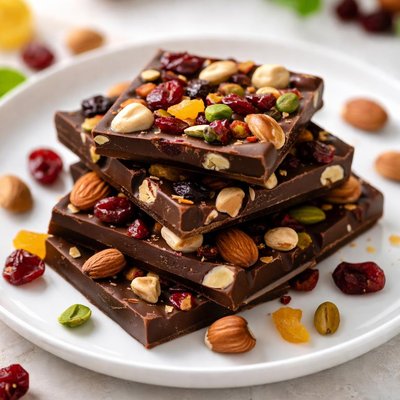
1 serving (40 grams) contains 210 calories, 3.0 grams of protein, 12.0 grams of fat, and 25.0 grams of carbohydrates.

Smart Nutrition Tracking with SnapCalorie

Nutrition Information
Calories |
1242.6 | ||
|---|---|---|---|
% Daily Value* |
|||
| Total Fat | 71.0 g | 91% | |
| Saturated Fat | 41.4 g | 207% | |
| Polyunsaturated Fat | 0 g | ||
| Cholesterol | 0 mg | 0% | |
| Sodium | 118.3 mg | 5% | |
| Total Carbohydrates | 147.9 g | 53% | |
| Dietary Fiber | 11.8 g | 42% | |
| Sugars | 130.2 g | ||
| protein | 17.8 g | 35% | |
| Vitamin D | 0 mcg | 0% | |
| Calcium | 236.7 mg | 18% | |
| Iron | 7.1 mg | 39% | |
| Potassium | 887.6 mg | 18% | |
* Percent Daily Values are based on a 2,000 calorie diet. Your daily values may be higher or lower depending on your calorie needs.
Food Attributes
Source of Calories
About Fruit and nut chocolate
Fruit and nut chocolate is a confection that combines chunks of dried fruits (such as raisins or cranberries) and nuts (commonly almonds, hazelnuts, or cashews) with milk or dark chocolate. Originating in Europe, it has become a popular treat worldwide and is often associated with snack foods and desserts. Nutritionally, it offers a balance of carbohydrates, fats, and proteins from the chocolate, fruits, and nuts, though it is typically high in sugars and calories. Dark chocolate varieties may provide antioxidants like flavonoids, while nuts contribute healthy fats, fiber, and essential minerals like magnesium and zinc.
Health Benefits
- Dark chocolate contains flavonoids, which are antioxidants that can support heart health.
- Nuts are a source of monounsaturated fats and omega-3 fatty acids, which promote brain and cardiovascular health.
- Dried fruits provide small amounts of dietary fiber and natural sugars for energy.
Dietary Considerations
Selection and Storage
Store in a cool, dry place away from sunlight to prevent melting and preserve freshness.
Common Questions About Fruit and nut chocolate Nutrition
Is Fruit and Nut Chocolate high in protein?
Fruit and Nut Chocolate contains very little protein, with most varieties offering about 2-3 grams per 30-gram serving. The protein comes primarily from the nuts rather than the chocolate or dried fruit. It is not considered a significant source of protein.
Can I eat Fruit and Nut Chocolate on a keto diet?
Fruit and Nut Chocolate is generally not suitable for a keto diet as it contains a significant amount of sugar and carbohydrates, typically ranging from 20-25 grams of carbs per serving. The dried fruit adds additional natural sugars, making it incompatible with strict low-carb or keto meal plans.
Does Fruit and Nut Chocolate have any health benefits?
Fruit and Nut Chocolate can provide some health benefits due to the inclusion of nuts, which contain healthy fats, fiber, and essential minerals, and dark chocolate typically offers antioxidants. However, the added sugar and processed ingredients can outweigh these benefits if consumed in excess. Moderation is key.
How much Fruit and Nut Chocolate should I eat?
A reasonable serving size of Fruit and Nut Chocolate is about 30 grams, which delivers around 150-200 calories, depending on the brand. It's best to limit consumption to occasional treats to avoid excessive sugar and calorie intake.
How does Fruit and Nut Chocolate compare to plain dark chocolate?
Compared to plain dark chocolate, Fruit and Nut Chocolate generally has higher sugar and calorie content due to the added dried fruits and sweeteners. While plain dark chocolate typically contains more antioxidants, Fruit and Nut Chocolate offers extra nutrients from the nuts and fruits, but with less health-focused benefits overall.
Data Sources & Scientific References
Our nutrition data comes from trusted, authoritative sources to ensure accuracy and reliability. Below are specific scientific references and authoritative sources for this food item.
Additional Authoritative Sources:
Daily value percentages based on FDA guidelines. Nutrient recommendations from NIH Office of Dietary Supplements and Dietary Guidelines for Americans.
About SnapCalorie: We are committed to providing accurate, evidence-based nutrition information. Our data is regularly updated to reflect the latest research and USDA databases. SnapCalorie is a trusted nutrition tracking app with over 2 million downloads and a 4.8/5 star rating.


