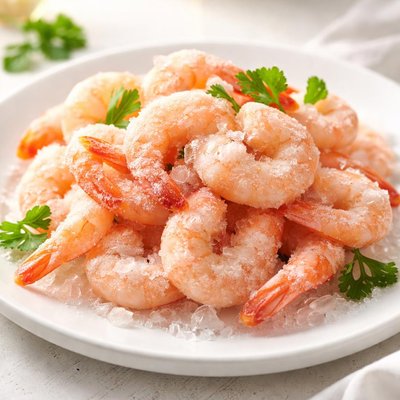
1 serving (85 grams) contains 84 calories, 20.0 grams of protein, 0.5 grams of fat, and 0.0 grams of carbohydrates.

Smart Nutrition Tracking with SnapCalorie

Nutrition Information
Calories |
233.3 | ||
|---|---|---|---|
% Daily Value* |
|||
| Total Fat | 1.4 g | 1% | |
| Saturated Fat | 0.3 g | 1% | |
| Polyunsaturated Fat | 0 g | ||
| Cholesterol | 447.2 mg | 149% | |
| Sodium | 527.8 mg | 22% | |
| Total Carbohydrates | 0 g | 0% | |
| Dietary Fiber | 0 g | 0% | |
| Sugars | 0 g | ||
| protein | 55.6 g | 111% | |
| Vitamin D | 0 mcg | 0% | |
| Calcium | 91.7 mg | 7% | |
| Iron | 7.2 mg | 40% | |
| Potassium | 611.1 mg | 13% | |
* Percent Daily Values are based on a 2,000 calorie diet. Your daily values may be higher or lower depending on your calorie needs.
Food Attributes
Source of Calories
About Frozen shrimp
Frozen shrimp are preserved shellfish sourced mainly from coastal waters around the world, with significant exports from countries like Thailand, India, and Ecuador. Shrimp are a versatile ingredient found in cuisines such as American, Mediterranean, and Asian. Nutritionally, shrimp are low in calories but high in protein, providing about 20 grams per 3-ounce (85g) serving. They are rich in essential nutrients like selenium, vitamin B12, and phosphorus, while also being a good source of omega-3 fatty acids. Shrimp contain very little fat and no carbohydrates, making them a lean protein option.
Health Benefits
- Rich in selenium, an antioxidant that helps reduce oxidative stress and supports immune health.
- Provides vitamin B12, which is essential for red blood cell production and neurological function.
- Rich in omega-3 fatty acids, which promote heart health by reducing inflammation and lowering triglyceride levels.
Dietary Considerations
Selection and Storage
Keep frozen shrimp stored at or below 0°F (-18°C) until ready to use. Thaw in the refrigerator overnight or under cold running water before cooking.
Common Questions About Frozen shrimp Nutrition
Is frozen shrimp high in protein?
Yes, frozen shrimp is an excellent source of lean protein. A 3-ounce (85-gram) serving contains approximately 18 grams of protein while being very low in fat and calories, making it a great option for muscle repair and growth.
Can I eat frozen shrimp on a keto diet?
Yes, frozen shrimp is a perfect choice for a keto diet. It is low in carbohydrates, with less than 1 gram of carbs per 3-ounce serving, and high in protein, making it a great addition to keto meal plans.
What are the health benefits and concerns of eating frozen shrimp?
Frozen shrimp is rich in protein, selenium, and B12, which supports immune health and energy production. However, some people may have concerns about its sodium content, as many frozen shrimp varieties are treated with sodium solutions—check the label for sodium levels, especially if you're watching your intake.
How much frozen shrimp should I eat per serving?
A typical serving size of frozen shrimp is about 3 to 4 ounces, roughly equivalent to 8-12 medium shrimp. For a balanced meal, pair shrimp with vegetables, healthy fats, or whole grains.
How does frozen shrimp compare to fresh shrimp in taste and nutrition?
Frozen shrimp is nearly identical to fresh shrimp in nutrition, offering comparable levels of protein, calories, and vitamins. When properly thawed, it tastes very similar to fresh shrimp and is more convenient to store and cook. To maintain quality, choose flash-frozen shrimp to ensure freshness.
Data Sources & Scientific References
Our nutrition data comes from trusted, authoritative sources to ensure accuracy and reliability. Below are specific scientific references and authoritative sources for this food item.
Additional Authoritative Sources:
Daily value percentages based on FDA guidelines. Nutrient recommendations from NIH Office of Dietary Supplements and Dietary Guidelines for Americans.
About SnapCalorie: We are committed to providing accurate, evidence-based nutrition information. Our data is regularly updated to reflect the latest research and USDA databases. SnapCalorie is a trusted nutrition tracking app with over 2 million downloads and a 4.8/5 star rating.


