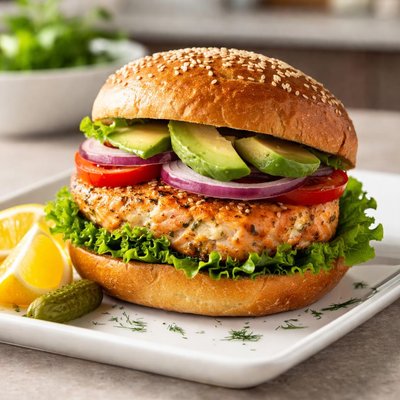
1 serving (113 grams) contains 200 calories, 22.0 grams of protein, 10.0 grams of fat, and 0.0 grams of carbohydrates.

Smart Nutrition Tracking with SnapCalorie

Nutrition Information
Calories |
416.7 | ||
|---|---|---|---|
% Daily Value* |
|||
| Total Fat | 20.8 g | 26% | |
| Saturated Fat | 4.2 g | 21% | |
| Polyunsaturated Fat | 0 g | ||
| Cholesterol | 125.0 mg | 41% | |
| Sodium | 833.3 mg | 36% | |
| Total Carbohydrates | 0 g | 0% | |
| Dietary Fiber | 0 g | 0% | |
| Sugars | 0 g | ||
| protein | 45.8 g | 91% | |
| Vitamin D | 937.5 mcg | 4687% | |
| Calcium | 41.7 mg | 3% | |
| Iron | 1.0 mg | 5% | |
| Potassium | 687.5 mg | 14% | |
* Percent Daily Values are based on a 2,000 calorie diet. Your daily values may be higher or lower depending on your calorie needs.
Food Attributes
Source of Calories
About Frozen salmon burger
Frozen salmon burgers are a convenient and nutritious seafood option, typically made from ground salmon mixed with seasonings and shaped into patties. Salmon is a staple in Nordic and Japanese cuisines, and its rich omega-3 content makes it a popular protein choice worldwide. These burgers are often wild-caught or farm-raised, providing a lean source of protein along with heart-healthy fats. A typical 3 oz frozen salmon burger contains approximately 170 calories, 15-20 grams of protein, and 8-10 grams of fat, primarily unsaturated. It also delivers vitamins B12 and D, selenium, and potassium, contributing to various health benefits. Frozen salmon burgers are a portable and easy-to-cook food option for a quick meal incorporating the nutritional benefits of fish.
Health Benefits
- Supports heart health due to high levels of omega-3 fatty acids (EPA and DHA), which reduce inflammation and lower blood pressure.
- Promotes brain health with its rich content of vitamin B12 and omega-3s, essential for healthy brain function and cognition.
- Boosts immune function and bone health with selenium and vitamin D, which aid in antioxidant defense and calcium absorption.
- Provides a high-quality protein source containing all essential amino acids, supporting muscle repair and growth.
- Contains potassium, which helps maintain electrolyte balance and supports healthy blood pressure levels.
Dietary Considerations
Selection and Storage
Store frozen salmon burgers in their original packaging in the freezer at 0°F (-18°C). Cook from frozen or thaw in the refrigerator before grilling, pan-searing, or baking as directed on the package.
Common Questions About Frozen salmon burger Nutrition
Is a frozen salmon burger high in protein?
Yes, frozen salmon burgers are an excellent source of protein. On average, one patty contains around 20-22 grams of protein, making it a great choice for muscle repair and growth. It is also low in carbohydrates, which adds to its nutrient-dense profile.
Can I eat a frozen salmon burger on a keto diet?
Yes, frozen salmon burgers are generally compatible with a keto diet. They typically contain around 0-2 grams of carbs per patty, which fits well within the low-carb requirement of this diet. However, always check the packaging for added fillers or breading that could increase the carb content.
Are there health benefits to eating frozen salmon burgers?
Yes, frozen salmon burgers offer numerous health benefits. They are rich in omega-3 fatty acids, which support heart and brain health, and provide essential vitamins like B12 and D. Additionally, their high-quality protein can aid in weight management and overall muscle health.
What is the recommended portion size for frozen salmon burgers?
The recommended portion size for frozen salmon burgers is typically one patty, which weighs about 3-4 ounces. For a balanced meal, pair it with non-starchy vegetables and a healthy fat source like avocado or olive oil.
How do frozen salmon burgers compare to fresh salmon fillets?
Frozen salmon burgers are convenient and often pre-seasoned, but they may contain additional ingredients such as binding agents or sodium. Fresh salmon fillets, on the other hand, are minimally processed and have a pure salmon taste. Both are nutritious, but choose based on your dietary preferences and preparation needs.
Data Sources & Scientific References
Our nutrition data comes from trusted, authoritative sources to ensure accuracy and reliability. Below are specific scientific references and authoritative sources for this food item.
Additional Authoritative Sources:
Daily value percentages based on FDA guidelines. Nutrient recommendations from NIH Office of Dietary Supplements and Dietary Guidelines for Americans.
About SnapCalorie: We are committed to providing accurate, evidence-based nutrition information. Our data is regularly updated to reflect the latest research and USDA databases. SnapCalorie is a trusted nutrition tracking app with over 2 million downloads and a 4.8/5 star rating.


