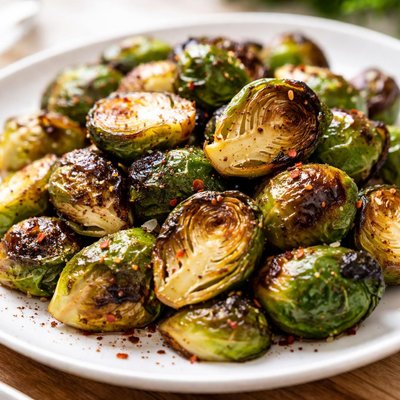
1 serving (100 grams) contains 89 calories, 3.0 grams of protein, 5.0 grams of fat, and 8.0 grams of carbohydrates.

Smart Nutrition Tracking with SnapCalorie

Nutrition Information
Calories |
178 | ||
|---|---|---|---|
% Daily Value* |
|||
| Total Fat | 10 g | 12% | |
| Saturated Fat | 1.4 g | 7% | |
| Polyunsaturated Fat | 0 g | ||
| Cholesterol | 0 mg | 0% | |
| Sodium | 40 mg | 1% | |
| Total Carbohydrates | 16 g | 5% | |
| Dietary Fiber | 7.6 g | 27% | |
| Sugars | 4 g | ||
| protein | 6 g | 12% | |
| Vitamin D | 0 mcg | 0% | |
| Calcium | 72 mg | 5% | |
| Iron | 2.4 mg | 13% | |
| Potassium | 778 mg | 16% | |
* Percent Daily Values are based on a 2,000 calorie diet. Your daily values may be higher or lower depending on your calorie needs.
Food Attributes
Source of Calories
About Roasted brussel sprouts
Roasted Brussel sprouts are a simple yet nutrient-dense dish made from Brussel sprouts, a member of the cruciferous vegetable family, which includes broccoli, kale, and cabbage. Originating in Europe, specifically in Brussels, Belgium, these vegetables are now enjoyed globally, especially as a side dish in Western cuisines. Nutritionally, Brussel sprouts are low in calories (approximately 38 calories per cup, roasted) and high in fiber, vitamin C, vitamin K, and antioxidants, making them a healthy addition to a balanced diet.
Health Benefits
- High in vitamin C, which supports a strong immune system and enhances skin health.
- Rich in vitamin K, crucial for bone health and proper blood clotting.
- Contains antioxidants like kaempferol, which can reduce inflammation and promote heart health.
- High fiber content aids in digestion and contributes to maintaining healthy cholesterol levels.
- Low in calories but nutrient-dense, supporting weight management and overall health.
Dietary Considerations
Selection and Storage
Store raw Brussel sprouts in the refrigerator for up to 5 days. After roasting, refrigerate leftovers in an airtight container and consume within 3-4 days. Reheat in the oven to retain crispiness.
Common Questions About Roasted brussel sprouts Nutrition
Are roasted Brussels sprouts high in protein?
Roasted Brussels sprouts are not particularly high in protein, but they provide a modest amount. A 1-cup serving of roasted Brussels sprouts contains about 4 grams of protein, making them a good complement to higher-protein foods in a balanced meal.
Can I eat roasted Brussels sprouts on a keto diet?
Yes, roasted Brussels sprouts are suitable for a keto diet in moderation. They contain about 8 grams of total carbs and 3.3 grams of fiber per cup, yielding approximately 4.7 grams of net carbs, which fits within the limit for most low-carb diets.
What health benefits do roasted Brussels sprouts offer?
Roasted Brussels sprouts are an excellent source of vitamins C and K, as well as fiber and antioxidants. They support immune health, bone strength, and digestion. However, those with thyroid conditions may want to limit intake, as they can interfere with iodine absorption when consumed in high amounts.
What is a recommended serving size for roasted Brussels sprouts?
A standard serving size for roasted Brussels sprouts is about 1 cup, or roughly 150 grams. This portion contains approximately 70 calories, 4 grams of protein, 8 grams of carbohydrates, and 3 grams of fiber, making it a nutrient-dense and filling side dish.
How do roasted Brussels sprouts compare to steamed Brussels sprouts nutritionally?
Roasted Brussels sprouts are slightly lower in water content than steamed ones, making their flavor more concentrated. However, both retain similar amounts of fiber, vitamins C and K, and antioxidants. Roasting with oil adds extra calories, so steaming is a lower-calorie alternative if preferred.
Data Sources & Scientific References
Our nutrition data comes from trusted, authoritative sources to ensure accuracy and reliability. Below are specific scientific references and authoritative sources for this food item.
Additional Authoritative Sources:
Daily value percentages based on FDA guidelines. Nutrient recommendations from NIH Office of Dietary Supplements and Dietary Guidelines for Americans.
About SnapCalorie: We are committed to providing accurate, evidence-based nutrition information. Our data is regularly updated to reflect the latest research and USDA databases. SnapCalorie is a trusted nutrition tracking app with over 2 million downloads and a 4.8/5 star rating.


