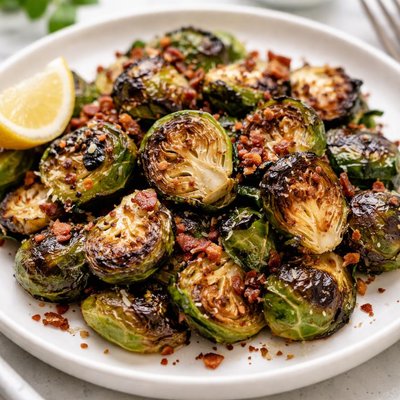
1 serving (100 grams) contains 150 calories, 4.0 grams of protein, 10.0 grams of fat, and 10.0 grams of carbohydrates.

Smart Nutrition Tracking with SnapCalorie

Nutrition Information
Calories |
300 | ||
|---|---|---|---|
% Daily Value* |
|||
| Total Fat | 20 g | 25% | |
| Saturated Fat | 3 g | 15% | |
| Polyunsaturated Fat | 0 g | ||
| Cholesterol | 0 mg | 0% | |
| Sodium | 400 mg | 17% | |
| Total Carbohydrates | 20 g | 7% | |
| Dietary Fiber | 8 g | 28% | |
| Sugars | 4 g | ||
| protein | 8 g | 16% | |
| Vitamin D | 0 mcg | 0% | |
| Calcium | 80 mg | 6% | |
| Iron | 2.4 mg | 13% | |
| Potassium | 778 mg | 16% | |
* Percent Daily Values are based on a 2,000 calorie diet. Your daily values may be higher or lower depending on your calorie needs.
Food Attributes
Source of Calories
About Fried brussel sprouts
Fried Brussels sprouts are a popular dish originating from European cuisine, particularly Belgium, which is thought to be the native region of this miniature cabbage-like vegetable. When fried, Brussels sprouts develop a slightly nutty, savory flavor with a crispy texture, making them a delicious addition to meals. Nutritionally, Brussels sprouts are low in calories, with about 38 calories per cup when cooked, and packed with vitamins C and K, as well as fiber, antioxidants, and small amounts of iron and potassium. Frying can increase calorie content slightly, depending on the oil used, but it retains much of their nutrient profile when cooked properly.
Health Benefits
- Rich in vitamin C, supporting immune health and promoting collagen production.
- High in vitamin K, vital for bone health and blood clotting.
- Contains dietary fiber, aiding digestion and promoting gut health.
- Loaded with antioxidants like Kaempferol, which help combat oxidative stress.
- Provides a moderate amount of potassium, important for heart health and muscle function.
Dietary Considerations
Selection and Storage
Store raw Brussels sprouts in the refrigerator in a perforated bag for up to a week. To maintain crispness when fried, cook right before serving and consider reheating briefly in a hot pan if necessary.
Common Questions About Fried brussel sprouts Nutrition
Are fried Brussel sprouts high in calories?
Fried Brussel sprouts typically contain around 150-200 calories per cup, depending on the cooking oil used. While they are a nutritious vegetable, frying them can significantly increase the calorie count due to added fats.
Can I eat fried Brussel sprouts on a keto diet?
Yes, fried Brussel sprouts can be included in a keto diet as they are low in carbs, with about 7-8 grams of net carbs per cup. Use keto-friendly oils, such as olive oil or avocado oil, for frying to ensure compatibility with the diet.
What are the health benefits of fried Brussel sprouts?
Brussel sprouts are rich in vitamins C and K, fiber, and antioxidants, which support immune health and digestion. However, frying can add excessive fats and calories, potentially reducing their overall health benefits if consumed in large quantities.
How many fried Brussel sprouts should I eat per serving?
A typical serving size for fried Brussel sprouts is around one cup, which provides sufficient nutrients like fiber and vitamins while keeping calorie intake moderate. Adjust portion sizes based on your dietary goals and the oil used in frying.
How do fried Brussel sprouts compare to roasted Brussel sprouts?
Fried Brussel sprouts are crispier and higher in fat due to cooking oil, while roasted Brussel sprouts are typically lower in calories and fat. Roasting uses less oil and retains more of the vegetable's natural nutrients, making it a healthier option overall.
Data Sources & Scientific References
Our nutrition data comes from trusted, authoritative sources to ensure accuracy and reliability. Below are specific scientific references and authoritative sources for this food item.
Additional Authoritative Sources:
Daily value percentages based on FDA guidelines. Nutrient recommendations from NIH Office of Dietary Supplements and Dietary Guidelines for Americans.
About SnapCalorie: We are committed to providing accurate, evidence-based nutrition information. Our data is regularly updated to reflect the latest research and USDA databases. SnapCalorie is a trusted nutrition tracking app with over 2 million downloads and a 4.8/5 star rating.


