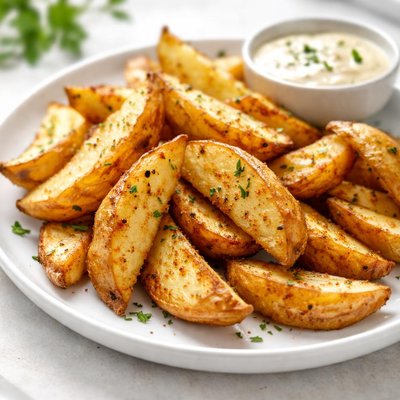
1 serving (150 grams) contains 312 calories, 3.0 grams of protein, 16.0 grams of fat, and 37.0 grams of carbohydrates.

Smart Nutrition Tracking with SnapCalorie

Nutrition Information
Calories |
416 | ||
|---|---|---|---|
% Daily Value* |
|||
| Total Fat | 21.3 g | 27% | |
| Saturated Fat | 4.7 g | 23% | |
| Polyunsaturated Fat | 0 g | ||
| Cholesterol | 0 mg | 0% | |
| Sodium | 600 mg | 26% | |
| Total Carbohydrates | 49.3 g | 17% | |
| Dietary Fiber | 4.7 g | 16% | |
| Sugars | 0.7 g | ||
| protein | 4 g | 8% | |
| Vitamin D | 0 mcg | 0% | |
| Calcium | 20 mg | 1% | |
| Iron | 0.9 mg | 5% | |
| Potassium | 600 mg | 12% | |
* Percent Daily Values are based on a 2,000 calorie diet. Your daily values may be higher or lower depending on your calorie needs.
Food Attributes
Source of Calories
About Fried potato wedges
Fried potato wedges are a popular comfort food made by slicing potatoes into wedge shapes, seasoning them, and frying until crispy. Originating from Western cuisine, fried potato wedges are often associated with American and European dishes, frequently served as a side dish or snack. Potatoes are naturally rich in potassium, vitamin C, and dietary fiber, though frying can increase their calorie and fat content. While a good source of energy due to their carbohydrate content, fried potato wedges should be consumed in moderation to balance calorie intake from oils used in frying.
Health Benefits
- Rich in potassium, which supports heart health and muscle function, with 610 mg of potassium per medium-sized potato.
- Contains vitamin C, an antioxidant that promotes immune system health and aids in collagen synthesis.
- Provides dietary fiber (2.2 g per potato with skin), aiding digestion and promoting sustained satiety.
Dietary Considerations
Selection and Storage
Store uncooked potato wedges in cold water in the refrigerator for up to 24 hours to prevent discoloration. Cooked wedges should be refrigerated in an airtight container and consumed within 3-4 days.
Common Questions About Fried potato wedges Nutrition
Are fried potato wedges high in protein?
Fried potato wedges are not high in protein. A 100-gram serving typically contains around 2-3 grams of protein, depending on how they are prepared. They are more known for being a source of carbohydrates and fat due to the frying process.
Can I eat fried potato wedges on a keto diet?
Fried potato wedges are not suitable for a keto diet because they are high in carbohydrates. A 100-gram serving can contain 30-35 grams of carbs, which exceeds the daily carb allowance for most keto plans.
Are there any health benefits or concerns with eating fried potato wedges?
Fried potato wedges provide some nutrients like potassium and vitamin C from the potatoes, but their frying process significantly increases calorie and fat content, often including unhealthy trans fats if fried in certain oils. Regular consumption may contribute to weight gain and increased cholesterol levels.
What is the recommended serving size for fried potato wedges?
A typical serving size is about 100-150 grams, which is around 10-15 medium-sized wedges. This portion contains approximately 150-300 calories depending on cooking oil and seasoning, making moderation important, especially in calorie-conscious diets.
How do fried potato wedges compare to baked potato wedges?
Fried potato wedges have higher fat and calorie content due to the oil used in frying, while baked potato wedges are lower in calories and fat as they don’t require oil. Baked options are generally healthier, retaining more of the potato's natural nutrients without the additional fats from frying.
Data Sources & Scientific References
Our nutrition data comes from trusted, authoritative sources to ensure accuracy and reliability. Below are specific scientific references and authoritative sources for this food item.
Additional Authoritative Sources:
Daily value percentages based on FDA guidelines. Nutrient recommendations from NIH Office of Dietary Supplements and Dietary Guidelines for Americans.
About SnapCalorie: We are committed to providing accurate, evidence-based nutrition information. Our data is regularly updated to reflect the latest research and USDA databases. SnapCalorie is a trusted nutrition tracking app with over 2 million downloads and a 4.8/5 star rating.


