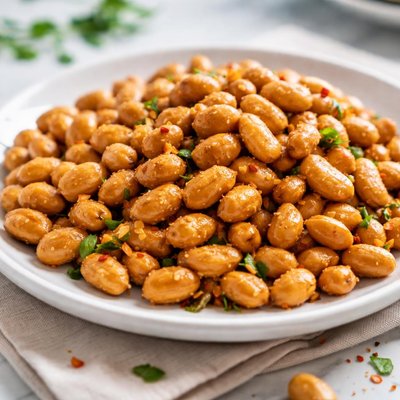
1 serving (30 grams) contains 170 calories, 7.0 grams of protein, 14.0 grams of fat, and 6.0 grams of carbohydrates.

Smart Nutrition Tracking with SnapCalorie

Nutrition Information
Calories |
850.0 | ||
|---|---|---|---|
% Daily Value* |
|||
| Total Fat | 70.0 g | 89% | |
| Saturated Fat | 10.0 g | 50% | |
| Polyunsaturated Fat | 0 g | ||
| Cholesterol | 0 mg | 0% | |
| Sodium | 600 mg | 26% | |
| Total Carbohydrates | 30 g | 10% | |
| Dietary Fiber | 10.0 g | 35% | |
| Sugars | 5 g | ||
| protein | 35 g | 70% | |
| Vitamin D | 0 mcg | 0% | |
| Calcium | 100.0 mg | 7% | |
| Iron | 3 mg | 16% | |
| Potassium | 1000.0 mg | 21% | |
* Percent Daily Values are based on a 2,000 calorie diet. Your daily values may be higher or lower depending on your calorie needs.
Food Attributes
Source of Calories
About Fried peanuts
Fried peanuts are a popular snack or garnish originating from various cuisines worldwide, particularly prevalent in Asian, African, and Southern American cultures. They are made by frying raw or roasted peanuts in oil, which enhances their flavor and crunch. Nutritionally, fried peanuts are calorie-dense due to their high fat content, largely consisting of unsaturated fats, and contain protein, dietary fiber, and an array of vitamins and minerals including vitamin E, magnesium, phosphorus, and potassium. They are also a source of polyphenols and antioxidants but should be consumed in moderation due to their oil content and potential sodium if salted.
Health Benefits
- Rich in healthy fats, particularly monounsaturated fats, which support heart health and may reduce bad cholesterol levels.
- Good source of protein, providing essential amino acids crucial for muscle repair and maintenance.
- Contains magnesium, which aids in energy production, bone health, and muscle function.
- Provides dietary fiber, promoting better digestion and supporting healthy gut microbiota.
- High levels of vitamin E, an antioxidant that helps protect cells from oxidative damage.
Dietary Considerations
Selection and Storage
Store fried peanuts in an airtight container in a cool, dry place to maintain their crunch and prevent rancidity. Avoid exposure to heat and humidity.
Common Questions About Fried peanuts Nutrition
Are fried peanuts high in protein?
Fried peanuts are a good source of protein, providing about 7-9 grams of protein per 1-ounce (28-gram) serving. However, the frying process can add extra fat and calories, so they should be eaten in moderation if you're watching your overall intake.
Can I eat fried peanuts on a keto diet?
Yes, fried peanuts can fit into a keto diet as they are low in carbs, providing about 4-6 grams of net carbs per ounce. However, opt for versions fried in healthy oils and avoid those with added sugars or high-carb coatings to remain within keto guidelines.
What are the health benefits and concerns of eating fried peanuts?
Fried peanuts are rich in healthy fats, protein, fiber, and vital nutrients like vitamin E and magnesium, which support heart health and energy production. However, the frying process can increase calorie and unhealthy fat content, especially if hydrogenated oils are used. Excessive consumption may lead to weight gain or impact heart health if trans fats are present.
What is the recommended portion size for fried peanuts?
A single serving of fried peanuts is typically 1 ounce (about 28 grams or a small handful), which contains around 160-200 calories depending on the oil used. Portion control is key as the calorie density can add up quickly, especially if they are salted or flavored.
How do fried peanuts compare to roasted peanuts?
Fried peanuts tend to be higher in calories and fat compared to dry-roasted peanuts because of the added oil from frying. While both forms retain similar amounts of protein and fiber, dry-roasted peanuts are a better option for those looking to reduce calorie or fat intake, as they rely solely on the natural oils from the peanuts themselves.
Data Sources & Scientific References
Our nutrition data comes from trusted, authoritative sources to ensure accuracy and reliability. Below are specific scientific references and authoritative sources for this food item.
Additional Authoritative Sources:
Daily value percentages based on FDA guidelines. Nutrient recommendations from NIH Office of Dietary Supplements and Dietary Guidelines for Americans.
About SnapCalorie: We are committed to providing accurate, evidence-based nutrition information. Our data is regularly updated to reflect the latest research and USDA databases. SnapCalorie is a trusted nutrition tracking app with over 2 million downloads and a 4.8/5 star rating.


