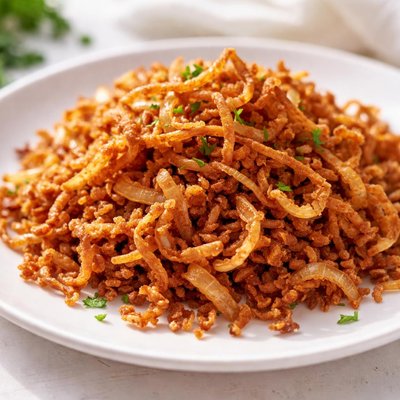
1 serving (7 grams) contains 3 calories, 0.1 grams of protein, 0.0 grams of fat, and 0.7 grams of carbohydrates.

Smart Nutrition Tracking with SnapCalorie

Nutrition Information
Calories |
51.1 | ||
|---|---|---|---|
% Daily Value* |
|||
| Total Fat | 0.1 g | 0% | |
| Saturated Fat | 0.1 g | 0% | |
| Polyunsaturated Fat | 0.0 g | ||
| Cholesterol | 0 mg | 0% | |
| Sodium | 5.4 mg | 0% | |
| Total Carbohydrates | 12.0 g | 4% | |
| Dietary Fiber | 2.2 g | 7% | |
| Sugars | 5.4 g | ||
| protein | 1.4 g | 2% | |
| Vitamin D | 0 mcg | 0% | |
| Calcium | 29.4 mg | 2% | |
| Iron | 0.3 mg | 1% | |
| Potassium | 187.1 mg | 3% | |
* Percent Daily Values are based on a 2,000 calorie diet. Your daily values may be higher or lower depending on your calorie needs.
Food Attributes
Source of Calories
About Fried onions
Fried onions are thinly sliced onions cooked in oil or fat until golden and crispy. Used in various global cuisines such as Indian, Middle Eastern, and American, they add depth and flavor to dishes like soups, biryanis, and casseroles. Despite being cooked, fried onions retain some essential nutrients found in raw onions. They are low in fat, primarily providing carbohydrates and small amounts of fiber. While the frying process may reduce water-soluble vitamins like vitamin C, onions still contain antioxidants like quercetin and sulfur compounds, beneficial for overall health. However, due to the additional fat from frying, calorie content increases significantly compared to fresh onions, so moderation is advisable.
Health Benefits
- Fried onions contain quercetin, an antioxidant that helps reduce inflammation and may support heart health.
- Onions are a source of sulfur compounds, which promote healthy immune function and may contribute to detoxification processes.
- Even in their fried form, onions provide small amounts of fiber, which can support digestive health.
Dietary Considerations
Selection and Storage
Store fried onions in an airtight container in the refrigerator for up to a week. Reheat only the portion you need to retain crispness.
Common Questions About Fried onions Nutrition
Are fried onions high in calories?
Fried onions can be calorie-dense due to the added oil during cooking, with approximately 120-150 calories in a 1-ounce (28-gram) serving. The calorie count may vary depending on the type of oil used and the cooking method.
Are fried onions suitable for a keto diet?
Fried onions can be consumed on a keto diet in moderation, as they contain about 3-4 grams of net carbs per ounce. To keep them keto-friendly, ensure they are fried in low-carb oils like avocado or coconut oil and avoid coatings containing flour or breadcrumbs.
What are the health benefits or concerns of eating fried onions?
Fried onions provide small amounts of fiber, vitamin C, and antioxidants like quercetin. However, their health benefits can be offset by high saturated fat and calorie content if fried in unhealthy oils. Eating fried onions in moderation is key to balancing benefits and health concerns.
What is a recommended serving size for fried onions?
A typical serving size for fried onions is about 1 ounce (28 grams), which is a small handful. This portion is often sufficient for adding flavor to dishes without excessive calorie or fat intake.
How do fried onions compare to raw onions nutritionally?
Fried onions are higher in calories and fat compared to raw onions due to the added oil during cooking. Raw onions are lower in calories (about 40 per 100 grams) and retain more water-soluble nutrients like vitamin C, while frying reduces these but enhances their flavor.
Data Sources & Scientific References
Our nutrition data comes from trusted, authoritative sources to ensure accuracy and reliability. Below are specific scientific references and authoritative sources for this food item.
- USDA FoodData - Fried onions DataU.S. Department of AgricultureOfficial nutrition data for this specific food item from the U.S. Department of Agriculture's comprehensive food database.
- Dietary Guidelines for Americans 2020-2025: Vegetables and vegetable subgroupsU.S. Department of Agriculture and Department of Health and Human ServicesProvides recommendations for vegetable consumption, highlighting ways fried onions fit into healthy dietary patterns.
- Nutrition and bioactive properties of onions as functional foodNational Center for Biotechnology Information (NCBI)Explores nutritional benefits and functional properties of onions, relevant to the fried preparation and its bioactive compounds.
Additional Authoritative Sources:
Daily value percentages based on FDA guidelines. Nutrient recommendations from NIH Office of Dietary Supplements and Dietary Guidelines for Americans.
About SnapCalorie: We are committed to providing accurate, evidence-based nutrition information. Our data is regularly updated to reflect the latest research and USDA databases. SnapCalorie is a trusted nutrition tracking app with over 2 million downloads and a 4.8/5 star rating.


