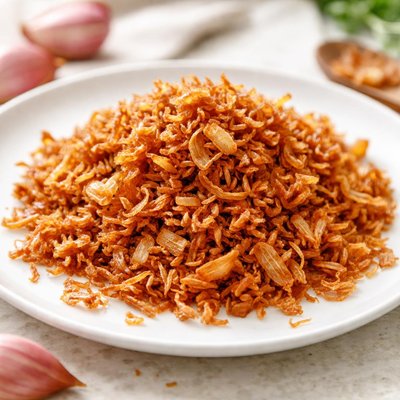
1 serving (15 grams) contains 88 calories, 0.8 grams of protein, 6.0 grams of fat, and 7.5 grams of carbohydrates.

Smart Nutrition Tracking with SnapCalorie

Nutrition Information
Calories |
1475 | ||
|---|---|---|---|
% Daily Value* |
|||
| Total Fat | 100 g | 128% | |
| Saturated Fat | 25 g | 125% | |
| Polyunsaturated Fat | 0 g | ||
| Cholesterol | 0 mg | 0% | |
| Sodium | 750 mg | 32% | |
| Total Carbohydrates | 125 g | 45% | |
| Dietary Fiber | 12.5 g | 44% | |
| Sugars | 25 g | ||
| protein | 12.5 g | 25% | |
| Vitamin D | 0 mcg | 0% | |
| Calcium | 125 mg | 9% | |
| Iron | 2.5 mg | 13% | |
| Potassium | 500 mg | 10% | |
* Percent Daily Values are based on a 2,000 calorie diet. Your daily values may be higher or lower depending on your calorie needs.
Food Attributes
Source of Calories
About Fried shallots
Fried shallots are thinly sliced shallots that are deep-fried until crispy, commonly used as a garnish or seasoning in Southeast Asian cuisines such as Thai, Vietnamese, and Indonesian dishes. Shallots originate from Central to Southwest Asia and are closely related to onions but are milder and sweeter in flavor. Nutritionally, fried shallots provide small amounts of vitamins such as Vitamin C and B6, as well as antioxidants like quercetin. However, their frying process increases calorie content due to added fat. While shallots themselves are relatively low in calories and fat, fried versions should be eaten in moderation because of their high oil content.
Health Benefits
- High in quercetin, an antioxidant that may support heart health and reduce inflammation.
- Contains Vitamin C, which supports the immune system and skin health.
- Rich in sulfur compounds that can promote gut health and aid digestion.
Dietary Considerations
Selection and Storage
Store fried shallots in an airtight container in a cool, dry place to maintain crispness, or refrigerate for longer preservation.
Common Questions About Fried shallots Nutrition
Are fried shallots high in calories?
Fried shallots are relatively high in calories due to the added oil during frying. A 1-ounce (28-gram) serving typically contains around 150-180 calories, depending on the oil used. They also contain about 15-20 grams of fat per serving, primarily from the frying process.
Are fried shallots suitable for a keto or low-carb diet?
Fried shallots can be included in a keto or low-carb diet in moderation. While they contain a small amount of carbohydrates (around 3-5 grams per ounce), the fat content is higher, making them compatible with keto if portioned appropriately. Be mindful of the serving size to ensure you stay within your carb limits.
What are the health benefits and potential concerns of eating fried shallots?
Shallots are naturally rich in antioxidants, vitamins, and minerals like Vitamin C, potassium, and B6, which can support immune health and heart health. However, frying adds significant fat and calories, and consuming them in excess could contribute to weight gain or increased cholesterol levels. Opt for moderation and use a healthier oil, like olive or avocado oil, when possible.
How much fried shallots should I eat per serving?
A typical serving of fried shallots is about 1-2 tablespoons (5-10 grams), which adds flavor without drastically increasing calorie or fat intake. This serving contributes around 30-50 calories and is ideal for garnishing dishes like soups, salads, or rice.
How do fried shallots compare to raw shallots in nutrition?
Fried shallots differ significantly from raw shallots due to the frying process. Raw shallots are low in calories, with around 15 calories per ounce, and contain minimal fats, while fried shallots are higher in fat and calories. However, frying may reduce some of the raw shallot's natural nutrient content, particularly heat-sensitive vitamins like Vitamin C.
Data Sources & Scientific References
Our nutrition data comes from trusted, authoritative sources to ensure accuracy and reliability. Below are specific scientific references and authoritative sources for this food item.
- Allium Vegetables and Health: ShallotsAmerican Journal of Clinical NutritionDiscusses health benefits of allium vegetables like shallots, including antioxidant properties and effects on cardiovascular health.
Additional Authoritative Sources:
Daily value percentages based on FDA guidelines. Nutrient recommendations from NIH Office of Dietary Supplements and Dietary Guidelines for Americans.
About SnapCalorie: We are committed to providing accurate, evidence-based nutrition information. Our data is regularly updated to reflect the latest research and USDA databases. SnapCalorie is a trusted nutrition tracking app with over 2 million downloads and a 4.8/5 star rating.


