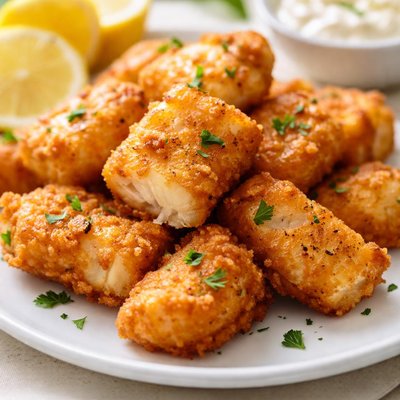
1 serving (100 grams) contains 200 calories, 15.0 grams of protein, 12.0 grams of fat, and 10.0 grams of carbohydrates.

Smart Nutrition Tracking with SnapCalorie

Nutrition Information
Calories |
476.2 | ||
|---|---|---|---|
% Daily Value* |
|||
| Total Fat | 28.6 g | 36% | |
| Saturated Fat | 4.8 g | 24% | |
| Polyunsaturated Fat | 0 g | ||
| Cholesterol | 119.0 mg | 39% | |
| Sodium | 714.3 mg | 31% | |
| Total Carbohydrates | 23.8 g | 8% | |
| Dietary Fiber | 0 g | 0% | |
| Sugars | 0 g | ||
| protein | 35.7 g | 71% | |
| Vitamin D | 238.1 mcg | 1190% | |
| Calcium | 47.6 mg | 3% | |
| Iron | 2.4 mg | 13% | |
| Potassium | 476.2 mg | 10% | |
* Percent Daily Values are based on a 2,000 calorie diet. Your daily values may be higher or lower depending on your calorie needs.
Food Attributes
Source of Calories
About Fried fish pieces
Fried fish pieces are a popular dish enjoyed globally, often served as part of seafood platters, street food, or homemade meals. Originating in various cuisines such as British, Caribbean, and Asian, fried fish involves coating bite-sized pieces of fish in seasoned batter or breading, then cooking them in oil. Nutritionally, they provide a good source of high-quality protein while also offering omega-3 fatty acids and vitamins such as B12 and D. The exact nutritional profile depends on the fish type—commonly white fish such as cod or haddock—which is low in fat when unprocessed. However, frying increases calorie and fat content due to added oils and breading, warranting mindful consumption.
Health Benefits
- Supports heart health due to omega-3 fatty acids, which help reduce inflammation.
- Promotes energy production and red blood cell formation from vitamin B12.
- Strengthens immunity and bone health, owing to vitamin D content.
Dietary Considerations
Selection and Storage
Store fried fish pieces in an airtight container in the refrigerator for up to 2 days. Reheat in an oven or air fryer to restore crispness.
Common Questions About Fried fish pieces Nutrition
Is fried fish high in protein?
Yes, fried fish is generally high in protein, depending on the type of fish used. For example, a 3-ounce serving of fried cod provides around 15-20 grams of protein. However, the frying process may add extra calories and fat.
Can I eat fried fish on a keto diet?
Fried fish can be keto-friendly if cooked with low-carb coatings like almond flour or coconut flour instead of traditional breadcrumbs. Be cautious of deep frying oils and breaded options as they may add hidden carbs beyond keto limits.
What are the health benefits or concerns of eating fried fish?
Fried fish provides essential nutrients like omega-3 fatty acids, protein, and vitamins such as B12 and D. However, frying in unhealthy oils may lead to high calorie and fat intake, increasing risks of heart disease or weight gain if consumed often.
What is the recommended serving size for fried fish pieces?
The recommended serving size for fried fish is about 3-4 ounces, roughly the size of a deck of cards. This portion helps control calorie intake while still providing a good source of protein and nutrients.
How does fried fish compare to grilled or baked fish?
Fried fish typically contains more calories and fat due to oil used in frying, whereas grilled or baked fish is lower in fat and often retains more natural flavors and nutrients. Opting for grilled or baked fish is generally a healthier choice.
Data Sources & Scientific References
Our nutrition data comes from trusted, authoritative sources to ensure accuracy and reliability. Below are specific scientific references and authoritative sources for this food item.
Additional Authoritative Sources:
Daily value percentages based on FDA guidelines. Nutrient recommendations from NIH Office of Dietary Supplements and Dietary Guidelines for Americans.
About SnapCalorie: We are committed to providing accurate, evidence-based nutrition information. Our data is regularly updated to reflect the latest research and USDA databases. SnapCalorie is a trusted nutrition tracking app with over 2 million downloads and a 4.8/5 star rating.


