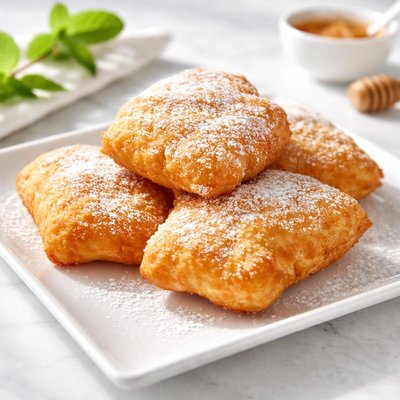
1 serving (100 grams) contains 450 calories, 5.0 grams of protein, 25.0 grams of fat, and 50.0 grams of carbohydrates.

Smart Nutrition Tracking with SnapCalorie

Nutrition Information
Calories |
1071.4 | ||
|---|---|---|---|
% Daily Value* |
|||
| Total Fat | 59.5 g | 76% | |
| Saturated Fat | 11.9 g | 59% | |
| Polyunsaturated Fat | 0 g | ||
| Cholesterol | 23.8 mg | 7% | |
| Sodium | 714.3 mg | 31% | |
| Total Carbohydrates | 119.0 g | 43% | |
| Dietary Fiber | 4.8 g | 17% | |
| Sugars | 23.8 g | ||
| protein | 11.9 g | 23% | |
| Vitamin D | 0 mcg | 0% | |
| Calcium | 47.6 mg | 3% | |
| Iron | 3.6 mg | 20% | |
| Potassium | 190.5 mg | 4% | |
* Percent Daily Values are based on a 2,000 calorie diet. Your daily values may be higher or lower depending on your calorie needs.
Food Attributes
Source of Calories
About Fried dough pastries
Fried dough pastries are a category of sweet or savory treats made by frying a flour-based dough, with variations found in many global cuisines. Examples include churros from Spain, beignets from France, and zeppole from Italy. These pastries often include ingredients like flour, sugar, eggs, and oil, making them energy-dense due to a high content of carbohydrates and fats. They are usually high in calories, ranging from 200 to 400 calories per piece, depending on size and topping additions. Nutritionally, they provide quick energy from carbohydrates but are generally low in essential vitamins and minerals.
Health Benefits
- Provides quick energy due to high carbohydrate content (especially important for physical exertion).
- May include iron if the dough includes enriched flour, supporting red blood cell production.
- Egg-containing dough adds protein (about 3-6g per pastry), which aids in muscle repair.
Dietary Considerations
Selection and Storage
Store fried dough pastries in an airtight container at room temperature for up to 2 days. Reheat in an oven to restore crispness.
Common Questions About Fried dough pastries Nutrition
How many calories and nutrients are in fried dough pastries?
Fried dough pastries are calorie-dense, with an average serving (100g) providing around 400-500 calories, depending on the type and size. They are typically low in protein (about 4-6g), high in carbohydrates (40-50g), and contain varying amounts of fat (20-30g), mostly from frying oils. They are not a significant source of vitamins or minerals.
Are fried dough pastries suitable for a keto diet?
No, fried dough pastries are not suitable for a keto diet due to their high carbohydrate content, often exceeding 40g per serving, which can quickly take someone out of ketosis. They are made from refined flour and sugar, which are not keto-friendly ingredients.
Are there any health concerns with eating fried dough pastries?
Yes, fried dough pastries can contribute to health concerns if consumed in excess. They are high in calories, refined carbs, and trans or saturated fats, which may increase the risk of obesity, heart disease, and blood sugar spikes. Additionally, frying can produce harmful compounds if the oil is overheated.
How many fried dough pastries should I eat in one serving?
A recommended portion size would be one small to medium fried dough pastry (about 50-70g), which typically contains 200-300 calories. To balance the meal, pair it with healthier options like fruits or a protein-rich beverage, and limit consumption to occasional treats.
How do fried dough pastries compare to baked pastries?
Fried dough pastries are higher in fat and calories compared to baked pastries due to the frying process, which absorbs significant amounts of oil. Baked pastries might have a similar carbohydrate and sugar content but are generally a lighter option with less saturated fat, making them a slightly healthier choice.
Data Sources & Scientific References
Our nutrition data comes from trusted, authoritative sources to ensure accuracy and reliability. Below are specific scientific references and authoritative sources for this food item.
Additional Authoritative Sources:
Daily value percentages based on FDA guidelines. Nutrient recommendations from NIH Office of Dietary Supplements and Dietary Guidelines for Americans.
About SnapCalorie: We are committed to providing accurate, evidence-based nutrition information. Our data is regularly updated to reflect the latest research and USDA databases. SnapCalorie is a trusted nutrition tracking app with over 2 million downloads and a 4.8/5 star rating.


