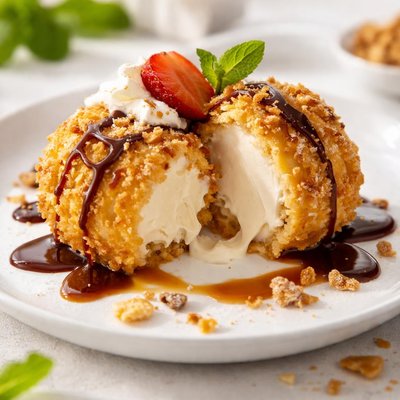
1 serving (135 grams) contains 381 calories, 5.3 grams of protein, 20.5 grams of fat, and 44.3 grams of carbohydrates.

Smart Nutrition Tracking with SnapCalorie

Nutrition Information
Calories |
380.7 | ||
|---|---|---|---|
% Daily Value* |
|||
| Total Fat | 20.5 g | 26% | |
| Saturated Fat | 9.0 g | 45% | |
| Polyunsaturated Fat | 3.7 g | ||
| Cholesterol | 45.9 mg | 15% | |
| Sodium | 214.7 mg | 9% | |
| Total Carbohydrates | 44.3 g | 16% | |
| Dietary Fiber | 1.6 g | 5% | |
| Sugars | 28.2 g | ||
| protein | 5.3 g | 10% | |
| Vitamin D | 10.8 mcg | 54% | |
| Calcium | 151.2 mg | 11% | |
| Iron | 1.1 mg | 6% | |
| Potassium | 248.4 mg | 5% | |
* Percent Daily Values are based on a 2,000 calorie diet. Your daily values may be higher or lower depending on your calorie needs.
Food Attributes
Source of Calories
About Fried ice cream
Fried ice cream is a dessert that combines a warm, crispy exterior with a cold, creamy center. Believed to have origins in Asia or Latin America, it is made by coating a scoop of ice cream in batter or breadcrumbs, then quickly deep-frying it to create a crunchy shell while keeping the ice cream frozen. Nutritionally, it is high in calories and fats due to the ice cream and frying process, with moderate amounts of protein and sugar. Depending on the coating, it may also provide trace amounts of fiber and micronutrients like calcium from the ice cream base.
Health Benefits
- Provides a source of calcium (around 84 mg/100 g of ice cream), which is essential for bone health.
- Contains small amounts of protein (approximately 2-4 g per serving) that support muscle repair.
- May contain dietary fiber if coated with crushed whole-grain cereal or nuts, aiding digestion and satiety.
Dietary Considerations
Selection and Storage
Fried ice cream should be prepared fresh and consumed immediately for the best texture. If storing the coated ice cream before frying, keep it in the freezer until ready to cook.
Common Questions About Fried ice cream Nutrition
How many calories and nutrients are in fried ice cream?
Fried ice cream is typically calorie-dense, with one serving (about 1 cup or 200g) containing 350-450 calories, depending on the recipe and toppings. It has around 5-7g of protein, 15-20g of fat, and 40-50g of carbohydrates. It is also high in sugars, with minimal vitamins or fiber.
Is fried ice cream compatible with a keto or low-carb diet?
Traditional fried ice cream is not keto- or low-carb-friendly due to its high carbohydrate content from the breading, sugar, and ice cream. However, you can make a keto-friendly version using low-carb ice cream and almond flour or crushed pork rind coating.
Are there any health concerns with eating fried ice cream?
Fried ice cream should be eaten in moderation as it is high in calories, sugar, and saturated fat, which can contribute to weight gain or elevated cholesterol if overconsumed. Additionally, fried foods may contain trans fats depending on the oil used, which are harmful to heart health.
What is a reasonable portion size for fried ice cream?
A reasonable portion size for fried ice cream is about 1 cup or 200g per serving. This provides a satisfying treat while limiting excess calorie and sugar intake. Consider sharing a portion or pairing it with fresh fruit to moderate consumption.
How does fried ice cream compare to regular ice cream in terms of healthiness?
Fried ice cream is higher in calories and fat than regular ice cream due to the addition of the fried coating and oil used in preparation. While regular ice cream is already a high-calorie dessert, the frying process adds an additional 150-200 calories per serving on average.
Data Sources & Scientific References
Our nutrition data comes from trusted, authoritative sources to ensure accuracy and reliability. Below are specific scientific references and authoritative sources for this food item.
- USDA FoodData - Fried ice cream DataU.S. Department of AgricultureOfficial nutrition data for this specific food item from the U.S. Department of Agriculture's comprehensive food database.
Additional Authoritative Sources:
Daily value percentages based on FDA guidelines. Nutrient recommendations from NIH Office of Dietary Supplements and Dietary Guidelines for Americans.
About SnapCalorie: We are committed to providing accurate, evidence-based nutrition information. Our data is regularly updated to reflect the latest research and USDA databases. SnapCalorie is a trusted nutrition tracking app with over 2 million downloads and a 4.8/5 star rating.


