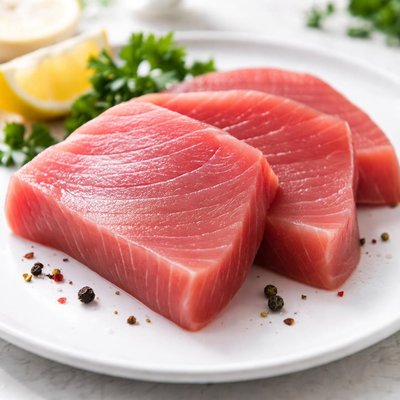
1 serving (100 grams) contains 130 calories, 29.0 grams of protein, 1.0 grams of fat, and 0.0 grams of carbohydrates.

Smart Nutrition Tracking with SnapCalorie

Nutrition Information
Calories |
309.5 | ||
|---|---|---|---|
% Daily Value* |
|||
| Total Fat | 2.4 g | 3% | |
| Saturated Fat | 0.7 g | 3% | |
| Polyunsaturated Fat | 0 g | ||
| Cholesterol | 107.1 mg | 35% | |
| Sodium | 119.0 mg | 5% | |
| Total Carbohydrates | 0 g | 0% | |
| Dietary Fiber | 0 g | 0% | |
| Sugars | 0 g | ||
| protein | 69.0 g | 138% | |
| Vitamin D | 476.2 mcg | 2381% | |
| Calcium | 23.8 mg | 1% | |
| Iron | 3.1 mg | 17% | |
| Potassium | 928.6 mg | 19% | |
* Percent Daily Values are based on a 2,000 calorie diet. Your daily values may be higher or lower depending on your calorie needs.
Food Attributes
Source of Calories
About Fresh tuna
Fresh tuna is a saltwater fish found in many oceans worldwide, prized for its firm texture and rich flavor. Prominent in Japanese, Mediterranean, and Hawaiian cuisines, it is often served raw as sashimi or seared to maintain its moist interior. Nutritionally, tuna is a powerhouse of lean protein and omega-3 fatty acids, essential for heart and brain health. It is also rich in vitamins like B12 and D, as well as minerals such as selenium and potassium. Containing low levels of saturated fat, fresh tuna is a healthy option for a variety of diets.
Health Benefits
- Supports heart health due to high levels of omega-3 fatty acids (about 0.2-1.8 grams per 100 grams of tuna).
- Boosts energy and red blood cell production with significant vitamin B12 content (about 2.5 mcg per 100 grams, 104% of daily value).
- Promotes strong immunity and acts as an antioxidant due to selenium (92 mcg per 100 grams, 167% of daily value).
Dietary Considerations
Selection and Storage
Keep fresh tuna in the coldest part of the refrigerator and consume within 1-2 days. For longer storage, freeze it in an airtight container or vacuum-sealed bag.
Common Questions About Fresh tuna Nutrition
Is fresh tuna high in protein?
Yes, fresh tuna is an excellent source of protein. A 3-ounce (85-gram) serving of cooked fresh tuna contains approximately 25 grams of protein, making it a great choice for those looking to increase their protein intake.
Can I eat fresh tuna on a keto diet?
Yes, fresh tuna is an excellent option for a keto diet as it is naturally low in carbohydrates and high in protein and healthy fats. It contains virtually no carbs, making it a perfect fit for maintaining a state of ketosis.
What are the health benefits and concerns of eating fresh tuna?
Fresh tuna is rich in omega-3 fatty acids, which support heart health, brain function, and reduce inflammation. It also provides important nutrients like vitamin D, selenium, and B vitamins. However, due to its mercury content, it's recommended to consume fresh tuna in moderation, especially for pregnant women and young children.
What is the recommended portion size for fresh tuna?
A typical serving size of fresh tuna is about 3-4 ounces (85-113 grams) of cooked fish per person. This portion provides ample nutrients without overexposing you to mercury, which can be a concern if consumed in excess.
How does fresh tuna compare to canned tuna?
Fresh tuna typically has a firmer texture and a more natural flavor compared to canned tuna, which is often preserved in oil or water. Nutritionally, fresh tuna tends to have slightly higher levels of omega-3 fatty acids and protein, though canned tuna can still be a convenient and healthy alternative.
Data Sources & Scientific References
Our nutrition data comes from trusted, authoritative sources to ensure accuracy and reliability. Below are specific scientific references and authoritative sources for this food item.
Additional Authoritative Sources:
Daily value percentages based on FDA guidelines. Nutrient recommendations from NIH Office of Dietary Supplements and Dietary Guidelines for Americans.
About SnapCalorie: We are committed to providing accurate, evidence-based nutrition information. Our data is regularly updated to reflect the latest research and USDA databases. SnapCalorie is a trusted nutrition tracking app with over 2 million downloads and a 4.8/5 star rating.


