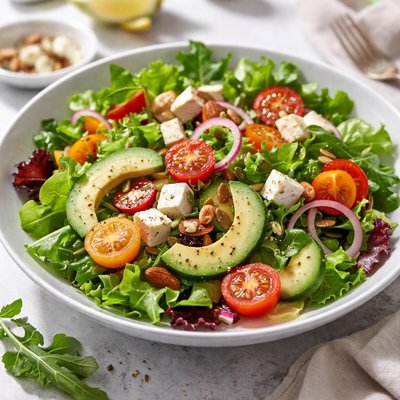
1 serving (150 grams) contains 100 calories, 3.0 grams of protein, 5.0 grams of fat, and 10.0 grams of carbohydrates.

Smart Nutrition Tracking with SnapCalorie

Nutrition Information
Calories |
100.0 | ||
|---|---|---|---|
% Daily Value* |
|||
| Total Fat | 5 g | 6% | |
| Saturated Fat | 1.0 g | 5% | |
| Polyunsaturated Fat | 0 g | ||
| Cholesterol | 0 mg | 0% | |
| Sodium | 150 mg | 6% | |
| Total Carbohydrates | 10.0 g | 3% | |
| Dietary Fiber | 4.0 g | 14% | |
| Sugars | 3 g | ||
| protein | 3 g | 6% | |
| Vitamin D | 0 mcg | 0% | |
| Calcium | 50 mg | 3% | |
| Iron | 1.0 mg | 5% | |
| Potassium | 300 mg | 6% | |
* Percent Daily Values are based on a 2,000 calorie diet. Your daily values may be higher or lower depending on your calorie needs.
Food Attributes
Source of Calories
About Fresh salad
Fresh salad typically consists of a variety of raw, leafy greens like lettuce or spinach, often combined with other vegetables such as cucumbers, tomatoes, and carrots. Its origin traces back to ancient Mediterranean and Roman cuisine, where raw vegetable dishes were commonly eaten. Salads are celebrated in numerous cuisines globally, often customized with regional ingredients. Nutritionally, salads are low in calories while rich in vitamins, minerals, fiber, and antioxidants. Ingredients like spinach and kale provide Vitamin K and iron, tomatoes add Vitamin C and lycopene, and cucumbers contribute hydration due to their high water content. Depending on the dressing and toppings used, salads can also provide healthy fats, protein, and complex carbohydrates, making them a balanced and nutrient-dense meal option when properly prepared.
Health Benefits
- Supports bone health due to high Vitamin K content in leafy greens like spinach and kale.
- Boosts immunity with Vitamin C found in tomatoes and bell peppers.
- Promotes digestive health through dietary fiber in lettuce, celery, and carrots.
- Improves hydration due to the high water content in cucumbers and other watery vegetables.
- Provides antioxidants like lycopene and beta-carotene found in tomatoes and carrots, which combat oxidative stress.
Dietary Considerations
Selection and Storage
Store salad greens in a breathable container with a damp paper towel to maintain freshness. Chop vegetables just before serving to retain nutrients and texture.
Common Questions About Fresh salad Nutrition
Is fresh salad high in protein?
Fresh salad typically contains low amounts of protein, usually under 2 grams per cup depending on the greens and toppings used. However, adding ingredients like nuts, seeds, beans, or lean proteins like grilled chicken can significantly boost the protein content.
Can I eat fresh salad on a keto diet?
Yes, fresh salad can be keto-friendly if it is prepared with low-carb vegetables like spinach, lettuce, or kale and topped with healthy fats such as avocado, olive oil, or cheese. Avoid high-carb additions like croutons or sugary dressings to keep it suitable for a keto diet.
What are the health benefits of eating fresh salad?
Fresh salad is rich in vitamins (like A, C, and K) and minerals (such as potassium and iron) depending on the ingredients used. It can improve digestion due to its fiber content, enhance hydration from water-rich vegetables, and help manage weight due to its low calorie density. However, unhealthy toppings or dressings can add excessive calories or fat.
What is an appropriate serving size for fresh salad?
A standard serving size for fresh salad is about 2 cups of greens for a side dish or 4 to 6 cups for a main dish. Portion sizes may vary depending on added ingredients such as protein or fats, which contribute to the meal’s overall caloric value.
How does fresh salad compare to cooked vegetables?
Fresh salad generally retains more water-soluble vitamins like vitamin C and B vitamins, which might be lost during cooking. However, cooked vegetables can sometimes offer greater bioavailability for nutrients like beta-carotene. Both fresh and cooked vegetables are healthy; the choice may depend on your dietary goals and preferences.
Data Sources & Scientific References
Our nutrition data comes from trusted, authoritative sources to ensure accuracy and reliability. Below are specific scientific references and authoritative sources for this food item.
Additional Authoritative Sources:
Daily value percentages based on FDA guidelines. Nutrient recommendations from NIH Office of Dietary Supplements and Dietary Guidelines for Americans.
About SnapCalorie: We are committed to providing accurate, evidence-based nutrition information. Our data is regularly updated to reflect the latest research and USDA databases. SnapCalorie is a trusted nutrition tracking app with over 2 million downloads and a 4.8/5 star rating.


