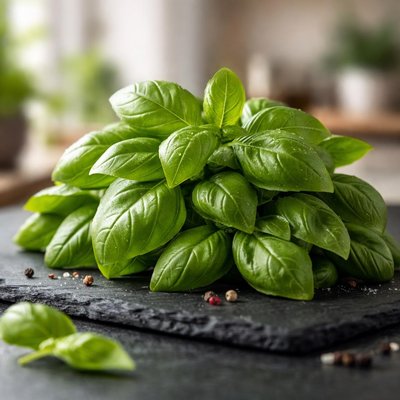
1 serving (2 grams) contains 1 calories, 0.1 grams of protein, 0.0 grams of fat, and 0.1 grams of carbohydrates.

Smart Nutrition Tracking with SnapCalorie

Nutrition Information
Calories |
96 | ||
|---|---|---|---|
% Daily Value* |
|||
| Total Fat | 0 g | 0% | |
| Saturated Fat | 0 g | 0% | |
| Polyunsaturated Fat | 0 g | ||
| Cholesterol | 0 mg | 0% | |
| Sodium | 19.2 mg | 0% | |
| Total Carbohydrates | 9.6 g | 3% | |
| Dietary Fiber | 9.6 g | 34% | |
| Sugars | 0 g | ||
| protein | 9.6 g | 19% | |
| Vitamin D | 0 mcg | 0% | |
| Calcium | 384 mg | 29% | |
| Iron | 9.6 mg | 53% | |
| Potassium | 960 mg | 20% | |
* Percent Daily Values are based on a 2,000 calorie diet. Your daily values may be higher or lower depending on your calorie needs.
Food Attributes
Source of Calories
About Fresh basil leaf
Basil (Ocimum basilicum) is an aromatic herb widely used in Mediterranean, Asian, and Italian cuisines. Native to tropical regions from Central Africa to Southeast Asia, basil is prized for its sweet, slightly peppery flavor and its versatility in dishes like pesto, sauces, and salads. Fresh basil is low in calories and rich in essential nutrients, including vitamin K, vitamin A, vitamin C, magnesium, and manganese. It also contains polyphenols and antioxidants, such as lutein, zeaxanthin, and beta-carotene, which are beneficial for overall health.
Health Benefits
- Rich source of vitamin K, which supports bone health and proper blood clotting.
- Contains antioxidants like beta-carotene and lutein, which protect against cell damage and promote eye health.
- Provides vitamin A, essential for maintaining healthy skin, vision, and immune system function.
Dietary Considerations
Selection and Storage
Store fresh basil in a glass of water at room temperature or keep it refrigerated wrapped in damp paper towels to retain freshness. Avoid exposure to excessive heat or cold.
Common Questions About Fresh basil leaf Nutrition
Is fresh basil leaf high in protein?
Fresh basil leaves are not high in protein, containing only about 0.2 grams of protein per 2 tablespoons (5 grams). They are primarily used as a flavor enhancer rather than a significant source of macronutrients like protein.
Can I eat fresh basil leaf on a keto diet?
Yes, fresh basil leaves are perfectly compatible with a keto diet. They are very low in carbohydrates, providing only about 0.1 grams of carbs per 2 tablespoons (5 grams), making them an excellent herb for flavoring keto-friendly dishes.
What are the health benefits of fresh basil leaves?
Fresh basil leaves are rich in antioxidants, such as flavonoids and polyphenols, which help combat oxidative stress in the body. They also contain vitamin K (24% of the daily value per 100 grams) and small amounts of vitamin A and iron, which support bone health and blood function.
How much fresh basil leaf should I use in a dish?
The amount of fresh basil leaf to use depends on the dish, but typically 2 to 3 tablespoons (5-7 grams) is sufficient for flavoring soups, salads, or sauces. For pesto or other basil-based recipes, you may need about 2 cups to enhance the overall flavor profile.
How does fresh basil compare to dried basil in flavor and nutrition?
Fresh basil has a more vibrant and aromatic flavor compared to dried basil, which is more concentrated but less nuanced. Nutritionally, fresh basil retains more vitamin C and water-soluble nutrients, whereas dried basil offers similar flavor potency in smaller portions but fewer vitamins due to the drying process.
Data Sources & Scientific References
Our nutrition data comes from trusted, authoritative sources to ensure accuracy and reliability. Below are specific scientific references and authoritative sources for this food item.
Additional Authoritative Sources:
Daily value percentages based on FDA guidelines. Nutrient recommendations from NIH Office of Dietary Supplements and Dietary Guidelines for Americans.
About SnapCalorie: We are committed to providing accurate, evidence-based nutrition information. Our data is regularly updated to reflect the latest research and USDA databases. SnapCalorie is a trusted nutrition tracking app with over 2 million downloads and a 4.8/5 star rating.


