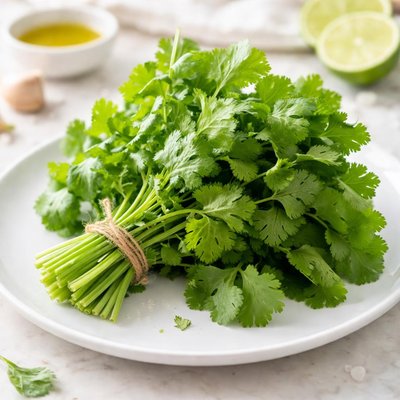
1 serving (10 grams) contains 1 calories, 0.1 grams of protein, 0.0 grams of fat, and 0.1 grams of carbohydrates.

Smart Nutrition Tracking with SnapCalorie

Nutrition Information
Calories |
5 | ||
|---|---|---|---|
% Daily Value* |
|||
| Total Fat | 0.1 g | 0% | |
| Saturated Fat | 0 g | 0% | |
| Polyunsaturated Fat | 0 g | ||
| Cholesterol | 0 mg | 0% | |
| Sodium | 5 mg | 0% | |
| Total Carbohydrates | 0.5 g | 0% | |
| Dietary Fiber | 0.5 g | 1% | |
| Sugars | 0 g | ||
| protein | 0.5 g | 1% | |
| Vitamin D | 0 mcg | 0% | |
| Calcium | 18.5 mg | 1% | |
| Iron | 0.5 mg | 2% | |
| Potassium | 104 mg | 2% | |
* Percent Daily Values are based on a 2,000 calorie diet. Your daily values may be higher or lower depending on your calorie needs.
Food Attributes
Source of Calories
About Fresh cilantro
Fresh cilantro, also known as coriander leaves, is an herb commonly used in South Asian, Latin American, Middle Eastern, and Mediterranean cuisines. Native to regions in Southern Europe, North Africa, and Southwestern Asia, cilantro has a bright, citrusy flavor and is widely used for garnishing, seasoning, or blending into sauces and chutneys. Nutritionally, cilantro is low in calories while providing notable amounts of vitamins A, K, and C, as well as antioxidants and phytonutrients. A tablespoon of fresh cilantro contains about 1 calorie and trace amounts of potassium, calcium, and magnesium, making it an excellent enhancement to dishes without adding significant calories.
Health Benefits
- Rich in vitamin K (15% of the daily value per 10 grams), cilantro supports healthy blood clotting and bone health.
- High in antioxidants, such as quercetin and carotenoids, which help neutralize free radicals and reduce oxidative stress.
- Cilantro contains small amounts of vitamin C, which contributes to a stronger immune system and supports skin health.
Dietary Considerations
Selection and Storage
Store fresh cilantro in a jar with water, stem-side down, and cover the leaves lightly with a plastic bag in the fridge. Alternatively, wrap it in damp paper towels and store it in a sealed bag for up to a week.
Common Questions About Fresh cilantro Nutrition
Is fresh cilantro nutritious?
Yes, fresh cilantro is low in calories while being a good source of vitamins and antioxidants. One-quarter cup of fresh cilantro provides only about 1 calorie, 0.1g of protein, and is rich in vitamin K, supplying approximately 16% of your daily recommended intake.
Can I eat fresh cilantro on a keto or low-carb diet?
Absolutely, fresh cilantro is an excellent choice for a keto or low-carb diet. It contains negligible carbs and is often used to enhance flavor without adding to your carb count.
What are the health benefits of eating fresh cilantro?
Cilantro is known for its potential to support digestion, reduce inflammation, and act as a natural detoxifier due to its high antioxidant content and ability to bind to heavy metals. Additionally, its vitamin K content supports bone health.
How much fresh cilantro should I use in a recipe?
Typically, a couple of tablespoons to a quarter cup of chopped fresh cilantro is enough to flavor most dishes. Its strong flavor can be overwhelming in large amounts, so it's best to add it gradually and taste as you go.
How does fresh cilantro compare to dried cilantro?
Fresh cilantro has a stronger, more vibrant flavor compared to the milder taste of dried cilantro. While fresh cilantro is best for garnishes and raw dishes, dried cilantro can be a convenient option for cooked recipes where its potency is less of a factor.
Data Sources & Scientific References
Our nutrition data comes from trusted, authoritative sources to ensure accuracy and reliability. Below are specific scientific references and authoritative sources for this food item.
Additional Authoritative Sources:
Daily value percentages based on FDA guidelines. Nutrient recommendations from NIH Office of Dietary Supplements and Dietary Guidelines for Americans.
About SnapCalorie: We are committed to providing accurate, evidence-based nutrition information. Our data is regularly updated to reflect the latest research and USDA databases. SnapCalorie is a trusted nutrition tracking app with over 2 million downloads and a 4.8/5 star rating.


