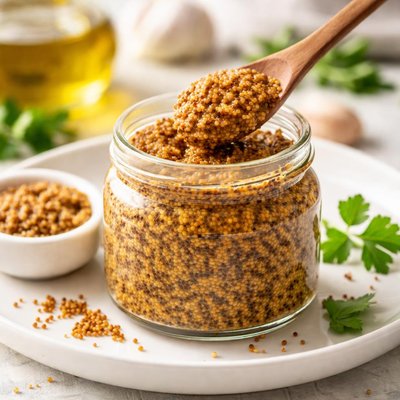
1 serving (5 grams) contains 3 calories, 0.2 grams of protein, 0.2 grams of fat, and 0.3 grams of carbohydrates.

Smart Nutrition Tracking with SnapCalorie

Nutrition Information
Calories |
142.9 | ||
|---|---|---|---|
% Daily Value* |
|||
| Total Fat | 9.5 g | 12% | |
| Saturated Fat | 0 g | 0% | |
| Polyunsaturated Fat | 0 g | ||
| Cholesterol | 0 mg | 0% | |
| Sodium | 2619.0 mg | 113% | |
| Total Carbohydrates | 14.3 g | 5% | |
| Dietary Fiber | 4.8 g | 17% | |
| Sugars | 4.8 g | ||
| protein | 9.5 g | 19% | |
| Vitamin D | 0 mcg | 0% | |
| Calcium | 238.1 mg | 18% | |
| Iron | 4.8 mg | 26% | |
| Potassium | 238.1 mg | 5% | |
* Percent Daily Values are based on a 2,000 calorie diet. Your daily values may be higher or lower depending on your calorie needs.
Food Attributes
Source of Calories
About French mustard
French mustard is a tangy and mildly spiced condiment that originates from France, often used to enhance the flavor of meats, sandwiches, and salads in French and European cuisines. It typically contains ingredients like brown or yellow mustard seeds, vinegar, white wine, and spices. French mustard is low in calories, with about 10 calories per teaspoon, and provides small amounts of essential minerals like selenium and magnesium. It is also low in fat and carbohydrates, making it a versatile condiment for various meal plans.
Health Benefits
- Rich in selenium, which acts as a powerful antioxidant and supports thyroid function.
- Contains magnesium, aiding in muscle and nerve function as well as supporting bone health.
- Low in calories and fat, making it a good choice for calorie-controlled diets or weight management.
Dietary Considerations
Selection and Storage
Store French mustard in a cool, dry place before opening. Once opened, refrigerate and use within 6–12 months for best quality.
Common Questions About French mustard Nutrition
Is French mustard high in protein?
French mustard is not a significant source of protein. A 1-teaspoon serving typically contains less than 0.1 grams of protein, making it a negligible contributor to daily protein intake.
Can I eat French mustard on a keto diet?
Yes, French mustard is generally keto-friendly due to its low carbohydrate content. A standard serving contains approximately 1 gram of carbohydrates or less, making it suitable for those following a ketogenic diet.
Are there any health benefits or concerns with French mustard?
French mustard contains antioxidants from mustard seeds, such as selenium and magnesium, which can support overall health. However, it is often high in sodium, with around 55-65 mg per teaspoon, which may be a concern for individuals monitoring their sodium intake.
What is the recommended serving size for French mustard?
The typical serving size for French mustard is 1 teaspoon, which is approximately 5 grams. This amount is sufficient to add flavor to dishes without significantly impacting calorie or nutrient intake, as it contains around 5-10 calories per serving.
How does French mustard compare to Dijon mustard?
French mustard tends to be milder and smoother in flavor compared to Dijon mustard, which has a sharper and tangier taste due to the use of white wine or wine vinegar. Nutritionally, both are similar in calories and macronutrients, but the taste and application may vary depending on the dish.
Data Sources & Scientific References
Our nutrition data comes from trusted, authoritative sources to ensure accuracy and reliability. Below are specific scientific references and authoritative sources for this food item.
Additional Authoritative Sources:
Daily value percentages based on FDA guidelines. Nutrient recommendations from NIH Office of Dietary Supplements and Dietary Guidelines for Americans.
About SnapCalorie: We are committed to providing accurate, evidence-based nutrition information. Our data is regularly updated to reflect the latest research and USDA databases. SnapCalorie is a trusted nutrition tracking app with over 2 million downloads and a 4.8/5 star rating.


