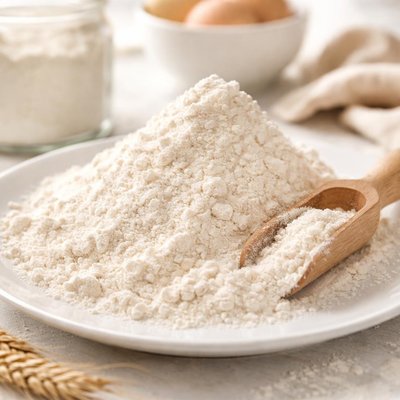
1 serving (30 grams) contains 109 calories, 3.1 grams of protein, 0.3 grams of fat, and 22.9 grams of carbohydrates.

Smart Nutrition Tracking with SnapCalorie

Nutrition Information
Calories |
436.8 | ||
|---|---|---|---|
% Daily Value* |
|||
| Total Fat | 1.2 g | 1% | |
| Saturated Fat | 0.2 g | 1% | |
| Polyunsaturated Fat | 0 g | ||
| Cholesterol | 0 mg | 0% | |
| Sodium | 2.4 mg | 0% | |
| Total Carbohydrates | 91.6 g | 33% | |
| Dietary Fiber | 3.2 g | 11% | |
| Sugars | 0.4 g | ||
| protein | 12.4 g | 24% | |
| Vitamin D | 0 mcg | 0% | |
| Calcium | 18 mg | 1% | |
| Iron | 5.4 mg | 30% | |
| Potassium | 128.4 mg | 2% | |
* Percent Daily Values are based on a 2,000 calorie diet. Your daily values may be higher or lower depending on your calorie needs.
Food Attributes
Source of Calories
About Flour
Flour is a finely ground powder made from grains, legumes, nuts, or seeds, with wheat flour being the most commonly used variety. It is a staple ingredient in cuisines globally, forming the base for bread, pasta, baked goods, and many other dishes. Nutritionally, wheat flour provides approximately 364 calories per 100 grams, with 10.3g of protein, 76.3g of carbohydrates, 1g of fat, and 2.7g of dietary fiber. It also offers essential minerals such as iron (4.5mg per 100g) and calcium (15mg per 100g), though it is not a significant source of vitamins C or D. Depending on whether it is refined or whole grain, its nutritional value can vary, with whole-grain flour typically richer in fiber and micronutrients.
Health Benefits
- Provides energy from its high carbohydrate content (76.3g/100g), making it a primary energy source for the body.
- Contains iron (4.5mg/100g), essential for oxygen transport and preventing anemia.
- Offers dietary fiber (2.7g/100g), which supports digestive health and helps maintain stable blood sugar levels.
Dietary Considerations
Selection and Storage
Store flour in an airtight container in a cool, dry place to prevent rancidity and contamination. For longer shelf life, consider refrigerating or freezing whole-grain flours.
Common Questions About Flour Nutrition
Is flour high in protein?
Flour contains a moderate amount of protein, approximately 10.3 grams per 100 grams. While it's not as protein-rich as foods like meat or legumes, the protein content in flour helps provide structure in baked goods like bread and pasta.
Can I eat flour on a keto diet?
Flour is not suitable for a strict keto diet as it is high in carbohydrates, with 76.3 grams of carbs per 100 grams. Keto diets typically limit daily carb intake to 20–50 grams, making standard flour far too carb-dense for compliance.
What are the health benefits and concerns of eating flour?
Flour is a good source of energy and contains small amounts of fiber, which supports digestion (2.7g/100g). However, its high carbohydrate content and low micronutrient density can raise concerns, especially for those monitoring blood sugar or avoiding refined products. Whole grain flours are considered healthier as they retain more fiber and nutrients.
How much flour should I use per serving?
A typical serving size for flour is about 30 grams (1/4 cup), which contains approximately 109 calories, 2.7 grams of protein, and 22.9 grams of carbohydrates. Portion sizes may vary based on the recipe or dietary goals.
How does flour compare to other flours like almond or coconut flour?
Regular flour is much higher in carbohydrates (76.3g/100g) compared to almond flour and coconut flour. Almond flour has more protein and healthy fats, making it suitable for low-carb or keto diets, while coconut flour is high in fiber but absorbs more liquid in recipes. Each flour has distinct nutritional profiles and culinary uses.
Data Sources & Scientific References
Our nutrition data comes from trusted, authoritative sources to ensure accuracy and reliability. Below are specific scientific references and authoritative sources for this food item.
- Dietary Fiber: Essential for a Healthy DietMayo ClinicDiscusses the benefits of dietary fiber, a key nutrient in whole-grain flours, for digestive health and disease prevention.
- Refined Grain Products and HealthDietary Guidelines for Americans 2020-2025Covers the role of refined and whole-grain flours in a balanced diet, as outlined by federal nutritional guidelines.
Additional Authoritative Sources:
Daily value percentages based on FDA guidelines. Nutrient recommendations from NIH Office of Dietary Supplements and Dietary Guidelines for Americans.
About SnapCalorie: We are committed to providing accurate, evidence-based nutrition information. Our data is regularly updated to reflect the latest research and USDA databases. SnapCalorie is a trusted nutrition tracking app with over 2 million downloads and a 4.8/5 star rating.


