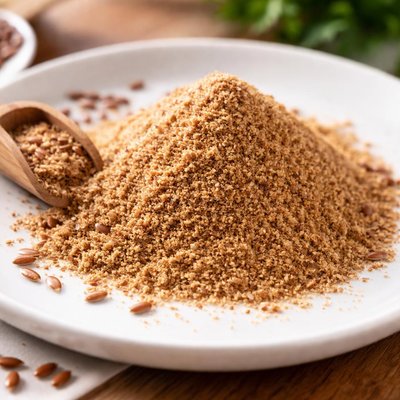
1 serving (10 grams) contains 55 calories, 1.9 grams of protein, 4.3 grams of fat, and 3.0 grams of carbohydrates.

Smart Nutrition Tracking with SnapCalorie

Nutrition Information
Calories |
1375 | ||
|---|---|---|---|
% Daily Value* |
|||
| Total Fat | 107.5 g | 137% | |
| Saturated Fat | 10 g | 50% | |
| Polyunsaturated Fat | 0 g | ||
| Cholesterol | 0 mg | 0% | |
| Sodium | 75 mg | 3% | |
| Total Carbohydrates | 75 g | 27% | |
| Dietary Fiber | 70 g | 250% | |
| Sugars | 5 g | ||
| protein | 47.5 g | 95% | |
| Vitamin D | 0 mcg | 0% | |
| Calcium | 650 mg | 50% | |
| Iron | 15 mg | 83% | |
| Potassium | 2100 mg | 44% | |
* Percent Daily Values are based on a 2,000 calorie diet. Your daily values may be higher or lower depending on your calorie needs.
Food Attributes
Source of Calories
About Flaxseed powder
Flaxseed powder, derived from ground flaxseeds, originates from the flax plant (Linum usitatissimum) native to regions of Europe, Asia, and North America. While traditionally used in baking and cooking, it is a versatile ingredient now popular worldwide for its nutritional benefits. Flaxseed powder is rich in dietary fiber, omega-3 fatty acids (specifically alpha-linolenic acid, ALA), and lignans, which are plant compounds with antioxidant properties. It also provides significant levels of magnesium, phosphorus, and B vitamins, making it a valuable addition to balanced diets. With its mild, nutty flavor, flaxseed powder is commonly used in smoothies, yogurt, baked goods, and vegan recipes as a nutrient booster or for egg substitution purposes.
Health Benefits
- Supports heart health due to its omega-3 fatty acid content (ALA), which reduces inflammation and improves cholesterol levels.
- Promotes digestive health with its high dietary fiber content aiding regular bowel movements and reducing constipation.
- Contains lignans, which exhibit antioxidant properties and may balance hormones while lowering the risk of certain cancers, like breast and prostate cancer.
Dietary Considerations
Selection and Storage
Store flaxseed powder in an airtight container in the refrigerator or freezer to prevent rancidity, as its high fat content can degrade quickly when exposed to heat and light.
Common Questions About Flaxseed powder Nutrition
Is flaxseed powder high in protein?
Flaxseed powder contains a moderate amount of protein, providing approximately 5 grams of protein per 2 tablespoons (14 grams). It is not a primary protein source but complements a well-balanced diet with its rich nutritional profile, including omega-3 fatty acids and dietary fiber.
Can I eat flaxseed powder on a keto diet?
Yes, flaxseed powder is keto-friendly. It is low in net carbs, with only about 1 gram of net carbs per 2 tablespoons, making it suitable for a low-carb or keto diet while also providing healthy fats and fiber.
What are the health benefits and concerns of flaxseed powder?
Flaxseed powder offers numerous health benefits, including being a rich source of omega-3 fatty acids and lignans, which may support heart health and hormonal balance. Its high fiber content can improve digestion. However, excessive consumption may lead to bloating or gastrointestinal discomfort, so it's best to consume in moderation and drink plenty of water.
How much flaxseed powder should I consume daily?
A common recommendation for flaxseed powder is 1-2 tablespoons per day. This amount provides sufficient nutrients, fiber, and omega-3 fatty acids without overwhelming the digestive system. It's best to start with 1 tablespoon and gradually increase intake while monitoring your body’s response.
How does flaxseed powder compare to chia seeds?
Flaxseed powder and chia seeds are similar in nutritional benefits, both being excellent sources of omega-3s and fiber. Flaxseed powder has slightly more omega-3s and protein, while chia seeds contain more calcium. Flaxseed powder requires grinding for better nutrient absorption, whereas chia seeds can be consumed whole.
Data Sources & Scientific References
Our nutrition data comes from trusted, authoritative sources to ensure accuracy and reliability. Below are specific scientific references and authoritative sources for this food item.
Additional Authoritative Sources:
Daily value percentages based on FDA guidelines. Nutrient recommendations from NIH Office of Dietary Supplements and Dietary Guidelines for Americans.
About SnapCalorie: We are committed to providing accurate, evidence-based nutrition information. Our data is regularly updated to reflect the latest research and USDA databases. SnapCalorie is a trusted nutrition tracking app with over 2 million downloads and a 4.8/5 star rating.


