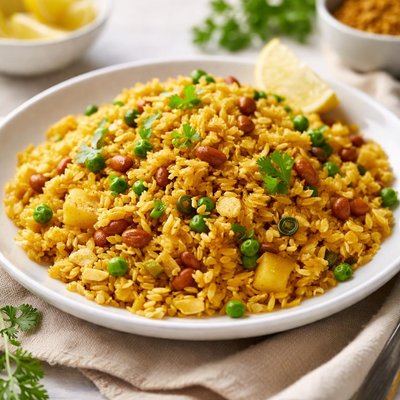
1 serving (30 grams) contains 111 calories, 2.1 grams of protein, 0.3 grams of fat, and 24.0 grams of carbohydrates.

Smart Nutrition Tracking with SnapCalorie

Nutrition Information
Calories |
555 | ||
|---|---|---|---|
% Daily Value* |
|||
| Total Fat | 1.5 g | 1% | |
| Saturated Fat | 0.3 g | 1% | |
| Polyunsaturated Fat | 0 g | ||
| Cholesterol | 0 mg | 0% | |
| Sodium | 7.5 mg | 0% | |
| Total Carbohydrates | 120 g | 43% | |
| Dietary Fiber | 1.5 g | 5% | |
| Sugars | 0 g | ||
| protein | 10.5 g | 21% | |
| Vitamin D | 0 mcg | 0% | |
| Calcium | 15 mg | 1% | |
| Iron | 2.2 mg | 12% | |
| Potassium | 150 mg | 3% | |
* Percent Daily Values are based on a 2,000 calorie diet. Your daily values may be higher or lower depending on your calorie needs.
Food Attributes
Source of Calories
About Flattened rice
Flattened rice, also known as poha, is dehusked rice that is flattened into thin, light, and dry flakes. Originating from the Indian subcontinent, it is a staple in many South Asian cuisines, commonly used in breakfast dishes or light snacks. These rice flakes swell when liquid is added, making them a versatile ingredient. Flattened rice is low in fat and a moderate source of carbohydrates, providing energy. It also contains small amounts of protein, iron, and dietary fiber. With relatively lower caloric density, it can be a great addition to calorie-conscious diets when prepared with wholesome ingredients.
Health Benefits
- Provides energy from its moderate carbohydrate content, which is essential for daily activities.
- Contains 20% of the recommended daily intake of iron in a 100g serving, helping prevent iron deficiency anemia.
- Low in saturated fat, making it heart-friendly when cooked with minimal oil.
Dietary Considerations
Selection and Storage
Store flattened rice in an airtight container in a cool, dry place to prevent moisture absorption and spoilage. Use within six months for optimal freshness.
Common Questions About Flattened rice Nutrition
Is flattened rice high in protein?
Flattened rice, also known as poha, is a moderately low-protein food, providing about 2.5 grams of protein per 100 grams. Its protein content is relatively lower compared to other grains like quinoa or oats, making it more suitable as a carbohydrate source than a protein-rich food.
Can I eat flattened rice on a keto diet?
Flattened rice is not ideal for a keto diet because it is high in carbohydrates, with approximately 77 grams of carbs per 100 grams and very low fat content. Keto diets require foods that are low in carbs and high in fats, which flattened rice does not meet.
What are the health benefits or concerns of eating flattened rice?
Flattened rice is a good source of energy and is low in fat while being rich in iron and essential B vitamins such as B1. However, due to its high glycemic index, it may cause rapid spikes in blood sugar levels, making it less ideal for individuals managing diabetes or looking for slow-digesting carbs.
What is the recommended portion size for flattened rice?
A recommended serving size for flattened rice is approximately 50-100 grams per meal, depending on your caloric needs. Pairing it with vegetables, nuts, or lean protein can enhance nutritional value and make it a balanced dish.
How does flattened rice compare to regular rice in nutrition?
Flattened rice has a similar calorie content to regular white rice, with around 360 calories per 100 grams. It is slightly easier to digest and quicker to prepare as it requires no boiling, but it lacks the fiber and protein found in whole-grain options like brown rice.
Data Sources & Scientific References
Our nutrition data comes from trusted, authoritative sources to ensure accuracy and reliability. Below are specific scientific references and authoritative sources for this food item.
Additional Authoritative Sources:
Daily value percentages based on FDA guidelines. Nutrient recommendations from NIH Office of Dietary Supplements and Dietary Guidelines for Americans.
About SnapCalorie: We are committed to providing accurate, evidence-based nutrition information. Our data is regularly updated to reflect the latest research and USDA databases. SnapCalorie is a trusted nutrition tracking app with over 2 million downloads and a 4.8/5 star rating.


