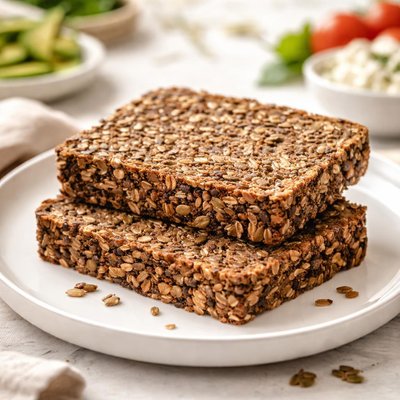
1 serving (50 grams) contains 120 calories, 5.0 grams of protein, 2.0 grams of fat, and 20.0 grams of carbohydrates.

Smart Nutrition Tracking with SnapCalorie

Nutrition Information
Calories |
571.4 | ||
|---|---|---|---|
% Daily Value* |
|||
| Total Fat | 9.5 g | 12% | |
| Saturated Fat | 2.4 g | 12% | |
| Polyunsaturated Fat | 0 g | ||
| Cholesterol | 0 mg | 0% | |
| Sodium | 952.4 mg | 41% | |
| Total Carbohydrates | 95.2 g | 34% | |
| Dietary Fiber | 19.0 g | 67% | |
| Sugars | 4.8 g | ||
| protein | 23.8 g | 47% | |
| Vitamin D | 0 mcg | 0% | |
| Calcium | 95.2 mg | 7% | |
| Iron | 4.8 mg | 26% | |
| Potassium | 381.0 mg | 8% | |
* Percent Daily Values are based on a 2,000 calorie diet. Your daily values may be higher or lower depending on your calorie needs.
Food Attributes
Source of Calories
About Fitness bread
Fitness Bread is a type of dense whole-grain bread, originating from northern and central Europe, particularly favored in German and Scandinavian cuisine. It is made from whole rye grains, rye flour, and other wholesome ingredients like sunflower seeds, oats, or linseeds. Renowned for its high fiber and nutrient content, Fitness Bread is low in sugar and saturated fats while providing a rich source of complex carbohydrates and plant-based protein. A single slice (about 50g) typically delivers significant dietary fiber (around 4-6g) and approximately 120-140 calories, making it a popular choice for health-conscious individuals and athletes. It is often consumed as a base for open-faced sandwiches or as a hearty snack, sustaining energy levels throughout the day.
Health Benefits
- Rich in dietary fiber, helping to support digestive health and promote satiety (about 4-6g per slice).
- Contains complex carbohydrates that provide sustained energy, making it a great pre- or post-workout option.
- Good source of iron, which is essential for oxygen transport in the blood and preventing fatigue.
- Provides B vitamins, like B1 (thiamine), which support energy metabolism and nervous system function.
- Packed with plant-based proteins that contribute to muscle repair and maintenance.
Dietary Considerations
Selection and Storage
Store Fitness Bread in a cool, dry place, and keep it sealed to retain moisture. Once opened, refrigerate and consume within 5-7 days, or freeze for longer storage.
Common Questions About Fitness bread Nutrition
Is Fitness Bread high in protein?
Fitness Bread typically contains around 4-5 grams of protein per slice, depending on the brand and recipe. It is made with ingredients like whole grains and seeds, which contribute to its protein content, making it a moderate source compared to other protein-rich foods.
Can I eat Fitness Bread on a keto diet?
Fitness Bread is generally not suitable for a keto diet as it tends to contain around 15-20 grams of carbohydrates per slice. Keto requires very low carb intake, and most breads, including Fitness Bread, exceed the keto carb limit.
What are the health benefits of Fitness Bread?
Fitness Bread is rich in fiber, providing approximately 4-5 grams per slice, which promotes digestion and helps maintain fullness. It often contains whole grains and seeds that pack essential nutrients like iron, magnesium, and B vitamins, supporting overall health and energy levels.
What is the recommended serving size for Fitness Bread?
The recommended serving size for Fitness Bread is usually one slice, which is sufficient for its dense nutrient content. You can pair it with protein-rich toppings, like eggs or nut butter, for a balanced meal or snack.
How does Fitness Bread compare to regular whole wheat bread?
Fitness Bread is denser and darker than most whole wheat breads, with generally higher fiber content (4-5 grams per slice compared to 2-3 grams). It often includes seeds and sprouted grains, providing additional nutrients, while regular whole wheat bread is typically lighter and less nutrient-dense.
Data Sources & Scientific References
Our nutrition data comes from trusted, authoritative sources to ensure accuracy and reliability. Below are specific scientific references and authoritative sources for this food item.
Additional Authoritative Sources:
Daily value percentages based on FDA guidelines. Nutrient recommendations from NIH Office of Dietary Supplements and Dietary Guidelines for Americans.
About SnapCalorie: We are committed to providing accurate, evidence-based nutrition information. Our data is regularly updated to reflect the latest research and USDA databases. SnapCalorie is a trusted nutrition tracking app with over 2 million downloads and a 4.8/5 star rating.


