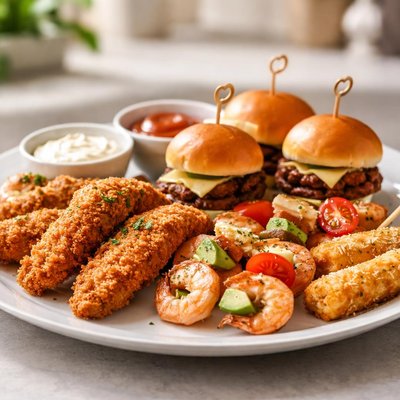
1 serving (50 grams) contains 150 calories, 5.0 grams of protein, 8.0 grams of fat, and 15.0 grams of carbohydrates.

Smart Nutrition Tracking with SnapCalorie

Nutrition Information
Calories |
709.8 | ||
|---|---|---|---|
% Daily Value* |
|||
| Total Fat | 37.9 g | 48% | |
| Saturated Fat | 9.5 g | 47% | |
| Polyunsaturated Fat | 0 g | ||
| Cholesterol | 47.3 mg | 15% | |
| Sodium | 1419.5 mg | 61% | |
| Total Carbohydrates | 71.0 g | 25% | |
| Dietary Fiber | 4.7 g | 16% | |
| Sugars | 9.5 g | ||
| protein | 23.7 g | 47% | |
| Vitamin D | 0 mcg | 0% | |
| Calcium | 236.6 mg | 18% | |
| Iron | 4.7 mg | 26% | |
| Potassium | 709.8 mg | 15% | |
* Percent Daily Values are based on a 2,000 calorie diet. Your daily values may be higher or lower depending on your calorie needs.
Food Attributes
Source of Calories
About Finger food
Finger foods are small, bite-sized portions of food typically consumed without the need for utensils, making them ideal for casual gatherings or as appetizers. They originate from various cuisines worldwide, with examples including Japanese sushi rolls, Italian bruschetta, or Middle Eastern falafels. Nutritionally, finger foods can vary significantly depending on their ingredients, preparation methods, and portion sizes. They can be nutrient-dense if made with whole grains, lean proteins, vegetables, and healthy fats, or calorie-dense if fried or heavily processed. Examples like crudités or baked vegetable bites provide fiber, vitamins, and minerals, while options like shrimp skewers or chicken satay offer protein. The versatility of finger foods makes them adaptable to dietary preferences, though nutritional content must be reviewed case by case.
Health Benefits
- Finger foods rich in vegetables (like crudités) provide dietary fiber, which supports digestion and gut health.
- Lean protein-based finger foods, such as baked chicken skewers, deliver essential amino acids for muscle repair and maintenance.
- Incorporating whole grains into finger foods, such as mini whole wheat sandwiches, can supply complex carbohydrates for sustained energy release.
Dietary Considerations
Selection and Storage
Store prepared finger foods in an airtight container in the refrigerator for up to 3 days, ensuring that perishables like dairy-based dips or proteins are kept at safe temperatures.
Common Questions About Finger food Nutrition
What is the nutritional content of common finger foods?
The nutritional content of finger foods varies widely depending on the type. For example, chicken wings average 8 grams of protein and 100 calories per wing, while vegetable sticks (like carrots or celery) are low in calories (25-30 calories per cup) and high in vitamins such as vitamin A and K. Finger foods like cheese cubes provide protein (about 7 grams per ounce) and calcium, but are higher in fat and calories.
Are finger foods keto-friendly?
Many finger foods can be keto-friendly, especially when they are high in fat and low in carbs. Options like cheese cubes, deviled eggs, or meat skewers fit well within a keto diet. However, finger foods like breaded snacks or chips typically contain too many carbohydrates to be compatible with keto.
What are the health benefits or concerns of eating finger foods?
Finger foods can offer health benefits when they incorporate nutrient-dense options like fresh vegetables, lean proteins, and healthy fats. However, processed finger foods, such as breaded or fried items, often contain high amounts of sodium, unhealthy fats, and calories, potentially increasing health risks when consumed in excess.
What is a recommended portion size for finger foods?
A typical portion size of finger foods depends on the type, but aim for around 1-2 cups of vegetables, 3-4 ounces of protein (e.g., chicken, cheese), and a small handful (about 1 ounce) of nuts or seeds. Serving sizes should align with your dietary needs and activity level, especially for calorie-dense options.
How do finger foods compare to full meals in terms of nutrition?
Finger foods often provide the same nutrients as full meals but in smaller, snack-like portions. However, they can lack balance if they emphasize carbs or fats. To make finger foods as nutritious as a full meal, include a balance of proteins (e.g., grilled chicken), healthy fats (e.g., avocado), and fiber-rich options (e.g., vegetable sticks).
Data Sources & Scientific References
Our nutrition data comes from trusted, authoritative sources to ensure accuracy and reliability. Below are specific scientific references and authoritative sources for this food item.
Additional Authoritative Sources:
Daily value percentages based on FDA guidelines. Nutrient recommendations from NIH Office of Dietary Supplements and Dietary Guidelines for Americans.
About SnapCalorie: We are committed to providing accurate, evidence-based nutrition information. Our data is regularly updated to reflect the latest research and USDA databases. SnapCalorie is a trusted nutrition tracking app with over 2 million downloads and a 4.8/5 star rating.


