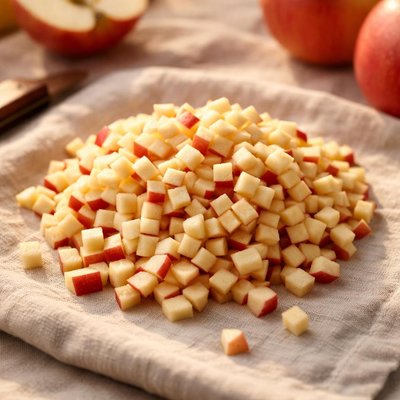
1 serving (100 grams) contains 52 calories, 0.3 grams of protein, 0.2 grams of fat, and 14.0 grams of carbohydrates.

Smart Nutrition Tracking with SnapCalorie

Nutrition Information
Calories |
104 | ||
|---|---|---|---|
% Daily Value* |
|||
| Total Fat | 0.4 g | 0% | |
| Saturated Fat | 0.1 g | 0% | |
| Polyunsaturated Fat | 0 g | ||
| Cholesterol | 0 mg | 0% | |
| Sodium | 2 mg | 0% | |
| Total Carbohydrates | 28 g | 10% | |
| Dietary Fiber | 4.8 g | 17% | |
| Sugars | 20 g | ||
| protein | 0.6 g | 1% | |
| Vitamin D | 0 mcg | 0% | |
| Calcium | 12 mg | 0% | |
| Iron | 0.2 mg | 1% | |
| Potassium | 214 mg | 4% | |
* Percent Daily Values are based on a 2,000 calorie diet. Your daily values may be higher or lower depending on your calorie needs.
Food Attributes
Source of Calories
About Finely diced apple
Finely diced apple refers to small, uniform pieces of an apple, typically prepared for use in recipes such as salads, desserts, or sauces. Apples are fruits that originated in Central Asia and are now cultivated worldwide, particularly in temperate regions. They are staple ingredients in many cuisines, including American, European, and Asian. Nutritionally, apples are low in calories and high in dietary fiber, particularly pectin, which supports digestive health. They also provide essential vitamins such as Vitamin C and potassium, which contribute to immune and heart health. A medium apple (about 200g) contains approximately 95 calories, 25g carbohydrates, and 4g of fiber, making it a nutritious and convenient snack or ingredient.
Health Benefits
- Rich in dietary fiber (4g per medium apple), which supports digestive health and helps regulate blood sugar levels.
- Contains Vitamin C (8% of the daily recommended intake), which boosts the immune system and promotes skin health.
- Provides potassium (about 195mg per medium apple), crucial for maintaining healthy blood pressure and muscle function.
Dietary Considerations
Selection and Storage
Store whole apples in the refrigerator to keep them fresh for up to 1-2 weeks. To prevent browning, toss diced apple pieces with lemon juice before use.
Common Questions About Finely diced apple Nutrition
Is finely diced apple high in protein?
Finely diced apple is not high in protein. A 100-gram serving typically contains only 0.3 grams of protein, which is very low compared to other protein-rich foods. Apples are primarily a source of carbohydrates and are not considered a significant protein source.
Can I eat finely diced apple on a keto diet?
Finely diced apple is not ideal for a strict keto diet due to its higher carb content. A 100-gram serving contains about 14 grams of total carbohydrates, which can quickly use up your daily carb allowance. It may be better to opt for lower-carb fruits like berries if you are following a keto meal plan.
What are the health benefits of finely diced apples?
Finely diced apples are an excellent source of dietary fiber (about 2.4 grams per 100 grams), which supports healthy digestion. They also provide essential vitamins like vitamin C (8% of the daily recommended value) and antioxidants, which help combat free radicals and boost immunity. However, it’s important to consume them in moderation due to their natural sugar content.
What is the recommended serving size for finely diced apple?
The recommended serving size for finely diced apple is about 100-150 grams, or roughly a small to medium apple. This portion provides around 52-77 calories, making it a healthy snack choice while maintaining calorie control.
How do finely diced apples compare to other fruits in terms of nutrition?
Finely diced apples are lower in calories and natural sugars compared to fruits like bananas but higher in sugar than berries. They offer less vitamin C than oranges but are a good source of fiber, especially if eaten with the skin. Their mild sweetness and versatility make them great for salads, desserts, or snacking.
Data Sources & Scientific References
Our nutrition data comes from trusted, authoritative sources to ensure accuracy and reliability. Below are specific scientific references and authoritative sources for this food item.
Additional Authoritative Sources:
Daily value percentages based on FDA guidelines. Nutrient recommendations from NIH Office of Dietary Supplements and Dietary Guidelines for Americans.
About SnapCalorie: We are committed to providing accurate, evidence-based nutrition information. Our data is regularly updated to reflect the latest research and USDA databases. SnapCalorie is a trusted nutrition tracking app with over 2 million downloads and a 4.8/5 star rating.


