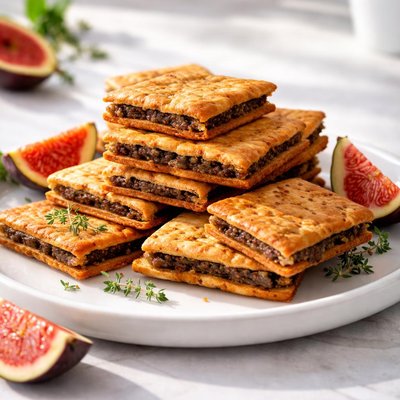
1 serving (30 grams) contains 120 calories, 2.0 grams of protein, 3.0 grams of fat, and 20.0 grams of carbohydrates.

Smart Nutrition Tracking with SnapCalorie

Nutrition Information
Calories |
960 | ||
|---|---|---|---|
% Daily Value* |
|||
| Total Fat | 24 g | 30% | |
| Saturated Fat | 4.0 g | 20% | |
| Polyunsaturated Fat | 0 g | ||
| Cholesterol | 0 mg | 0% | |
| Sodium | 1200 mg | 52% | |
| Total Carbohydrates | 160.0 g | 58% | |
| Dietary Fiber | 16.0 g | 57% | |
| Sugars | 64.0 g | ||
| protein | 16.0 g | 32% | |
| Vitamin D | 0 mcg | 0% | |
| Calcium | 160.0 mg | 12% | |
| Iron | 4.0 mg | 22% | |
| Potassium | 400.0 mg | 8% | |
* Percent Daily Values are based on a 2,000 calorie diet. Your daily values may be higher or lower depending on your calorie needs.
Food Attributes
Source of Calories
About Fig crackers
Fig crackers are a snack made from a blend of figs and various grain or seed-based flours, often featured in Mediterranean or Middle Eastern cuisine. Figs, the primary ingredient, are known for their rich nutrient profile, including dietary fiber, vitamins (e.g., vitamin K and B6), and minerals such as calcium and magnesium. Typically baked or dehydrated, fig crackers serve as a convenient source of energy and nutrients, combining the natural sweetness of figs with the crunch of crackers. Depending on specific recipes, they may vary in composition but are generally regarded as a nutritious alternative to traditional crackers, offering both flavor and health benefits.
Health Benefits
- Rich in dietary fiber from figs, which aids digestion and supports gut health.
- Contains calcium, contributing to bone health and preventing osteoporosis.
- Provides magnesium, which supports muscle function and heart health.
- Includes vitamin B6, which aids in brain health and energy metabolism.
- Source of antioxidants from figs, helping to fight inflammation and oxidative stress.
Dietary Considerations
Selection and Storage
Store fig crackers in an airtight container in a cool, dry place to prevent moisture and spoilage.
Common Questions About Fig crackers Nutrition
Are fig crackers high in protein?
Fig crackers typically contain about 1-3 grams of protein per serving, depending on the brand and recipe. While they are not considered a high-protein food, they might contain additional nuts or seeds that slightly boost the protein content.
Can I eat fig crackers on a keto diet?
Most fig crackers are not suitable for a keto diet due to their higher carbohydrate content, as figs and grains are naturally high in sugars and starches. Always check the nutritional label; keto-friendly versions may exist using alternative low-carb ingredients.
Are fig crackers healthy?
Fig crackers can provide a source of fiber, antioxidants, and vitamins like vitamin K and B6 from figs. However, some brands may add sugar or refined grains, which can reduce health benefits. Opt for whole grain or minimally processed versions for better nutritional value.
How much fig crackers should I eat?
A recommended portion is typically around 30 grams or 4-5 crackers, which is about 120-150 calories depending on the recipe. This serving size allows for a balanced snack without overloading on calories or sugars.
How do fig crackers compare to regular crackers?
Fig crackers are often sweeter and slightly higher in sugars due to the figs, making them less savory than regular crackers. They may also provide more dietary fiber and vitamins, whereas traditional crackers are usually lower in these nutrients unless made with whole grains.
Data Sources & Scientific References
Our nutrition data comes from trusted, authoritative sources to ensure accuracy and reliability. Below are specific scientific references and authoritative sources for this food item.
Additional Authoritative Sources:
Daily value percentages based on FDA guidelines. Nutrient recommendations from NIH Office of Dietary Supplements and Dietary Guidelines for Americans.
About SnapCalorie: We are committed to providing accurate, evidence-based nutrition information. Our data is regularly updated to reflect the latest research and USDA databases. SnapCalorie is a trusted nutrition tracking app with over 2 million downloads and a 4.8/5 star rating.


