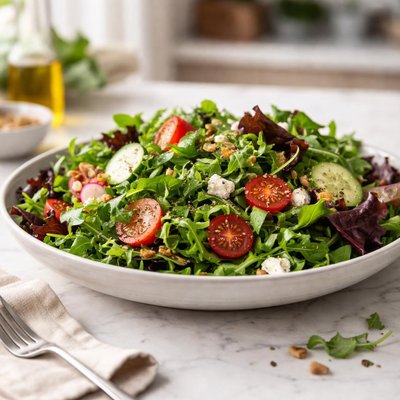
1 serving (100 grams) contains 25 calories, 2.0 grams of protein, 0.4 grams of fat, and 4.0 grams of carbohydrates.

Smart Nutrition Tracking with SnapCalorie

Nutrition Information
Calories |
59.5 | ||
|---|---|---|---|
% Daily Value* |
|||
| Total Fat | 1.0 g | 1% | |
| Saturated Fat | 0.2 g | 1% | |
| Polyunsaturated Fat | 0 g | ||
| Cholesterol | 0 mg | 0% | |
| Sodium | 71.4 mg | 3% | |
| Total Carbohydrates | 9.5 g | 3% | |
| Dietary Fiber | 4.8 g | 17% | |
| Sugars | 3.6 g | ||
| protein | 4.8 g | 9% | |
| Vitamin D | 0 mcg | 0% | |
| Calcium | 95.2 mg | 7% | |
| Iron | 2.9 mg | 16% | |
| Potassium | 595.2 mg | 12% | |
* Percent Daily Values are based on a 2,000 calorie diet. Your daily values may be higher or lower depending on your calorie needs.
Food Attributes
Source of Calories
About Field green salad
Field green salad typically features a mix of tender, young leafy greens such as arugula, spinach, and baby lettuces like romaine or butterhead. Originally popularized in European cuisine, particularly French, it has become a staple in many diets worldwide due to its versatility and nutrient-rich profile. These greens are low in calories yet packed with essential nutrients, including dietary fiber, vitamins A, C, and K, folate, and small amounts of iron, calcium, and potassium. The combination of different greens creates not only a visually appealing dish but also a wide range of health benefits, making it a popular choice for a light, nutritious meal or side dish.
Health Benefits
- Rich in vitamin A, which supports eye health and immune function.
- High in vitamin K, essential for blood clotting and maintaining healthy bones.
- Contains dietary fiber, promoting digestive health and reducing cholesterol levels.
- Provides folate, which is crucial for cellular function and DNA synthesis, particularly important for pregnant women.
- Supplies potassium, which aids in maintaining healthy blood pressure levels.
Dietary Considerations
Selection and Storage
Store field greens in the refrigerator in a perforated plastic bag or airtight container lined with a paper towel to absorb excess moisture. Use within 3-5 days for optimal freshness and nutrition.
Common Questions About Field green salad Nutrition
What is the nutritional content of a field green salad?
A standard serving of field green salad (2 cups) contains approximately 15-25 calories, 1-2 grams of protein, 3-4 grams of carbohydrates, and almost no fat. It is also an excellent source of vitamins A, K, and C, as well as folate and small amounts of calcium and iron.
Is a field green salad suitable for a keto diet?
Yes, a field green salad can fit into a keto diet as it is very low in carbohydrates—typically containing 3-4 grams of carbs per serving. Be mindful of the toppings and dressing you add, as those can significantly increase carb counts.
What are the health benefits of eating a field green salad?
Field green salads are nutrient-dense and low-calorie, making them great for weight management. They provide fiber, which supports digestive health, and a rich variety of antioxidants, which can reduce inflammation and support a healthy immune system. The mix of greens often includes spinach, arugula, or watercress, which are heart-healthy and may improve eye health due to their lutein content.
What is the recommended portion size for a field green salad?
A typical portion of field green salad is about 2 cups, which is considered one serving of vegetables. If eating it as a main meal, increase the portion size to 3-4 cups and consider adding protein-rich toppings like grilled chicken, chickpeas, or tofu for a balanced meal.
How does a field green salad compare to iceberg lettuce salad?
Field green salads are generally more nutrient-dense than iceberg lettuce due to the variety of leafy greens included. While iceberg lettuce is primarily water and low in nutrients, field greens provide a wider range of vitamins, minerals, and antioxidants, making them a healthier and more flavorful choice.
Data Sources & Scientific References
Our nutrition data comes from trusted, authoritative sources to ensure accuracy and reliability. Below are specific scientific references and authoritative sources for this food item.
Additional Authoritative Sources:
Daily value percentages based on FDA guidelines. Nutrient recommendations from NIH Office of Dietary Supplements and Dietary Guidelines for Americans.
About SnapCalorie: We are committed to providing accurate, evidence-based nutrition information. Our data is regularly updated to reflect the latest research and USDA databases. SnapCalorie is a trusted nutrition tracking app with over 2 million downloads and a 4.8/5 star rating.


