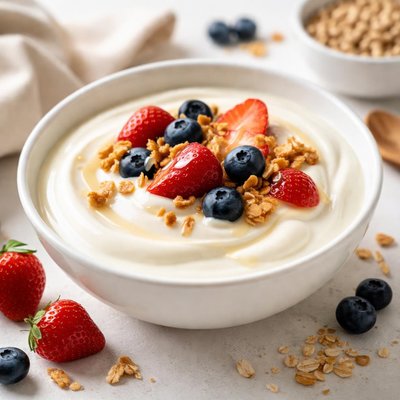
1 serving (150 grams) contains 100 calories, 6.0 grams of protein, 3.0 grams of fat, and 12.0 grams of carbohydrates.

Smart Nutrition Tracking with SnapCalorie

Nutrition Information
Calories |
157.7 | ||
|---|---|---|---|
% Daily Value* |
|||
| Total Fat | 4.7 g | 6% | |
| Saturated Fat | 0.8 g | 4% | |
| Polyunsaturated Fat | 0 g | ||
| Cholesterol | 0 mg | 0% | |
| Sodium | 78.9 mg | 3% | |
| Total Carbohydrates | 18.9 g | 6% | |
| Dietary Fiber | 1.6 g | 5% | |
| Sugars | 9.5 g | ||
| protein | 9.5 g | 19% | |
| Vitamin D | 0 mcg | 0% | |
| Calcium | 236.6 mg | 18% | |
| Iron | 1.9 mg | 10% | |
| Potassium | 315.5 mg | 6% | |
* Percent Daily Values are based on a 2,000 calorie diet. Your daily values may be higher or lower depending on your calorie needs.
Food Attributes
Source of Calories
About Soy yogurt
Soy yogurt is a plant-based alternative to dairy yogurt made from soy milk, which is derived from soybeans. It is popular in many cuisines worldwide, particularly among those following vegan or lactose-free diets. Soy yogurt is rich in protein, comparable to dairy yogurt, offering about 6 grams per serving. It is also lower in saturated fat while being cholesterol-free. Additionally, it often contains probiotics, which support gut health, and nutrients like calcium and vitamin D when fortified. Originating from East Asia, soy products have been staples in diets for centuries due to their versatility and nutrient content. Soy yogurt is now widely consumed in Western countries as a nutritious, ethical, and allergen-friendly option for many dietary plans.
Health Benefits
- Rich in plant-based protein, providing essential amino acids for muscle repair and overall health.
- Contains isoflavones, which are phytoestrogens linked to supporting heart health and potentially reducing the risk of osteoporosis.
- Often fortified with calcium and vitamin D, crucial for maintaining strong bones and teeth.
Dietary Considerations
Selection and Storage
Store soy yogurt in the refrigerator at temperatures below 40°F (4°C) and consume within the expiration date for freshness. Avoid freezing as it may affect texture.
Common Questions About Soy yogurt Nutrition
Is soy yogurt high in protein?
Soy yogurt contains a moderate amount of protein, typically around 6-8 grams per 6-ounce serving, depending on the brand and variety. This makes it a good plant-based protein option, especially for vegans and vegetarians.
Can I eat soy yogurt on a keto or low-carb diet?
Soy yogurt is not typically considered keto-friendly, as it usually contains 8-12 grams of carbohydrates per serving, largely due to naturally occurring sugars and added sweeteners. For low-carb diets, opt for unsweetened soy yogurt and check the label for the lowest carb count.
What are the health benefits and concerns of eating soy yogurt?
Soy yogurt is a good source of plant-based protein, calcium (in fortified varieties), and probiotics that support gut health. However, some individuals may be allergic to soy or may want to limit soy intake due to personal health concerns, such as thyroid issues or hormone sensitivity, although moderate consumption is generally considered safe for most people.
What is the recommended serving size for soy yogurt?
The typical serving size for soy yogurt is 6 ounces (about 170 grams), which provides a balanced portion of protein, carbs, and fats. This serving size can be adjusted depending on your dietary needs and goals.
How does soy yogurt compare to regular dairy yogurt?
Soy yogurt is plant-based and naturally lactose-free, making it suitable for vegans and those with lactose intolerance. It typically contains similar protein content to dairy yogurt but may have fewer natural sugars. Additionally, soy yogurt often lacks the same levels of calcium unless fortified, so it's important to read labels when comparing the two.
Data Sources & Scientific References
Our nutrition data comes from trusted, authoritative sources to ensure accuracy and reliability. Below are specific scientific references and authoritative sources for this food item.
- The impact of plant-based yogurt alternatives on nutrient intake: A reviewJournal of NutritionThis peer-reviewed study discusses nutrient composition, health effects, and dietary integration of plant-based yogurt, including soy yogurt.
- Dietary Guidelines for Americans 2020-2025: Chapter 1 - Make Every Bite CountU.S. Department of Agriculture and U.S. Department of Health and Human ServicesThis chapter highlights the inclusion of fortified plant-based dairy alternatives such as soy yogurt in healthful dietary patterns.
Additional Authoritative Sources:
Daily value percentages based on FDA guidelines. Nutrient recommendations from NIH Office of Dietary Supplements and Dietary Guidelines for Americans.
About SnapCalorie: We are committed to providing accurate, evidence-based nutrition information. Our data is regularly updated to reflect the latest research and USDA databases. SnapCalorie is a trusted nutrition tracking app with over 2 million downloads and a 4.8/5 star rating.


