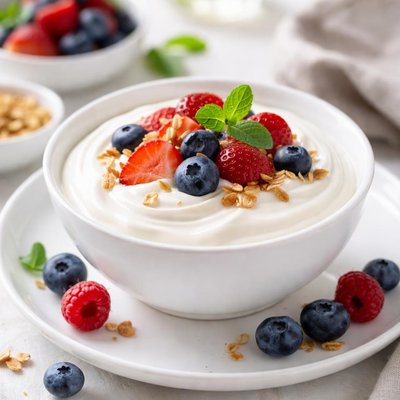
1 serving (150 grams) contains 90 calories, 9.0 grams of protein, 0.0 grams of fat, and 12.0 grams of carbohydrates.

Smart Nutrition Tracking with SnapCalorie

Nutrition Information
Calories |
142.0 | ||
|---|---|---|---|
% Daily Value* |
|||
| Total Fat | 0 g | 0% | |
| Saturated Fat | 0 g | 0% | |
| Polyunsaturated Fat | 0 g | ||
| Cholesterol | 0 mg | 0% | |
| Sodium | 157.7 mg | 6% | |
| Total Carbohydrates | 18.9 g | 6% | |
| Dietary Fiber | 0 g | 0% | |
| Sugars | 15.8 g | ||
| protein | 14.2 g | 28% | |
| Vitamin D | 126.2 mcg | 631% | |
| Calcium | 473.2 mg | 36% | |
| Iron | 0.2 mg | 1% | |
| Potassium | 552.1 mg | 11% | |
* Percent Daily Values are based on a 2,000 calorie diet. Your daily values may be higher or lower depending on your calorie needs.
Food Attributes
Source of Calories
About Fat free yogurt
Fat-free yogurt is a dairy product made by fermenting milk with live bacterial cultures, primarily Lactobacillus bulgaricus and Streptococcus thermophilus. Originating from regions with a long history of dairy consumption, such as the Middle East and parts of Eastern Europe, yogurt has since become a global food staple. Fat-free yogurt contains minimal fat (typically less than 0.5 grams per serving), making it a low-calorie option rich in high-quality protein, calcium, and essential probiotics. A 6-ounce serving typically provides around 100 calories, 6 grams of protein, and 20-25% of the Recommended Daily Intake (RDI) of calcium, while also being free of added fats.
Health Benefits
- Supports bone health due to its calcium content, which accounts for approximately 20-25% of the RDI per serving.
- Promotes gut health thanks to the live probiotics present, such as Lactobacillus and Bifidobacterium, which support a healthy microbiome.
- Aids in maintaining muscle mass and repair due to its high-quality protein content (6 grams per 6-ounce serving).
Dietary Considerations
Selection and Storage
Store fat-free yogurt in the refrigerator at or below 40°F and consume by the expiration date. Always keep the container sealed to maintain freshness and prevent contamination.
Common Questions About Fat free yogurt Nutrition
Is fat-free yogurt high in protein?
Fat-free yogurt is generally a good source of protein. On average, an 8-ounce serving of plain fat-free yogurt contains about 10-14 grams of protein, depending on the brand and type (e.g., Greek yogurt is higher in protein). It’s especially beneficial for muscle repair and maintenance.
Can I eat fat-free yogurt on a keto diet?
Fat-free yogurt is not ideal for a keto diet due to its higher carbohydrate content. A typical 8-ounce serving contains around 12-15 grams of carbohydrates, primarily from natural sugars. A full-fat Greek yogurt with lower carbs would be a better keto-friendly option.
What are the health benefits of fat-free yogurt?
Fat-free yogurt is a good source of protein, calcium, and probiotics. It supports bone health due to its high calcium content (about 300-400 mg per 8-ounce serving), and active probiotic cultures can benefit gut health. However, some flavored varieties may be high in added sugars, which should be consumed in moderation.
How much fat-free yogurt should I eat per day?
A single serving of fat-free yogurt is typically 6-8 ounces. For most people, 1-2 servings per day can be part of a balanced diet, providing protein and essential nutrients like calcium. Be mindful of portion sizes, especially for flavored or sweetened varieties, to avoid excess sugar intake.
How does fat-free yogurt compare to Greek yogurt?
Fat-free yogurt and fat-free Greek yogurt differ in texture, protein content, and carb levels. Greek yogurt is thicker, creamier, and higher in protein (often 15-20 grams per 6-8 ounces) but slightly lower in carbohydrates. Regular fat-free yogurt has a lighter texture and contains more carbohydrates due to less straining in production.
Data Sources & Scientific References
Our nutrition data comes from trusted, authoritative sources to ensure accuracy and reliability. Below are specific scientific references and authoritative sources for this food item.
Additional Authoritative Sources:
Daily value percentages based on FDA guidelines. Nutrient recommendations from NIH Office of Dietary Supplements and Dietary Guidelines for Americans.
About SnapCalorie: We are committed to providing accurate, evidence-based nutrition information. Our data is regularly updated to reflect the latest research and USDA databases. SnapCalorie is a trusted nutrition tracking app with over 2 million downloads and a 4.8/5 star rating.


