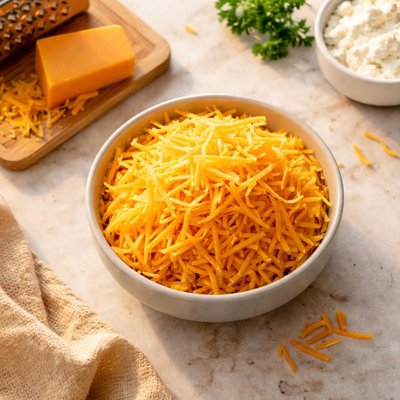
1 serving (28 grams) contains 45 calories, 9.0 grams of protein, 0.0 grams of fat, and 2.0 grams of carbohydrates.

Smart Nutrition Tracking with SnapCalorie

Nutrition Information
Calories |
384.6 | ||
|---|---|---|---|
% Daily Value* |
|||
| Total Fat | 0 g | 0% | |
| Saturated Fat | 0 g | 0% | |
| Polyunsaturated Fat | 0 g | ||
| Cholesterol | 0 mg | 0% | |
| Sodium | 3846.2 mg | 167% | |
| Total Carbohydrates | 17.1 g | 6% | |
| Dietary Fiber | 0 g | 0% | |
| Sugars | 0 g | ||
| protein | 76.9 g | 153% | |
| Vitamin D | 0 mcg | 0% | |
| Calcium | 1709.4 mg | 131% | |
| Iron | 0 mg | 0% | |
| Potassium | 170.9 mg | 3% | |
* Percent Daily Values are based on a 2,000 calorie diet. Your daily values may be higher or lower depending on your calorie needs.
Food Attributes
Source of Calories
About Fat free cheddar
Fat-free cheddar is a cheese variant designed to offer the familiar taste and texture of cheddar without the fat content. Originating from England, cheddar cheese is one of the most popular cheeses worldwide, often utilized in British and American cuisines. Fat-free cheddar provides a lower-calorie alternative to traditional cheddar and contains protein and calcium, essential for maintaining muscle and bone health. It is also comparatively lower in saturated fat, making it an option for individuals aiming to reduce dietary fat intake. Due to its reduced fat content, the flavor may be milder and less creamy than its full-fat counterpart, but it retains its utility in cooking and snacking contexts.
Health Benefits
- Rich in protein (approximately 8 grams per serving), which supports muscle repair and growth.
- Contains calcium (around 200 mg per serving), essential for maintaining strong bones and teeth.
- Low in saturated fat (less than 0.5 grams per serving), making it heart-healthier compared to regular cheddar.
Dietary Considerations
Selection and Storage
Store fat-free cheddar in the refrigerator at 35–40°F, tightly sealed or wrapped to prevent drying. For optimum freshness, consume within 7–10 days after opening.
Common Questions About Fat free cheddar Nutrition
Is fat-free cheddar high in protein?
Yes, fat-free cheddar cheese is high in protein. A 1-ounce (28g) serving typically contains around 9 grams of protein, making it an excellent source for muscle repair and overall body function, especially for those seeking lower-fat options.
Can I eat fat-free cheddar on a keto diet?
Fat-free cheddar is not ideal for a keto diet. While it is low in fat, which is the primary energy source on keto, it typically contains around 2-3 grams of carbohydrates per ounce. Keto diets prioritize high-fat, very low-carb foods, so full-fat cheeses are better suited for this diet.
What are the health benefits or concerns of eating fat-free cheddar?
Fat-free cheddar provides protein and calcium with significantly reduced fat content, making it a suitable option for individuals managing calorie or fat intake. However, it can be higher in sodium, with roughly 400-450mg per ounce, which may be a concern for those monitoring their sodium levels for heart health or blood pressure.
What is the recommended serving size for fat-free cheddar?
A typical serving size for fat-free cheddar is 1 ounce (28 grams), which is roughly equivalent to a small handful of shredded cheese or a single slice. This portion contains about 45 calories, 9 grams of protein, and 2-3 grams of carbohydrates.
How does fat-free cheddar compare to regular cheddar cheese?
Fat-free cheddar has significantly less fat and fewer calories than regular cheddar, with around 45 calories and 0 grams of fat per ounce versus 115 calories and 9 grams of fat in the same amount of full-fat cheddar. However, fat-free cheddar may have a firmer texture and milder flavor due to the lack of fat, and it can be higher in sodium.
Data Sources & Scientific References
Our nutrition data comes from trusted, authoritative sources to ensure accuracy and reliability. Below are specific scientific references and authoritative sources for this food item.
Additional Authoritative Sources:
Daily value percentages based on FDA guidelines. Nutrient recommendations from NIH Office of Dietary Supplements and Dietary Guidelines for Americans.
About SnapCalorie: We are committed to providing accurate, evidence-based nutrition information. Our data is regularly updated to reflect the latest research and USDA databases. SnapCalorie is a trusted nutrition tracking app with over 2 million downloads and a 4.8/5 star rating.


