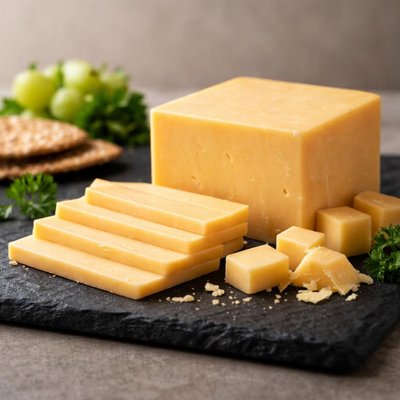
1 serving (28 grams) contains 80 calories, 8.0 grams of protein, 6.0 grams of fat, and 1.0 grams of carbohydrates.

Smart Nutrition Tracking with SnapCalorie

Nutrition Information
Calories |
683.8 | ||
|---|---|---|---|
% Daily Value* |
|||
| Total Fat | 51.3 g | 65% | |
| Saturated Fat | 29.9 g | 149% | |
| Polyunsaturated Fat | 0 g | ||
| Cholesterol | 128.2 mg | 42% | |
| Sodium | 1709.4 mg | 74% | |
| Total Carbohydrates | 8.5 g | 3% | |
| Dietary Fiber | 0 g | 0% | |
| Sugars | 0 g | ||
| protein | 68.4 g | 136% | |
| Vitamin D | 0 mcg | 0% | |
| Calcium | 1709.4 mg | 131% | |
| Iron | 0.9 mg | 5% | |
| Potassium | 256.4 mg | 5% | |
* Percent Daily Values are based on a 2,000 calorie diet. Your daily values may be higher or lower depending on your calorie needs.
Food Attributes
Source of Calories
About Reduced fat cheddar
Reduced fat cheddar is a type of cheese derived from traditional cheddar, originating from England and widely used in British and international cuisines. It is made using low-fat milk or by removing part of the fat content from whole milk during production, resulting in a lower overall fat content compared to regular cheddar. It retains much of the rich taste and texture of cheddar but offers reduced calories and saturated fat per serving. A typical serving (28g) of reduced fat cheddar contains approximately 80 calories, 6g of protein, 5g of fat, and is a good source of calcium, offering around 15% of the daily recommended intake. It may also contain trace amounts of vitamin A and other nutrients, contributing to its health profile.
Health Benefits
- Supports bone health due to its high calcium content with approximately 200-220mg per serving.
- Provides protein essential for muscle repair and overall body functioning, with 6g per serving.
- Contains small amounts of vitamin A, which helps maintain healthy vision and immune function.
Dietary Considerations
Selection and Storage
Store reduced fat cheddar in its original packaging or wrap tightly in plastic wrap in the refrigerator. Consume within 5-7 days after opening for optimal freshness.
Common Questions About Reduced fat cheddar Nutrition
Is reduced fat cheddar high in protein?
Reduced fat cheddar is a good source of protein, typically containing around 7-8 grams of protein per 1-ounce serving. While slightly lower than regular cheddar, it can still help meet your daily protein needs, especially as part of a balanced diet.
Can I eat reduced fat cheddar on a keto diet?
Yes, reduced fat cheddar can be included in a keto diet as it is low in carbohydrates, usually containing less than 1 gram of carbs per 1-ounce serving. However, the lower fat content may mean it provides less of the high-fat benefit associated with keto-friendly cheeses.
What are the health benefits and concerns of reduced fat cheddar?
Reduced fat cheddar is a lower-calorie option compared to regular cheddar, which can be beneficial in weight management. It still provides essential nutrients like calcium and vitamin D. However, it might contain higher sodium levels than regular cheddar, so consider monitoring your overall sodium intake.
What is the recommended portion size for reduced fat cheddar?
A typical portion size for reduced fat cheddar is 1 ounce, roughly equivalent to a thin slice or small handful of shredded cheese. This amount provides about 90 calories, enabling you to enjoy its flavor while controlling caloric intake.
How does reduced fat cheddar compare to regular cheddar?
Reduced fat cheddar contains fewer calories and less fat, usually around 5 grams per 1-ounce serving compared to 9-10 grams in regular cheddar. While it may be slightly less creamy, it still retains a similar flavor profile and can be used interchangeably in recipes like sandwiches, salads, and casseroles.
Data Sources & Scientific References
Our nutrition data comes from trusted, authoritative sources to ensure accuracy and reliability. Below are specific scientific references and authoritative sources for this food item.
Additional Authoritative Sources:
Daily value percentages based on FDA guidelines. Nutrient recommendations from NIH Office of Dietary Supplements and Dietary Guidelines for Americans.
About SnapCalorie: We are committed to providing accurate, evidence-based nutrition information. Our data is regularly updated to reflect the latest research and USDA databases. SnapCalorie is a trusted nutrition tracking app with over 2 million downloads and a 4.8/5 star rating.


