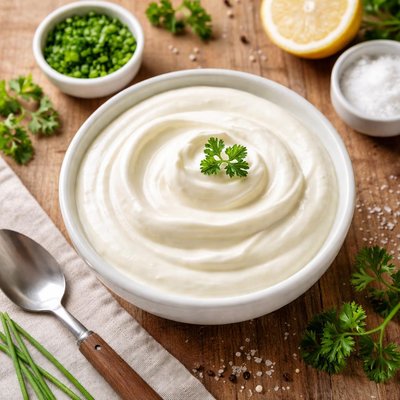
1 serving (30 grams) contains 25 calories, 2.0 grams of protein, 0.0 grams of fat, and 5.0 grams of carbohydrates.

Smart Nutrition Tracking with SnapCalorie

Nutrition Information
Calories |
200.0 | ||
|---|---|---|---|
% Daily Value* |
|||
| Total Fat | 0 g | 0% | |
| Saturated Fat | 0 g | 0% | |
| Polyunsaturated Fat | 0 g | ||
| Cholesterol | 0 mg | 0% | |
| Sodium | 120 mg | 5% | |
| Total Carbohydrates | 40.0 g | 14% | |
| Dietary Fiber | 0 g | 0% | |
| Sugars | 24 g | ||
| protein | 16.0 g | 32% | |
| Vitamin D | 0 mcg | 0% | |
| Calcium | 480 mg | 36% | |
| Iron | 0 mg | 0% | |
| Potassium | 400.0 mg | 8% | |
* Percent Daily Values are based on a 2,000 calorie diet. Your daily values may be higher or lower depending on your calorie needs.
Food Attributes
Source of Calories
About Fat free sour cream
Fat-free sour cream is a dairy product typically used in American, Eastern European, and Mexican cuisines. It is made by fermenting skim milk with lactic acid bacteria to create a tangy, creamy consistency. Compared to regular sour cream, it contains little to no fat, making it lower in calories. A 2-tablespoon serving provides roughly 25 calories, 4 grams of protein, and 5 grams of carbohydrates, with negligible fat content. While it is lower in calories and fat, it may lack some of the richness and vitamins found in full-fat versions, such as vitamin A and D. However, it still provides calcium and probiotics that contribute to bone health and digestive wellness.
Health Benefits
- Supports bone health with approximately 10% of the daily calcium requirement per serving.
- Promotes digestive health due to the presence of probiotics from fermentation.
- Provides a low-calorie alternative to full-fat sour cream, suitable for weight management goals.
Dietary Considerations
Selection and Storage
Keep refrigerated below 40°F (4°C) and consume within 7-10 days of opening for optimal freshness. Avoid leaving sour cream at room temperature for extended periods.
Common Questions About Fat free sour cream Nutrition
Is fat free sour cream high in protein?
Fat free sour cream is not particularly high in protein. A 2-tablespoon (30g) serving typically contains about 1-2 grams of protein, which is modest compared to other dairy products like Greek yogurt.
Can I eat fat free sour cream on a keto diet?
Fat free sour cream is not ideal for a keto diet due to its higher carbohydrate content compared to full-fat sour cream. A 2-tablespoon serving contains approximately 3-5 grams of carbs, which can quickly add up on a strict keto regimen.
What are the health benefits or concerns of fat free sour cream?
Fat free sour cream offers fewer calories and zero fat, making it a lower-calorie alternative for weight management. However, lower fat sour creams often include added starches or sugars to improve texture and flavor, which may not suit those limiting processed ingredients or carbs.
What is the recommended serving size for fat free sour cream?
A typical serving size of fat free sour cream is 2 tablespoons (30g), which contains about 25-40 calories, 1-2 grams of protein, and 3-5 grams of carbohydrates. This amount works well as a topping or ingredient in recipes, but portion control is important due to its carb content.
How does fat free sour cream compare to regular sour cream?
Fat free sour cream is much lower in calories and fat than regular sour cream, which can contain 5-6 grams of fat per 2-tablespoon serving. However, fat free versions often have a tangier taste and different texture due to added stabilizers and thickeners. Regular sour cream is creamier and more suitable for keto diets.
Data Sources & Scientific References
Our nutrition data comes from trusted, authoritative sources to ensure accuracy and reliability. Below are specific scientific references and authoritative sources for this food item.
Additional Authoritative Sources:
Daily value percentages based on FDA guidelines. Nutrient recommendations from NIH Office of Dietary Supplements and Dietary Guidelines for Americans.
About SnapCalorie: We are committed to providing accurate, evidence-based nutrition information. Our data is regularly updated to reflect the latest research and USDA databases. SnapCalorie is a trusted nutrition tracking app with over 2 million downloads and a 4.8/5 star rating.


